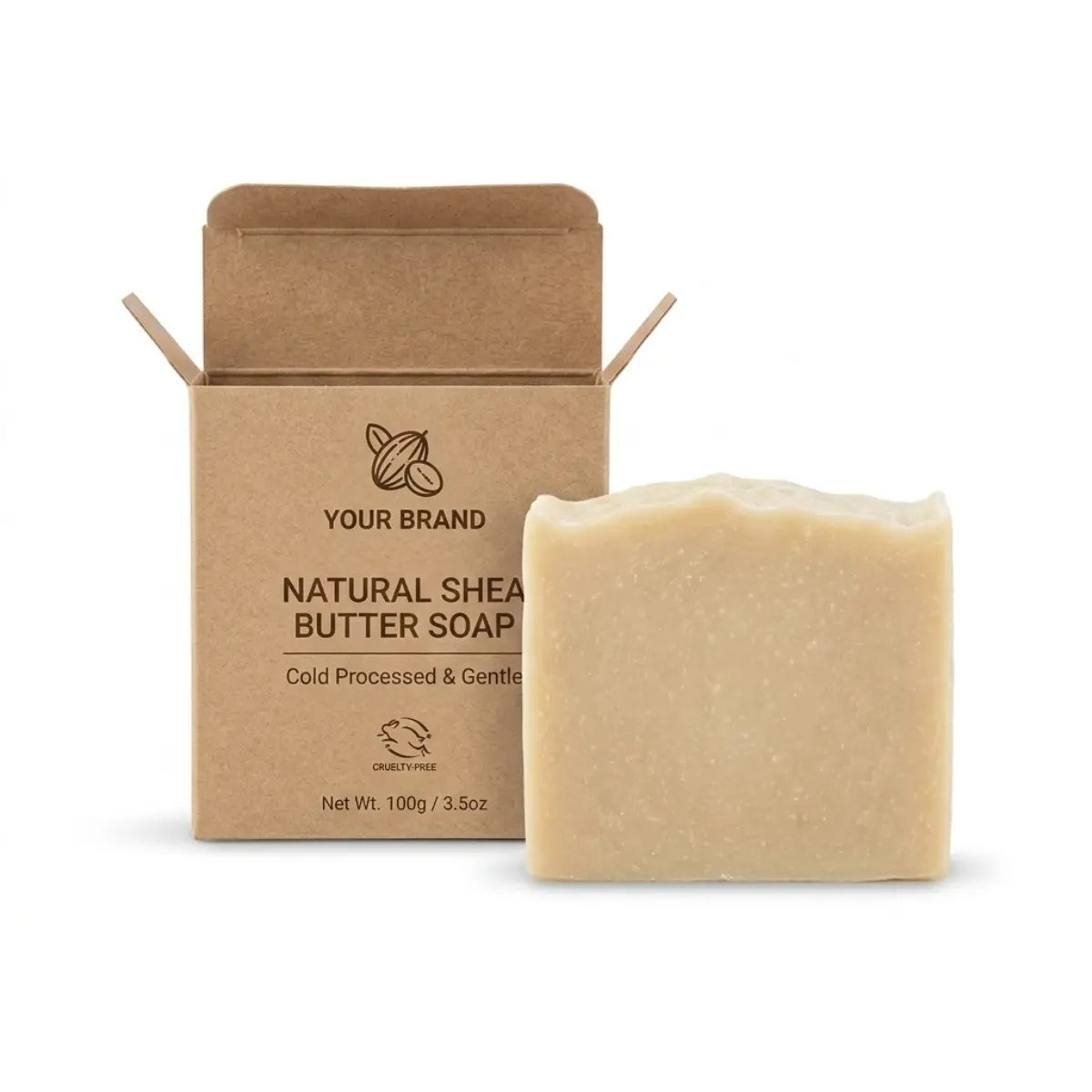

Plenty of people in the trade treat body butter as lotion with less water and a nicer jar. That shortcut breaks down at the first spec sheet. What is body butter, formulated properly? It is a different structure: a fat-based, semi-solid base that behaves differently in the filler, in the warehouse and on the label.
Body butter is a thick, semi-solid moisturizer built mostly from plant butters and oils, with little or no water. It suits dry, rough areas where a heavier film is wanted. It comes as anhydrous whipped blends or as water-containing emulsions. The name describes texture, so the formula decides what you really have.
Body butter is a fat-based, low-water moisturizer; lotion is a water-based emulsion. The ingredient list, preservation system and shipping risk all follow from that split. Before a private label project, settle the formula type, your target markets and the container, in that order.
What Is Body Butter, Really?
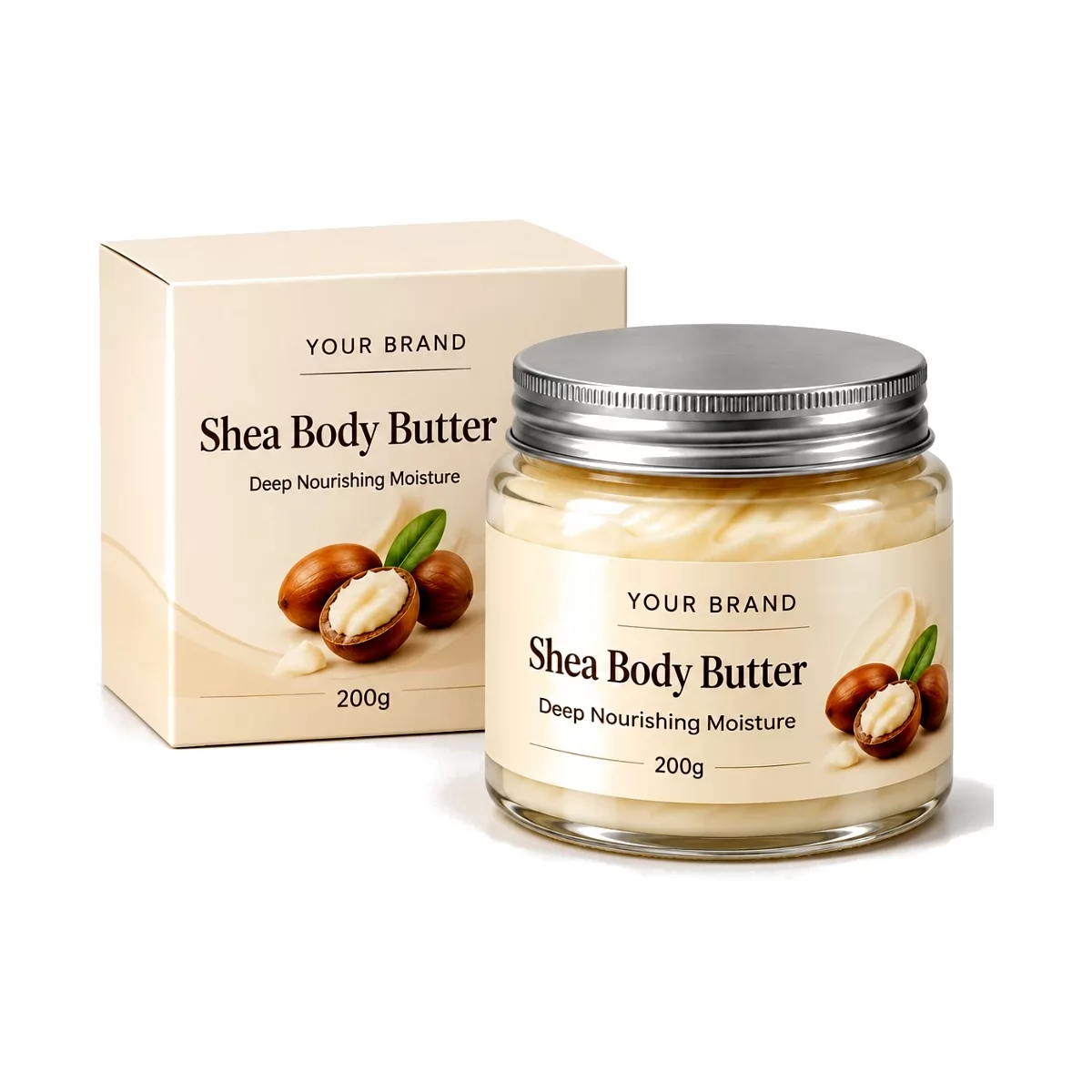
A body butter is a semi-solid cosmetic moisturizer whose base is shea, cocoa, mango or similar butters blended with liquid oils. Water is absent in the anhydrous type and limited in the emulsified type. "Butter" names the texture and fat base, not one raw material.
Anhydrous versus emulsified butters
An anhydrous butter is just fats, oils and small additives, whipped or poured. No water means microbes have little to grow in, so many of these products run with a light preservation system or none at all. Do not read that as "no risk." Wet fingers and condensation in the jar bring water in, and a challenge test on the finished product is still the sensible check.
An emulsified butter contains water held in the fat phase by emulsifiers. It spreads more easily and feels less greasy, but it needs a full preservative system, a pH and viscosity check, and stability testing. Different product, different paperwork.
Why the name varies by market
"Body butter," "body cream" and "body souffle" are used loosely, and retailers in different regions apply them differently. One buyer's "butter" is another's "rich cream." So define the product by what is in the jar: water or no water, hardness, how it is whipped. Write that into the brief and ignore what the label calls it.
Body Butter vs Body Lotion: The Differences That Change Your Spec
The body butter vs body lotion difference is mostly structural. Lotion is an oil-in-water emulsion with a high water share, so it is pourable and pumpable. Body butter carries far more fat, so it is scooped, spatula-filled or squeezed from a wide tube. That one split drives packaging, preservation and cost.
| Criterion | Body butter | Body lotion |
|---|---|---|
| Water content | None to low | High |
| Emulsifier load | None (anhydrous) to moderate | Needed in every batch |
| Feel on skin | Dense, rich, slower to absorb | Light, spreads fast |
| Usual container | Jar, tub, wide-mouth tube | Pump bottle, squeeze tube |
| Main cost driver | Butter and oil price, fill weight | Emulsifier system, preservatives |
| Main risk | Heat softening, graininess | Separation, microbial control |
If your customers want a rich winter product and you can control shipping temperature, butter earns its place. If you sell into hot regions or want a daily-use format, lotion is the easier build.
Butter Is Not One Ingredient: What Body Butter Is Made Of
Body butter ingredients fall into a few families: solid butters, liquid oils, a small group of functional additives, and fragrance. Read the INCI list (the standardized ingredient naming system used on cosmetic labels) in descending order of concentration. In a typical butter the first few lines are fats, and that tells you more than any marketing copy.
Butters and oils
The common butters are shea (INCI: Butyrospermum Parkii (Shea) Butter), cocoa (Theobroma Cacao (Cocoa) Seed Butter) and mango (Mangifera Indica (Mango) Seed Butter). Each melts and feels a little differently. Cocoa butter is hard and brittle at room temperature, shea is softer and creamier, and mango sits in between and is often chosen for a less sticky finish.
The liquid side is carrier oils such as sweet almond, jojoba or sunflower, plus lighter esters. The butter-to-oil ratio is the real control knob. More butter gives a firmer pot that holds its shape but drags on the skin. More oil gives a softer, spreadable product that melts and slumps sooner. Most formulating is a search for the ratio where it survives your shipping lane and still feels pleasant.
Emulsifiers, preservatives and fragrance
Emulsifiers, for instance Cetearyl Alcohol or Glyceryl Stearate, appear only in water-containing types. Preservatives follow the same rule, though an antioxidant such as Tocopherol often shows up in anhydrous butters to slow rancidity in the oils. Fragrance is the quiet variable: some fragrance materials soften a fat base or discolor it over time, and each has allergen and usage limits that depend on the market. Colorants need the same check. Pick them with the destination in mind, not after the sample is approved.
Whipped body butter and shea butter moisturizer: texture mechanics
Whipping beats air into a cooled fat blend, and the product turns light and fluffy. It also turns fragile. Shea and cocoa butter are made of fats that crystallize in several forms, and if a melted batch cools too slowly or unevenly, coarse crystals form. That is the grainy feel many buyers complain about. A jar that warms up in a container and re-sets will do the same.
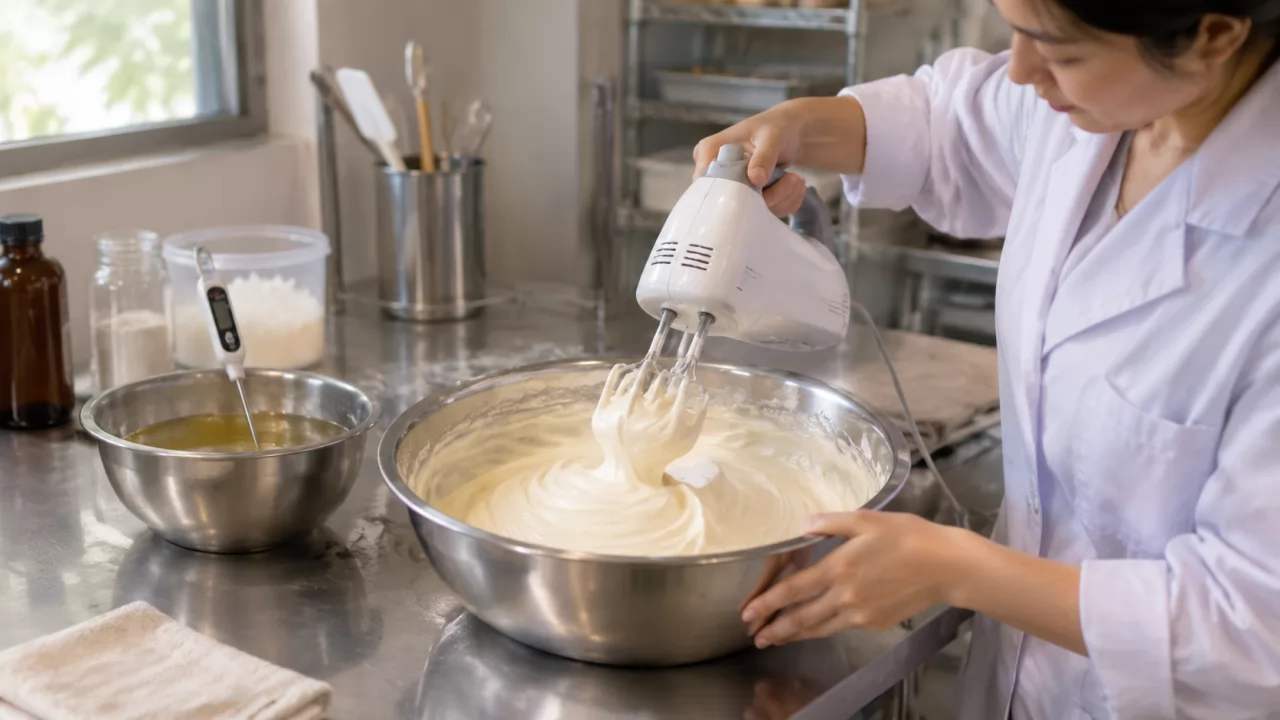
So cooling control and whipping temperature matter as much as the recipe. Tempering, fast controlled cooling, or adding a stabilizing wax can help. Each of these trades some softness for stability, and you should know which side your product sits on before you approve it.
Three Things People Get Wrong About Body Butter
"Richer always means better." A very high butter load feels heavy, leaves a film and can be a nuisance to fill. Often a customer prefers a middle texture. Test the feel with the people who will actually buy it, not with the founder's dry elbows.
"Natural wording is safe to print." Terms like "natural" or "organic" on a pack invite scrutiny and need support for that exact formula. Shea is plant-derived, but the finished jar also holds fragrance, preservatives and colorants. Describe what is in it, using INCI names, and keep claims to what a document backs up.
"One formula works in every climate." It does not. A butter that holds in a cool warehouse can soften, oil out or turn grainy during summer transit to the Gulf. Ask for a stability test at elevated temperature and a freeze-thaw cycle, and consider a firmer variant for hot lanes.
Starting a Body Butter Line Through Private Label
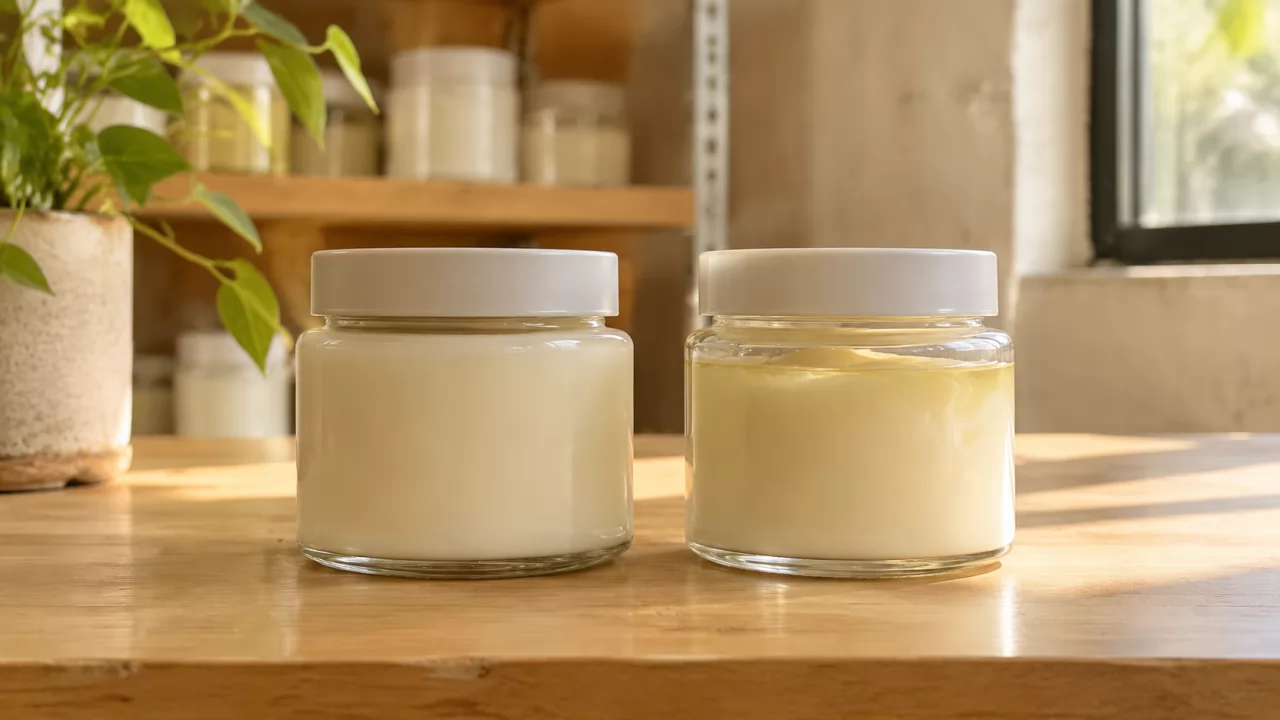
How to start a body butter brand with a contract manufacturer comes down to a handful of decisions made in order. Choose the formula type first (anhydrous or emulsified). Then fragrance, then the jar or tub, then the filling weight and carton layout. Changing the container late is expensive, because jar shape and neck size affect fill temperature and cooling.
| Stage | What happens | What you review |
|---|---|---|
| Brief | Formula type, texture, fragrance direction | Target markets, claim list |
| Sample | First sample made and sent | Feel, scent, color, grain |
| Stability | Heat and cold cycles on filled jars | Separation, softening, odor |
| Packaging | Jar, label and carton artwork | INCI order, warnings, fill weight |
| Bulk sample | Pre-production batch approval | Match to approved sample |
| Shipment | Inspection, then loading | Carton marks, jar sealing |
Skipping the stability row is the usual shortcut, and it is the one that costs the most later.
Compliance is checked market by market
Ingredient listing, claim wording, preservative rules and labeling differ across the US, the EU, the UK and Gulf countries. The EU and UK, for example, run their own cosmetic regulations with a safety assessment and product notification step. The US has its own framework, and Gulf states apply their own standards and registration routes. Treat each target market as a separate review. Ask for the INCI list, safety documents and test reports for your exact formula, and do not assume that coverage in one market carries over to another.
Where a manufacturer fits in
Boymay Cosmetics produces bath bombs, shower steamers and personal care products on an OEM/ODM basis, with custom formulas, shapes and packaging, so for a body butter project ask that formula type, filling method and jar options be confirmed in writing before sampling.
Short Glossary
- INCI: the standard international system for naming ingredients on cosmetic labels.
- Anhydrous: a formula made without added water, usually fats, oils and additives only.
- Emulsifier: an ingredient that keeps oil and water mixed together in one stable product.
- Occlusive: an ingredient that forms a film on skin and slows water loss.
- Patch test: a small-area skin test used to check for irritation or allergic reaction.
FAQ
Q: Is body butter the same as body cream?
A: No, not by formula. Body cream is normally an emulsion with a meaningful water share, while body butter is fat-led with little or no water. Retail labels blur this, so compare the ingredient lists, not the names.
Q: Does body butter need a preservative?
A: Anhydrous butter often needs little, but emulsified butter always does. Water can enter an anhydrous jar through use, so ask your manufacturer for a preservation rationale and challenge test results for the finished product.
Q: Why does my sample go grainy?
A: Usually because the butter crystallized unevenly after melting. Slow cooling or temperature swings during shipping are the common causes. A tempered cooling step or a firmer butter blend often fixes it.
Q: What do I need to decide before requesting a private label sample?
A: Formula type, target markets, texture, fragrance direction, container and rough quantity. Claims should be settled early, since they affect which documents you will need.