
قارن الحد الأدنى لكمية الطلب، وتكلفة الوحدة، وتسعير بدء التشغيل لصابون العلامة الخاصة. اطّلع على شرائح الحد الأدنى لكمية الطلب، ومحركات التكلفة، وكيفية التعرّف على عروض الأسعار الصادقة من المورّدين.
ترسل بريدًا إلكترونيًا إلى خمسة من مصنّعي الصابون مع نفس المتطلبات — قالب 4 oz، تركيبة نباتية، وعلبة kraft — وتعود إليك خمسة ردود تكاد لا تشبه بعضها البعض. أحدهم يقدّم حدًا أدنى 500 قطعة بسعر $2.90 للوحدة. وآخر يطلب 5,000 قطعة لكنه يخفض السعر إلى $0.95. وثالث لا يتعامل مع أي طلب يقل عن 10,000 ولا يزال يفرض سعرًا أعلى من الأول. الفروق حقيقية، وليس السبب أن أحدًا يكذب عليك. السبب أن الحد الأدنى لكمية الطلب وتكلفة الوحدة هما ناتجان عن عملية تصنيع، وليسا أسعارًا ثابتة، ومعظم جداول عروض الأسعار تخفي المدخلات.
يفكك هذا الدليل تلك المدخلات بالطريقة التي يتبعها مدير التوريد — حتى تعرف في المرة القادمة التي تتباين فيها الأرقام أي المورّدين يضيف هامشًا مبالغًا فيه، وأيهم صادق، وأيهم يناسب حجم طلبك فعليًا.
إجابة سريعة: نظرة عامة على النطاقات المعتادة للحد الأدنى لكمية الطلب والتكلفة
إذا كنت تحتاج فقط إلى صورة عامة عن السوق قبل التعمق: فإن شركات الحد الأدنى المنخفض للطلب والعلامة البيضاء ستكلّفك عادةً من نحو 100–500 قطعة لكل SKU. أما الدفعات القياسية للعلامة الخاصة فتقع بين 1,000 و5,000 قطعة. وتبلغ تكلفة الوحدة بعد التسليم عادةً ما بين $0.80 و$3.50، ويتحدد موقعك ضمن هذا النطاق بدرجة أكبر بكثير وفقًا للتركيبة، ووزن القطعة، والتغليف، وليس وفقًا لقاعدة الصابون نفسها.
| شريحة الحد الأدنى لكمية الطلب | حالة الاستخدام النموذجية | أثر التكلفة |
|---|---|---|
| 100–500 قطعة | اختبار السوق، طرح موسمي، علامة تجارية لمتجر واحد | أعلى تكلفة للوحدة ($2.50–$3.50)؛ حد أدنى من رأس المال المقدم |
| 1,000–5,000 قطعة | خط DTC قائم، طرح تجزئة لمتاجر متخصصة | فئة متوسطة ($1.10–$2.40)؛ يتم استهلاك رسوم الإعداد بشكل أفضل |
| 5,000–20,000 قطعة | سلسلة تجزئة، صندوق اشتراك، برنامج بيع بالجملة | أقل تكلفة للوحدة ($0.80–$1.30)؛ التزام رأسمالي فعلي |
لاحظ المقايضة التي تقوم بها فعليًا: الأموال المجمّدة في المخزون مقابل التكلفة التي يتم توفيرها لكل قطعة. هذا التوتر هو ما يحرك كل قرار أدناه.
لماذا يوجد الحد الأدنى لكمية الطلب (ولماذا لا يعني "MOQ المنخفض" دائمًا سعرًا أقل)
الحد الأدنى لكمية الطلب ليس لأن المُصنِّع يصعّب الأمور. بل هو النقطة التي تتوقف عندها دفعة الإنتاج عن خسارة المال. فكل دفعة تتحمل تكاليف ثابتة — وقت الخلط، تجهيز القالب، تغيير خط الإنتاج، إعداد طباعة الملصقات — ثم تُوزَّع هذه التكاليف على عدد الوحدات التي تطلبها. إذا طلبت عددًا قليلًا، فإن كل لوح يتحمل حصة كبيرة من تلك التكلفة الثابتة. وإذا طلبت عددًا أكبر، فإن الحصة تتقلص.
وهنا الأسطورة التي تستحق أن نُبطلها مبكرًا: إن انخفاض الحد الأدنى للطلب في صابون العلامة الخاصة لا يعني صفقة أفضل. بل يعني أنك تدفع علاوة لتجنب الالتزام برأس المال. أحيانًا تكون هذه العلاوة مبررة — عندما تختبر رائحة عطرية جديدة أو سوقًا جديدة. لكن غالبًا ما تكون مجرد راحة مكلفة.
محركات التكلفة الحقيقية وراء MOQ الصابون
- كيمياء الدفعات. لا يمكن للتصبّن أن يتوسع بلا حدود على دفعات صغيرة جدًا. فالصابون المصنوع بالطريقة الباردة يحتاج إلى فترة معالجة كاملة ويُنتَج في دفعات ثابتة داخل أوعية محددة، لذلك تكون حدوده الدنيا مرتفعة وتمتد مهَل التسليم إلى أربعة أو ستة أسابيع. أما الصابون المصبوب والصب فهو أكثر مرونة ويدعم دفعات أصغر. وتأتي ألواح السايندت (Syndet) — وهي قاعدة السايندت التي تستخدمها في الواقع معظم الألواح "اللطيفة" أو "المتوازنة مع درجة الحموضة" — في المنتصف، ويحدّدها في ذلك حجم سعة خطوط البثق والختم.
- اقتصاديات الملصقات والطباعة. تتميز الطباعة الرقمية بتكاليف إعداد شبه معدومة ولكن بسعر أعلى للوحدة، لذا فهي الأنسب للدفعات القصيرة. أما الطباعة الفلكسوغرافية فتتضمن رسوم ألواح لا تكون مجدية إلا بعد تجاوز بضعة آلاف من الوحدات. وعادةً ما يقع التعادل عند نحو 2,500–3,000 ملصق. والمورّد الذي يعرض عليك MOQ منخفضًا لتصاميم الفلكسو غالبًا ما يضمّن تكلفة الألواح في سعر الوحدة.
- القوالب المخصصة والنقش البارز. يُعد القالب المصمم خصيصًا أو الشعار المنقوش استثمارًا أوليًا لمرة واحدة، وغالبًا ما يتراوح بين $400–$1,500. وعند توزيعه على 500 لوح، يكون ذلك ذا أثر ملموس. أما على 10,000، فيكاد يختفي. وهذا البند وحده يفسر الكثير من الفروق بين عروض الأسعار التي ستراها.
تفكيك تكلفة صابون العلامة الخاصة لكل وحدة
لمراجعة أي عرض سعر، فكّك اللوح إلى مكوّناته. فتكلفة إنتاج صابون العلامة الخاصة لكل وحدة هي في الواقع أربع أو خمس أرقام مكدسة معًا، ومعرفة كل رقم منها توضح لك أين يوجد هامش ربح المورّد — أو الحشو الزائد.
المواد الخام والتصميم التركيبي
تشكل الزيوت الأساسية، والمكونات الفعالة، والعطر، والملون جوهر المنتج. وتبلغ تكلفة المواد لقاعدة الجلسرين أو السايندت القياسية مع رائحة بسيطة نحو $0.35–$0.55 لكل لوح 4 oz. أما إذا اتجهت إلى منتجات نباتية، أو خالية من زيت النخيل، أو عضوية معتمدة، فإن هذا النطاق يرتفع إلى $0.90–$1.20، لأن خلطات المواد الخافضة للتوتر السطحي الخالية من زيت النخيل والزيوت العطرية الطبيعية تكلف أضعاف نظيراتها التقليدية.
كل ادعاء "نظيف" تضيفه له تكلفة. أصبح التصنيع الخالي من القسوة والنباتي الآن من المتطلبات الأساسية للمشترين في أمريكا الشمالية والاتحاد الأوروبي، ويمكن للمصنّعين ذوي السمعة الجيدة اعتماده — لكن إعادة الصياغة ليست مجانية، وأي مورّد يقول ذلك ينبغي أن يثير الريبة.
تكلفة التغليف — البند الذي يُستهان به
هنا يفاجأ مالكو العلامات التجارية للمرة الأولى. فقد تكلف العلبة المطبوعة أو الغلاف الورقي أو الغلاف الانكماشي بقدر تكلفة الصابون نفسه — وأحيانًا أكثر. تتراوح تكلفة تغليف صابون العلامة الخاصة عادةً بين $0.30–$1.50 للوحدة بعد احتساب الصندوق وأي غلاف داخلي والتشطيبات مثل الطباعة المعدنية أو التغليف بلمسة ناعمة.
كما أن للتغليف حدًا أدنى للطلب الخاص به، ونادرًا ما يطابق الحد الأدنى لطلب الصابون. فقد يطلب مزود طباعة الكراتين 2,000 وحدة كحد أدنى حتى لو كان إنتاج الصابون 1,000 وحدة. هذا التفاوت يدفعك بصمت إلى شراء كميات زائدة من التغليف أو دفع رسوم زيادة للطلبات الصغيرة — وهي تكلفة لا تظهر إطلاقًا في عرض سعر الصابون.
العمالة، والأدوات، وتكاليف الامتثال الإضافية
إلى جانب المواد، توجد الرسوم التي لا تتغير مع الحجم: مراجعة التصميم، وإعداد القوالب، والوثائق التي تحتاجها قانونيًا. بالنسبة للسوق الأمريكية، يعني ذلك وضع ملصقات المكونات المتوافقة مع INCI، وإذا قدّمت أي ادعاء يتجاوز التنظيف، فلابد من معرفة أين تبدأ قواعد مستحضرات التجميل لدى FDA بموجب MoCRA. أما في الاتحاد الأوروبي، فهو اللائحة الخاصة بمنتجات التجميل (EC No. 1223/2009)، التي تتطلب تقييمًا للسلامة ووجود Person مسؤول في الملف. هذه المتطلبات ليست اختيارية، وسيكون لدى المصنع الجاد بالفعل الاختبارات والمسار التوثيقي اللازم لدعمها.
الشحن، والرسوم الجمركية، والتكلفة عند الوصول
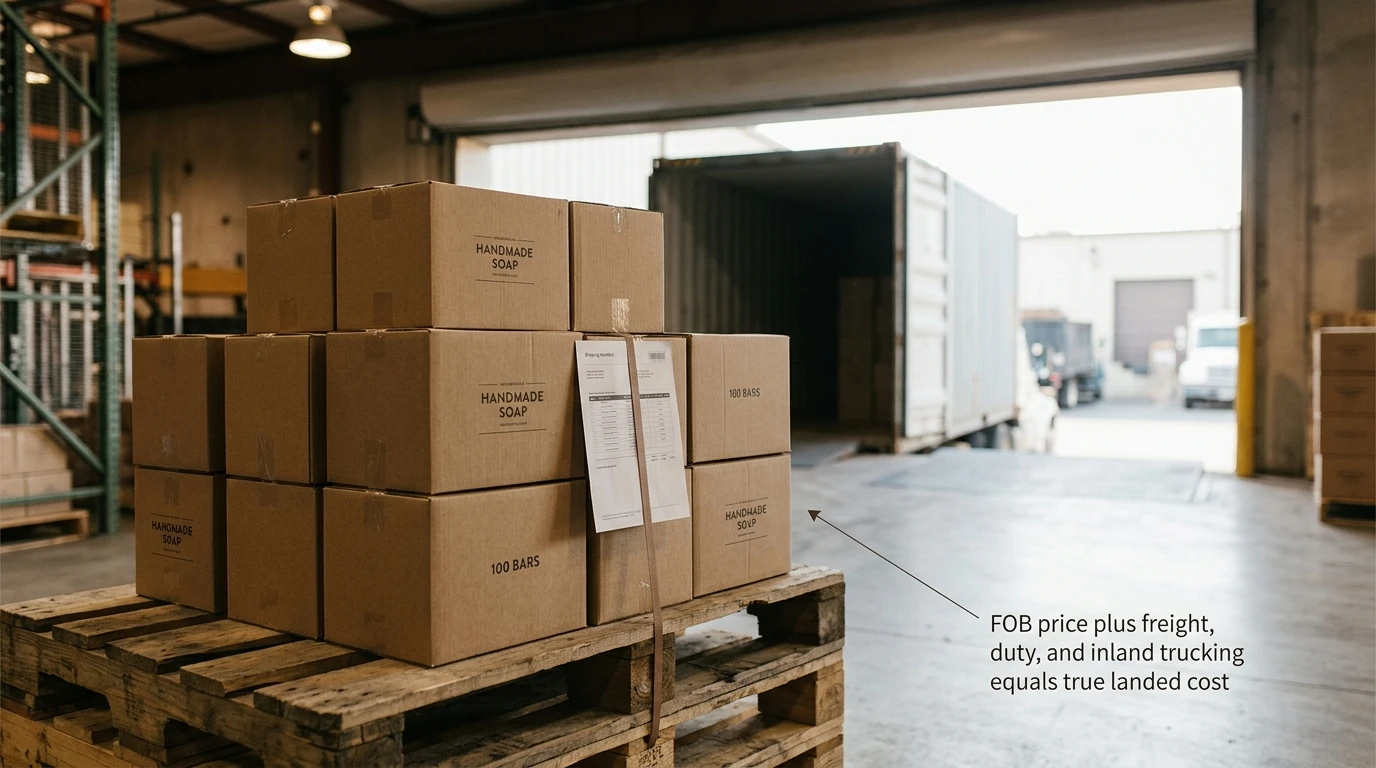
سعر FOB ليس ما تدفعه فعليًا. يمكن أن تضيف الشحن البحري، والرسوم الجمركية، والنقل البري الداخلي $0.15–$0.60 لكل قطعة في الطلبات الخارجية، وتتأثر الدفعات الصغيرة بأكبر قدر لأنك لا تملأ حاوية كاملة. وقد ينتهي الأمر بالمورّد الذي يقدّم رقم FOB جذاب إلى أن يكون أغلى من الخيار المحلي عندما تُحتسب التكلفة عند الوصول بصدق. اطلب دائمًا السعر المُسلَّم، لا سعر بوابة المصنع.
الحد الأدنى للطلب حسب نوع المصنّع: أين تطلب فعليًا
المكان الذي تضع فيه الطلب يحدد تكلفة الوحدة الواحدة ومرونتك معًا. لا يوجد خيار صحيح عالميًا — بل الخيار الصحيح فقط لمرحلتك.
موردو Low-MOQ / White Label
توفّر هذه الشركات تركيبات مطوّرة مسبقًا تضع عليها ملصقًا فقط. يتيح لك مصنّع صابون private label منخفض MOQ من هذا النوع دخول السوق خلال أسابيع لا أشهر، ويُمكّنك من اختبار ثلاثة عطور دون المخاطرة بمبلغ $15,000. المقابل هو سعر أعلى للوحدة وملكية محدودة جدًا أو معدومة للتركيبة — فأنت تستأجر وصفتهم، وكذلك يفعل منافسك في الشارع المقابل.
مصنّعو العلامة الخاصة الكاملة حسب الطلب
يعني التصنيع المخصص بالكامل أن تكون تركيبتك، وقالبك، ومواصفاتك الخاصة بك. تكون كميات الطلب الدنيا أعلى — وغالبًا تبدأ عند نحو 1,000 وحدة لكل SKU — لكن تكلفة الوحدة تنخفض بشكل حاد مع التوسع، وتكون التركيبة ملكًا لك بالفعل. هذا هو المسار المناسب بعد أن تثبت الطلب وتريد منتجًا لا يستطيع أحد آخر نسخه. أكّد كتابيًا من يملك حقوق ملكية التركيبة قبل بدء التطوير.
التوريد الخارجي مقابل التوريد المحلي
يوفر التوريد المحلي سرعة أكبر في الإنجاز، وتواصلًا أسهل، وامتثالًا أبسط، ولكن بسعر أساسي أعلى. أما التوريد الخارجي — وخاصةً من المصنّعين الآسيويين الراسخين — فيقدّم تكاليف أقل بشكل ملحوظ لكل وحدة وقدرة عالية على التخصيص، مقابل مدد توريد أطول والحاجة إلى التحقق من الشهادات بعناية. والسؤال الحاسم ليس "أيّهما أرخص"، بل "أيّ المخاطر أستطيع إدارتها فعليًا." إن مصنعًا يحمل اعتماد GMP وISO وFDA وSMETA يزيل معظم مخاوف الامتثال التي تجعل العلامات التجارية تتردد أصلًا في التوريد الخارجي.
تقدير تكلفة بدء مشروع الصابون بعلامتك الخاصة
لنضع هذا في إطار طلب أول واقعي: 1,000 قطعة، رائحة مخصصة، عبوة كرتونية مطبوعة، وSKU واحد. إليك تفصيلًا منطقيًا للبنود حتى تتمكن من التحقق من مدى واقعية تكلفة بدء مشروع الصابون بعلامتك الخاصة.
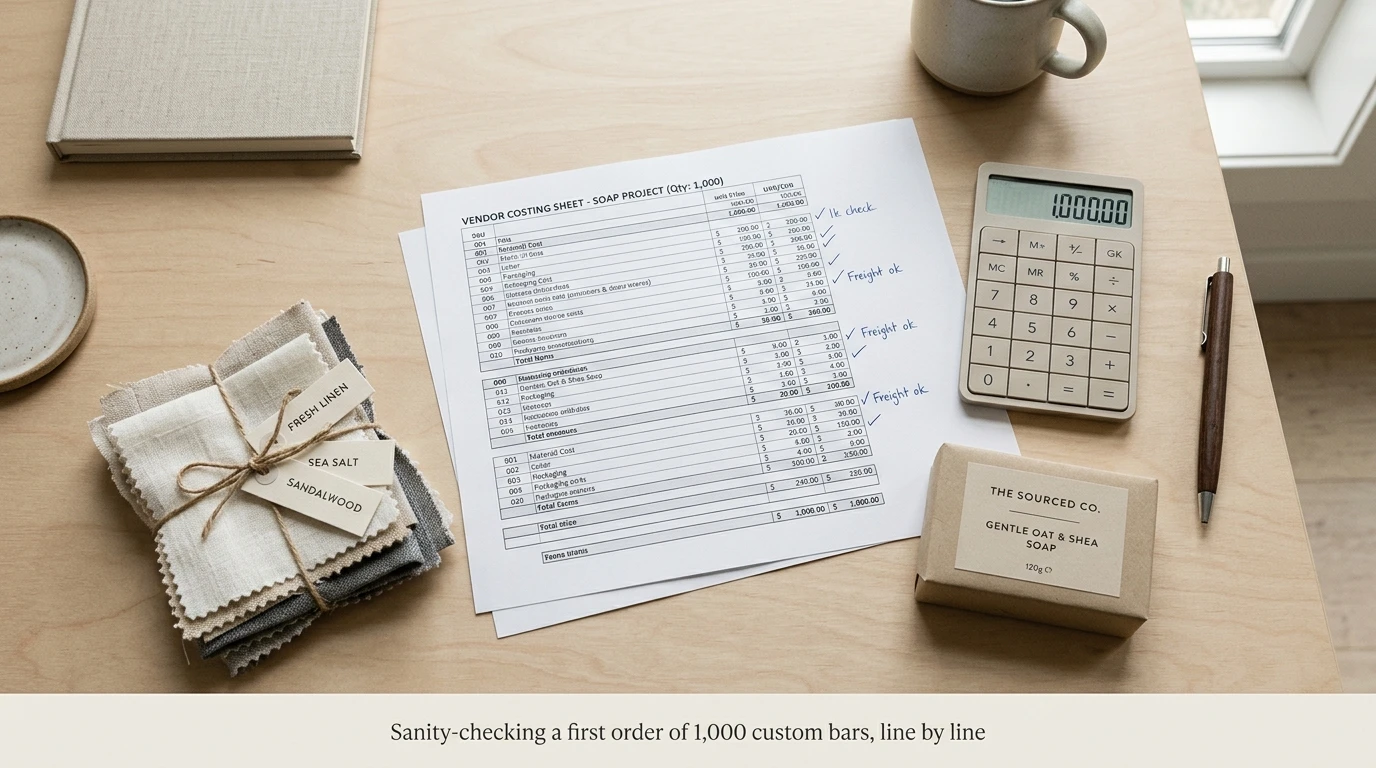
| البند | التكلفة التقديرية |
|---|---|
| قاعدة الصابون + التركيبة (1,000 قطعة) | $550 – $900 |
| التغليف (علب + أغلفة) | $450 – $1,100 |
| قالب مخصص / أدوات النقش البارز | $400 – $1,200 (مرة واحدة) |
| إعداد طباعة الملصقات + المراجعة الأولية | $150 – $400 |
| عينات (2–3 جولات) | $120 – $350 |
| اختبارات الامتثال + التوثيق | $300 – $800 |
| الشحن + الرسوم الجمركية (مُسلَّم) | $200 – $600 |
| إجمالي الدفعة الأولى التقريبي | $2,170 – $5,350 |
التكاليف التي ينسى القادمون الجدد احتسابها هي الأكثر إيلامًا: جولتان أو ثلاث من العينات قبل الاعتماد النهائي، وإعادة الشحن عندما تكون النسخة التجريبية الأولى غير صحيحة، والمخزون الراكد الناتج عن طلب عطر لم يرده السوق. خصصوا هامشًا احتياطيًا بنسبة 15–20% لهذه البنود. فهي ليست حالات استثنائية؛ بل هي القاعدة عند الإطلاق الأول.
كيفية التفاوض على الحد الأدنى لكمية الطلب وخفض تكلفة الوحدة
تأتي معظم القدرة التفاوضية هنا من تقليل أعمال الإعداد والتغيير لدى الشركة المصنّعة، وليس من المساومة على السعر الأساسي.
- وحِّد القالب عبر وحدات SKU المختلفة. نفس شكل اللوح، بروائح مختلفة. تكلفة أداة واحدة موزعة على كامل خط إنتاجك.
- شارك في عطر أو عائلة أساس مشتركة. إذا استخدمت ثلاثة منتجات نفس قاعدة syndet، فسيشغّل المصنع دفعة كبيرة واحدة بدلًا من ثلاث دفعات صغيرة — ويمرّر إليك جزءًا من هذا التوفير.
- ادمج عمليات الطباعة. اطبع جميع نسخ الملصقات الخاصة بك في مهمة واحدة لتجاوز نقطة التعادل في الطباعة الفلكسوغرافية دفعة واحدة.
- نظّم إعادة الطلب على مراحل. التزم بحجم محدد على مدار السنة، مع التسليم على دفعات مجدولة. ستحصل على سعر الكميات الكبيرة من دون الحاجة إلى تخزين كل شيء دفعة واحدة.
- خطّط للإنتاج في غير موسم الذروة. تقدّم المصانع أسعارًا أقل عندما لا تكون خطوطها تحت ضغط كبير. يمكن لحجز دفعة في نافذة أهدأ أن يوفّر مبلغًا حقيقيًا.
في تسعير الجملة لصابون الملصقات المخصصة، الخطوة الصادقة هي أن تسأل الشركة المصنّعة مباشرة: "ما أصغر تعديل يمكن إجراؤه على المواصفات الخاصة بي بحيث يخفض الحد الأدنى لكمية الطلب أو تكلفة الوحدة؟" الشريك الجيد سيخبرك.
الأخطاء الشائعة التي ترفع التكلفة
- الإفراط في التخصيص في أول دفعة — قوالب مخصصة ومواد فعّالة نادرة قبل أن تثبت مبيعات منتج SKU واحد.
- تجاهل عدم التوافق بين الحد الأدنى لكمية الطلب للتغليف والمنتج، ثم شراء كميات زائدة من الصناديق لتلبية الحد الأدنى للطابعة.
- مطاردة أقل سعر FOB ونسيان أن الشحن والرسوم الجمركية ورسوم الدفعات الصغيرة قد تقلب المعادلة.
- التقليل من ميزانية الامتثال والاختبار، ثم الاضطرار إلى التصرف بسرعة عندما يطلب بائع تجزئة أو سوق إلكتروني مستندات لا تملكها.
هل أنت مستعد لتسعير أول دفعة إنتاج؟
الأرقام على الورق لا تأخذك إلا إلى حد معين. وأسرع طريقة لاستبدال التخمين بميزانية حقيقية هي عرض مواصفاتك الفعلية على مُصنِّع والحصول على عرض سعر مفصل حسب البنود — يشمل التكلفة الأساسية، والتغليف، والأدوات، والشحن المُسلَّم، بدلًا من تجميعها في رقم غامض واحد لكل لوح.
منذ عام 1995، تدير BOMAY إنتاج OEM/ODM لعلامات العناية بالاستحمام والعناية الشخصية في أنحاء أمريكا الشمالية وأوروبا والشرق الأوسط — 16 خطًا آليًا، معتمدة وفق GMP وISO وFDA وSMETA، مع تركيبات نباتية وخالية من القسوة، وقوالب مخصصة، وMOQ يبدأ من 1,000. عادةً ما تُشحن العينات خلال 7–14 يومًا. أرسل لنا مواصفات اللوح والكمية المستهدفة، وسنُعدّ لك تفصيل التكلفة قبل أن تلتزم بدولار واحد على المخزون. ابدأ بعينة؛ وتوسّع عندما تكون الأرقام مناسبة.
الأسئلة الشائعة
س: ما هو الحد الأدنى لكمية الطلب لمنتج صابون بعلامة خاصة؟
ج: يختلف بشكل كبير. قد يقبل موردو العلامة البيضاء 100–500 قطعة لكل SKU، بينما يبدأ مصنعو العلامات الخاصة المخصصة بالكامل عادةً عند حوالي 1,000 وحدة. ويتحدد الرقم بحسب كيمياء الدفعة، وإعداد الطباعة، واحتساب استهلاك القالب، وليس بناءً على قاعدة عشوائية.
س: كم تبلغ تكلفة إنتاج قطعة صابون واحدة بعلامة خاصة؟
ج: عادةً ما تتراوح التكلفة المُسلَّمة لكل قطعة بين $0.80 و $3.50. وتمثل المواد الخام نحو $0.35–$1.20 من ذلك؛ أما الباقي فهو التغليف، والأدوات، والامتثال، والشحن. التركيبات النباتية أو الخالية من زيت النخيل والتغليف الفاخر يدفعانك نحو أعلى النطاق.
س: هل يمكنني الحصول على صابون بعلامة خاصة بدون MOQ؟
ج: يُعدّ عدم وجود MOQ حقيقي أمرًا نادرًا، وعادةً ما يقتصر على التركيبات الجاهزة بالكامل مع ملصقات عامة. وبمجرد أن ترغب في عطر مخصص، أو قالب، أو عبوة مطبوعة، يظهر الحد الأدنى — لأن لدى المُصنِّع تكاليف إعداد فعلية يجب استردادها. توجد حدود دنيا منخفضة جدًا، لكنك تدفع مقابلها في سعر الوحدة.
س: هل التصنيع في الخارج أقل تكلفة للعلامات التجارية الصغيرة؟
ج: غالبًا نعم من حيث تكلفة الوحدة، ولكن ليس دائمًا من حيث التكلفة الإجمالية عند الوصول للشحنات الصغيرة جدًا، لأن الشحن والجمارك يؤثران أكثر على الطلبات الصغيرة. وتصبح التكلفة أقل بوضوح مع زيادة الحجم. وتكمن المزايا الحقيقية للمصنع الخارجي المعتمد في التخصيص العميق وتكلفة أقل على نطاق واسع — بشرط أن تكون الشهادات سليمة.
س: كم من المال أحتاج لبدء خط صابون بعلامة تجارية خاصة؟
ج: عادةً ما يتراوح إطلاق واقعي لمنتج واحد بحوالي 1,000 قطعة بين 2,200–5,400 دولارًا شاملًا كل شيء، بما في ذلك العينات، والأدوات، والامتثال، والشحن. أضف احتياطيًا بنسبة 15–20% لإعادة الاختبار، وإعادة الشحن، والمخزون البطيء الحركة.