
Launch your private label persimmon soap in Germany. Sourcing, compliance, pricing, and a step-by-step roadmap from a trusted European manufacturer.
After walking a few dozen brands through the German cosmetics market, one pattern shows up again and again: the founders who stumble aren't the ones with weak products. They're the ones who treated regulation and manufacturing as afterthoughts. And persimmon soap? That's the interesting case where a genuinely differentiated ingredient meets one of Europe's most demanding consumer bases. The question isn't whether it can work here. It's whether you'll set it up right the first time.
This guide takes you from the "why" through the messy middle of compliance, sourcing, and pricing, and out the other side with a launch roadmap you can actually follow.
Key Takeaways
- Germany's natural cosmetics market sits above €1.6 billion, and clean-label skincare is outpacing conventional segments — a receptive backdrop for a novel botanical.
- Persimmon (Diospyros kaki) offers a credible functional story: tannins for astringency, beta-carotene for tone, and vitamin C for antioxidant claims.
- Every cosmetic sold here must be notified in the EU CPNP and backed by a compliant Product Information File under Regulation (EC) No 1223/2009.
- Your manufacturer is the single biggest lever — it shapes formulation quality, compliance readiness, and time to market.
- A realistic first launch runs roughly €8,000–€20,000 depending on MOQ, packaging, and how much regulatory work you keep in-house.
Why Persimmon Soap — and Why Germany, Right Now
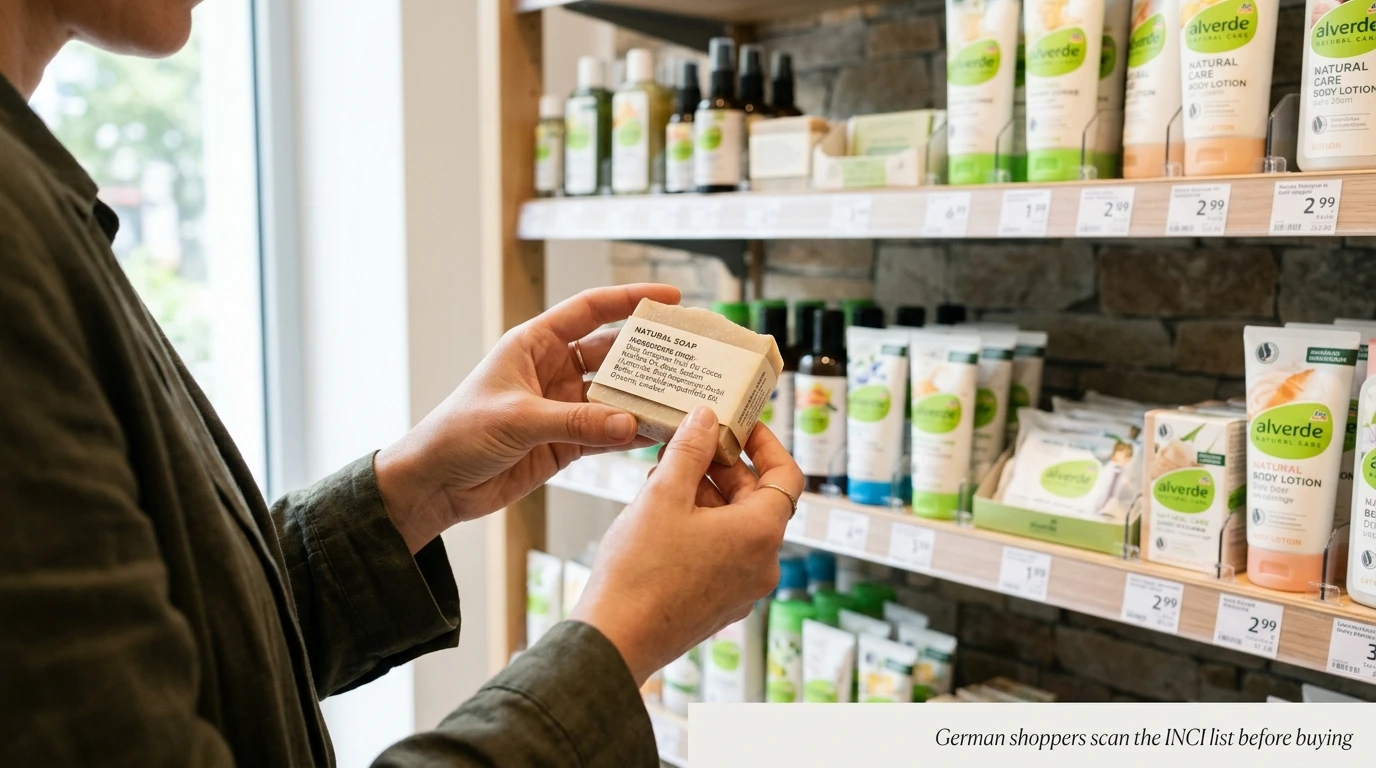
German shoppers read labels. Watch someone in a dm or Rossmann aisle and you'll see them turning the bar over to scan the INCI list before it reaches the basket. That habit rewards products with a real ingredient story instead of one more lavender bar competing on price.
Persimmon fruit extract gives you that story. The tannins act as gentle astringents, the carotenoids support even-tone messaging, and the vitamin C content provides a legitimate antioxidant angle. This isn't a marketing invention — there's a research base behind it, and crucially, it hasn't saturated German shelves the way charcoal or oatmeal already have. That gap is the opportunity.
Germany also prizes traceability. If your persimmon extract comes from verifiable sourcing and your labeling is honest about it, the narrative carries real weight. That's a market where doing things properly is a competitive advantage, not just a cost.
Understanding the German Natural Soap Landscape
Who Is Actually Buying
The core buyer is a woman aged 25 to 50, but the edges are widening. Men's natural grooming is climbing, and Q4 gifting drives heavy impulse buying in organic and specialty retail. This segment happily pays €6–€14 for a 100g bar when the backstory earns it.
Where Products Sell
| Channel | Notes |
|---|---|
| Online (own store / Amazon.de) | Low barrier to entry, high competition; lives or dies on imagery and copy. |
| Organic grocery (Bio supermarkets) | Usually wants Natrue or BDIH certification for shelf space. |
| Concept stores / apothecaries | Higher margin, lower volume, relationship-driven. |
| Subscription boxes | Strong for sampling and early awareness. |
| Wholesale to spas / hotels | Needs consistent supply and a B2B price structure. |
Competitive Positioning
Most persimmon soaps currently reaching Germany are Korean or Taiwanese brands with thin German-language marketing. That leaves a wide lane for a properly localized, EU-made product built for the German consumer. Your edge isn't only the ingredient. It's being here, speaking the language, and meeting compliance expectations from day one.
EU and German Regulatory Requirements You Must Know
This part is non-negotiable, and skipping it is the most expensive mistake newcomers make.
The Core Legal Framework
All cosmetics sold in Germany fall under EU Regulation (EC) No 1223/2009. There's no separate German cosmetics statute — the EU regulation applies directly. In practical terms:
- Each product needs a Responsible Person (RP) established inside the EU.
- The RP maintains a Product Information File (PIF).
- Every product must be notified in the CPNP before it goes on sale.
- A Cosmetic Product Safety Report (CPSR) must be prepared by a qualified assessor.
What Goes into the Product Information File
The PIF is your legal shield, not busywork. It holds the product description and formula, GMP evidence (ISO 22716 compliance from your manufacturer), the safety assessment, preservative efficacy data, and substantiation for every claim you make.
Claims — Where Brands Get into Trouble
Both the EU regulation and Germany's Heilmittelwerbegesetz (HWG) draw a hard line around therapeutic language. "Helps improve the appearance of uneven skin tone" is acceptable. "Treats hyperpigmentation" crosses into medicinal territory and invites scrutiny. Back every claim with at least a documented ingredient-function rationale in the PIF.
Fragrance Allergen Disclosure
If your formula includes any of the declared fragrance allergens under current SCCS guidance, they must appear in the INCI when present above 0.01% for rinse-off products. Bar soap counts as rinse-off, but track allergens from the formulation stage anyway — it saves relabeling later.
Finding the Right Manufacturer for Private Label Persimmon Soap in Germany
This is where projects either take off or quietly die. Your manufacturer sets your formulation quality, compliance readiness, and minimum volumes in one stroke.
What to Look For
An ISO 22716-certified facility is the floor — without it you can't build a compliant PIF. Beyond that, prioritize:
- Real experience incorporating botanical extracts (persimmon behaves differently from standard plant oils).
- An existing safety assessor relationship or in-house regulatory capacity.
- Willingness to hand over full INCI disclosure and a Certificate of Analysis for raw materials.
- Cold-process or hot-process capability that matches your positioning.
European vs. Asian Manufacturers
| Factor | EU Manufacturer | Asian Manufacturer |
|---|---|---|
| Regulatory alignment | Stronger; fluent in CPNP/PIF | Needs more due diligence |
| MOQ | Typically 200–500 units per SKU | Often lower (50–200 units) |
| Lead time | 6–14 weeks | 8–16 weeks plus shipping |
| Language | Direct communication | May need an intermediary |
| Persimmon sourcing | Less common; verify availability | More established supply chains |
| Cost per unit | Higher | Lower, but watch total landed cost |
For a Germany-first launch, a European partner simplifies compliance a great deal. As a persimmon soap manufacturer germany option, the local route tends to recover its cost premium by cutting the consultant fees you'd otherwise spend bridging non-EU documentation.
Questions to Ask Potential Suppliers
- Can you provide ISO 22716 certification and a recent audit report?
- Do you support CPNP registration or work with a regulatory partner?
- What's your persimmon extract specification — standardized extract or raw powder?
- What's the minimum stability testing period before you release a batch?
- Do you print labels, or does that sit with us?
Formulation Considerations for Persimmon Soap
You don't need to be a cosmetic chemist. You do need enough understanding to spot a weak product and ask sharp questions.
The Functional Case
Persimmon fruit extract (INCI: Diospyros Kaki Fruit Extract) contributes:
- Gallotannins and ellagitannins — astringency and a pore-tightening perception.
- Beta-carotene and lycopene — antioxidant support and a warm tone in the finished bar.
- Vitamin C — a brightening angle, though stability at soap pH is a genuine hurdle.
That last point matters. At the alkaline pH of a saponified bar, ascorbic acid degrades quickly. A capable formulator either uses a stabilized derivative or trims the claim accordingly. Ask directly how your manufacturer handles it before you print anything.
Complementary Ingredients That Work
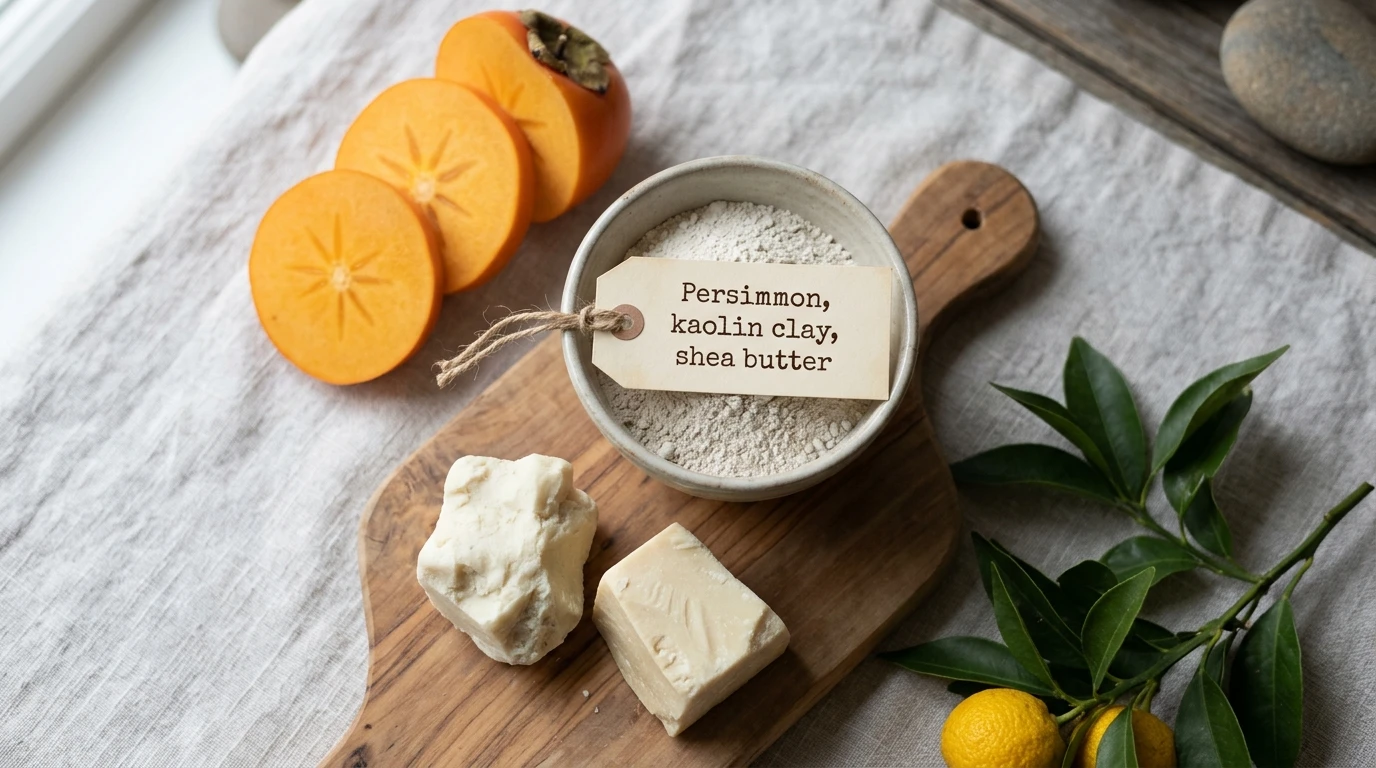
Kaolin clay pairs well with persimmon, improving the tactile feel while supporting a cleansing story. Shea or cocoa butter in the superfat fraction adds moisturizing credibility. A restrained frankincense or yuzu note reads premium in Germany without chasing a fad.
Preservation and Stability
Even bar soaps benefit from challenge testing when they carry water-phase botanical extracts. Plan for three to six months of accelerated stability work, and build that into your timeline rather than discovering it late.
Packaging, Labeling, and Brand Positioning
Mandatory Label Elements
Every label must show, in German (or all relevant EU languages for cross-border sales):
- Product name and function
- Net weight
- Name and address of the EU Responsible Person
- Country of origin, if outside the EU
- Batch number
- Best-before date or the PAO symbol
- Precautions and warnings
- Full INCI list
Design That Converts Here
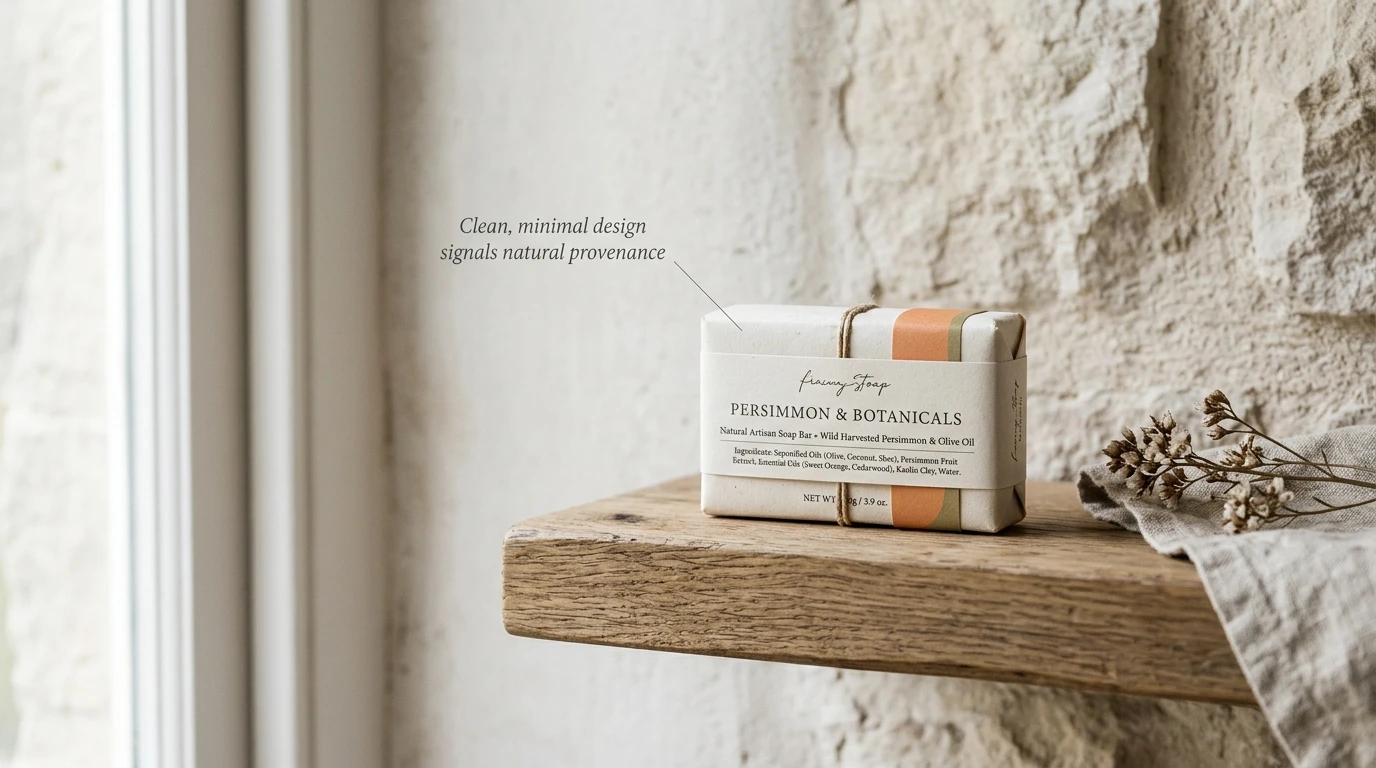
German buyers distrust over-designed packaging. Clean, minimal layouts with clear ingredient callouts consistently beat busy, illustration-heavy designs in the organic segment. Muted, earthy palettes signal natural provenance without looking muddy. If your extract has a specific origin, name it — "Persimmon extract, Wakayama, Japan" adds instant credibility.
Sustainable Packaging Is Now a Legal Step
Germany runs some of Europe's strictest packaging rules under the Verpackungsgesetz (VerpackG). Sell packaged goods here and you must register with a licensed dual-system provider such as Grüner Punkt and pay into the recycling scheme. It's not complicated, but plenty of new entrants miss it until a compliance notice arrives.
Pricing Strategy and Margin Structure
Realistic Benchmarks
| Cost Component | Typical Range |
|---|---|
| Manufacturing per 100g bar (EU) | €1.20 – €2.80 |
| Packaging per unit | €0.30 – €0.80 |
| Regulatory setup (one-time) | €1,500 – €4,000 |
| Safety assessment per formula | €500 – €1,200 |
| CPNP registration | Free (time cost only) |
A retail price of €8.90–€12.90 per bar is realistic in the natural segment and leaves room for wholesale margin if you chase retail. Direct-to-consumer gives you a fatter margin but demands more marketing spend.
MOQ and Cash Flow
Most private label runs start at 200–500 units per SKU. At around €2 per unit in manufacturing and setup costs spread over 500 units, your break-even lands near €4–€5 per bar before marketing. Price from that reality. Undercutting the market to buy traction rarely works in Germany's premium natural segment — it just erodes perceived value.
Common Mistakes That Stall or Kill German Launches
Skipping the safety assessment. It feels like an expense before your first sale. It's also the law, and German authorities do run market surveillance.
Overclaiming. "Removes dark spots" on a rinse-off soap is both a regulatory risk and a credibility hit with ingredient-literate shoppers.
Using a non-EU Responsible Person. An RP outside the EU cannot legally fill the role. That's a structural error you have to fix before anything reaches the market.
Underestimating lead times. Between formulation, stability testing, safety assessment, CPNP notification, packaging, and first delivery, a realistic window is six to ten months from supplier selection to first sale.
Ignoring German-language content. English-only packaging or a machine-translated site signals corner-cutting immediately, and it quietly undermines any premium positioning.
Step-by-Step Launch Roadmap
Phase 1: Foundation (Months 1–2)
- Define the product concept, target channel, and price position.
- Shortlist three to five manufacturers with the right certifications.
- Draft a product brief covering formulation direction, packaging, and claim strategy.
Phase 2: Development (Months 2–5)
- Select a manufacturer; request samples and stability testing.
- Engage an EU Responsible Person or regulatory consultant.
- Commission the CPSR.
- Finalize the INCI and label copy against HWG claim rules.
Phase 3: Compliance and Production (Months 5–7)
- Submit the CPNP notification once the CPSR is complete.
- Register with a VerpackG dual-system provider.
- Confirm the production run and review batch documentation.
- Finalize e-commerce or wholesale outreach.
Phase 4: Launch (Month 8+)
- Soft launch direct-to-consumer with strong photography and German copy.
- Build relationships with organic specialty channels.
- Gather early feedback and keep monitoring compliance.
Ready to Move Forward?
Launching a private label persimmon soap in Germany is genuinely achievable. The ingredient story is strong, the market is receptive, and the regulatory path — structured as it is — becomes straightforward once you understand it.
The gap between brands that launch and brands that stall almost always comes down to execution support. Choosing the right manufacturing partner, getting compliance right from the start, and building a German-language presence that actually speaks to the market — those three variables carry most of the outcome.
Whether you're still researching or ready to move into supplier selection and regulatory setup, we work with brands at exactly this stage. Our team has hands-on experience with CPNP registration, connecting founders to ISO 22716-certified European soap makers, and assembling compliant launch packages for the German and wider EU market — the kind of support a serious custom persimmon soap supplier europe relationship should include, and the difference between a smooth launch and a stalled one when you want to launch private label soap germany or scale into wholesale persimmon soap private label.
Get in touch to discuss your project. A 30-minute conversation usually clarifies the path, the timeline, and what it realistically costs to do this properly.
FAQ
Q: Do I need Natrue or BDIH certification to sell natural soap in Germany?
A: No. These certifications are voluntary. They help considerably with organic retail distribution and consumer trust, but they aren't required to place a product on the market. Consider budgeting for them in year two if shelf placement is a goal.
Q: Can I use a Korean or Japanese manufacturer and still sell in Germany?
A: Yes. The product must meet EU Regulation 1223/2009 regardless of where it's made, and you'll need an EU-based Responsible Person. Asian manufacturers experienced in EU export can often supply the right documentation, but verify that explicitly before committing.
Q: How long does a safety assessment take?
A: Usually four to eight weeks with a qualified assessor, assuming raw material safety data and supplier documentation are complete. Almost every delay traces back to missing supplier paperwork, so gather it early.
Q: What's the minimum viable budget to launch?
A: A lean but legally compliant launch — one SKU, modest packaging, online only — is achievable for roughly €8,000–€12,000 including regulatory setup, the first production run, packaging, and basic marketing assets. Under-budgeting the regulatory side is the most common planning error I see.
Q: Is persimmon extract a restricted ingredient in EU cosmetics?
A: No. It doesn't appear on the restricted or prohibited lists under Annexes II, III, IV, or V of the EU Cosmetics Regulation. It's a permitted botanical, though your safety assessor will still evaluate it within the context of your specific formula and use pattern.