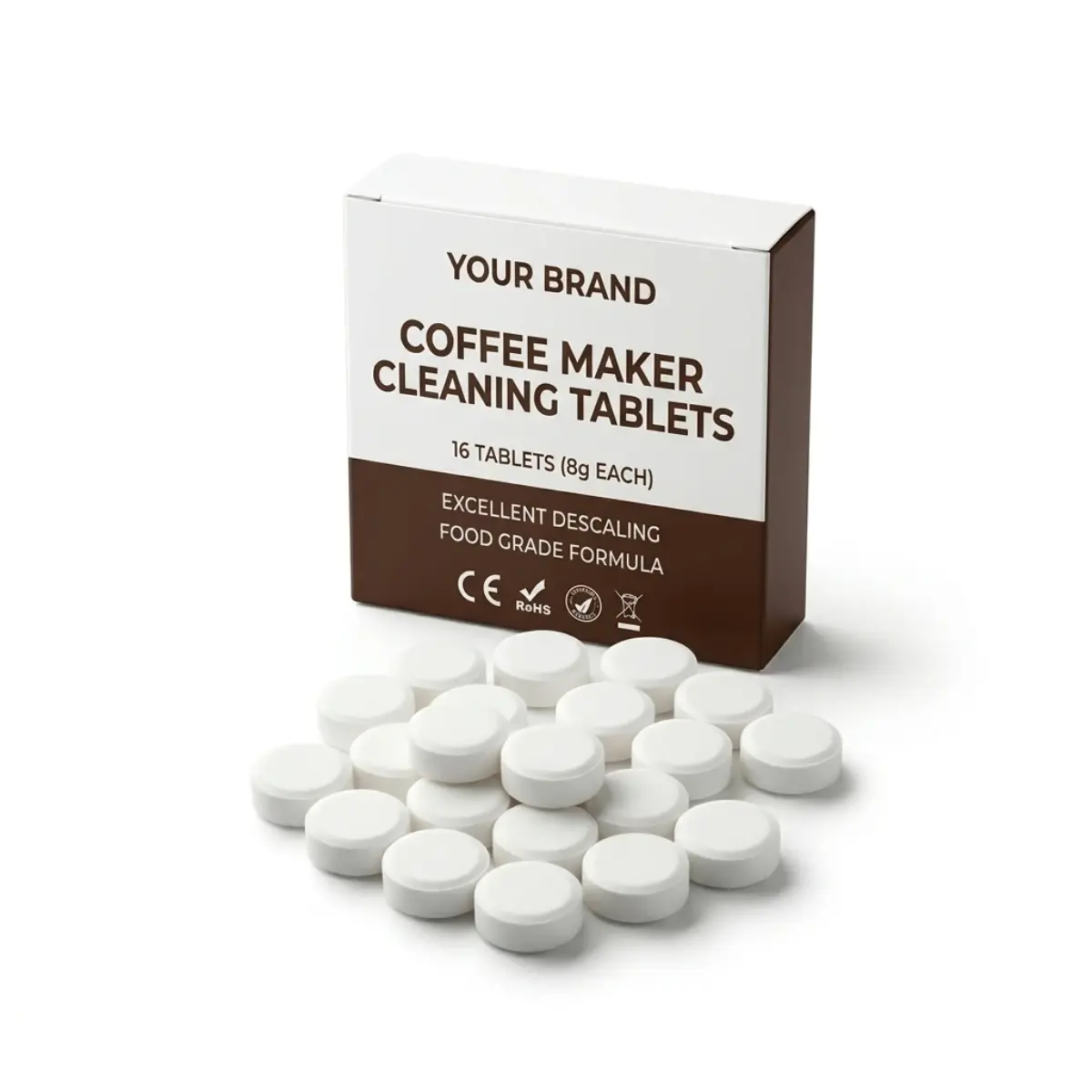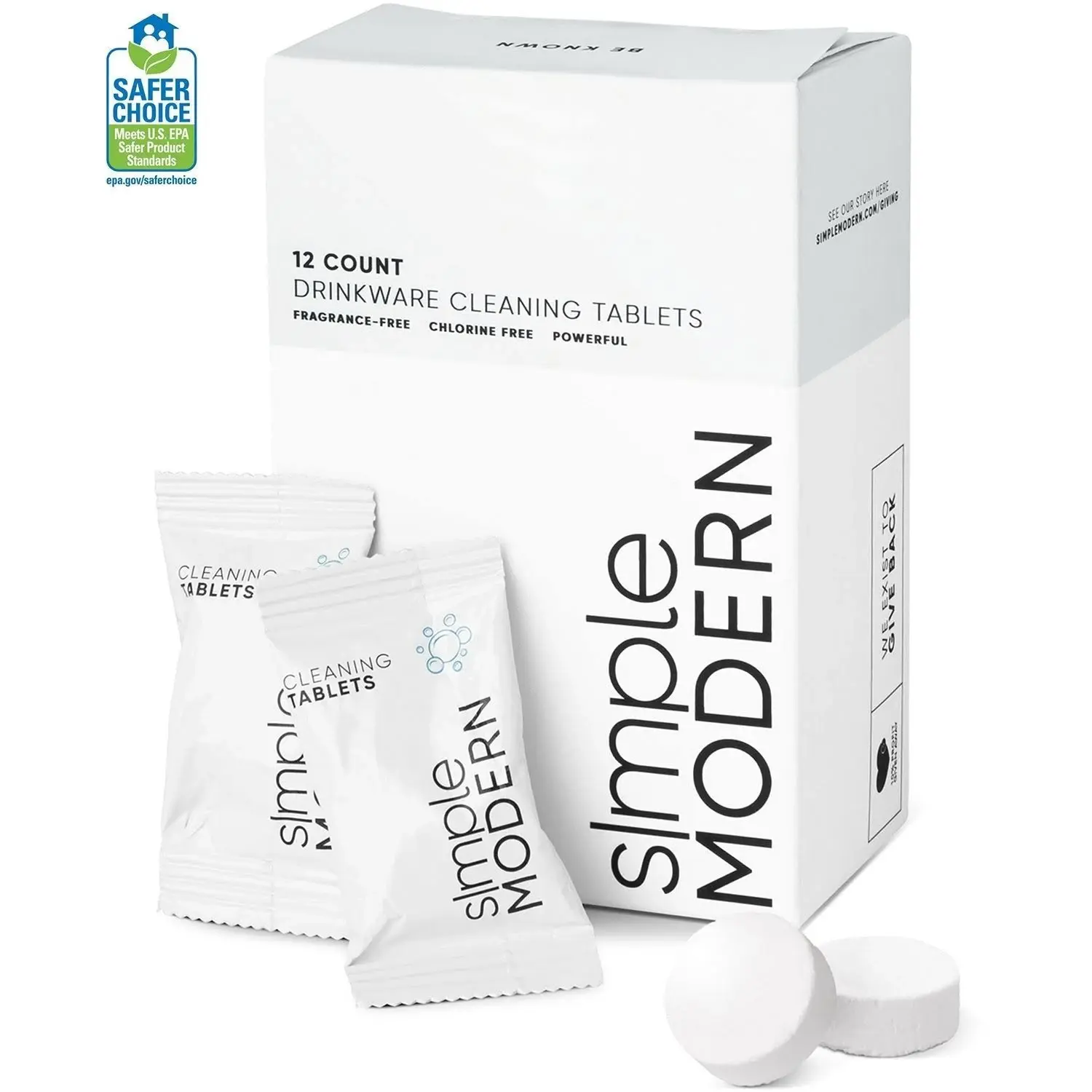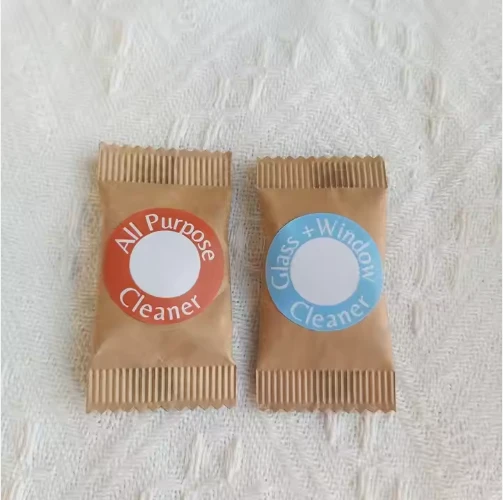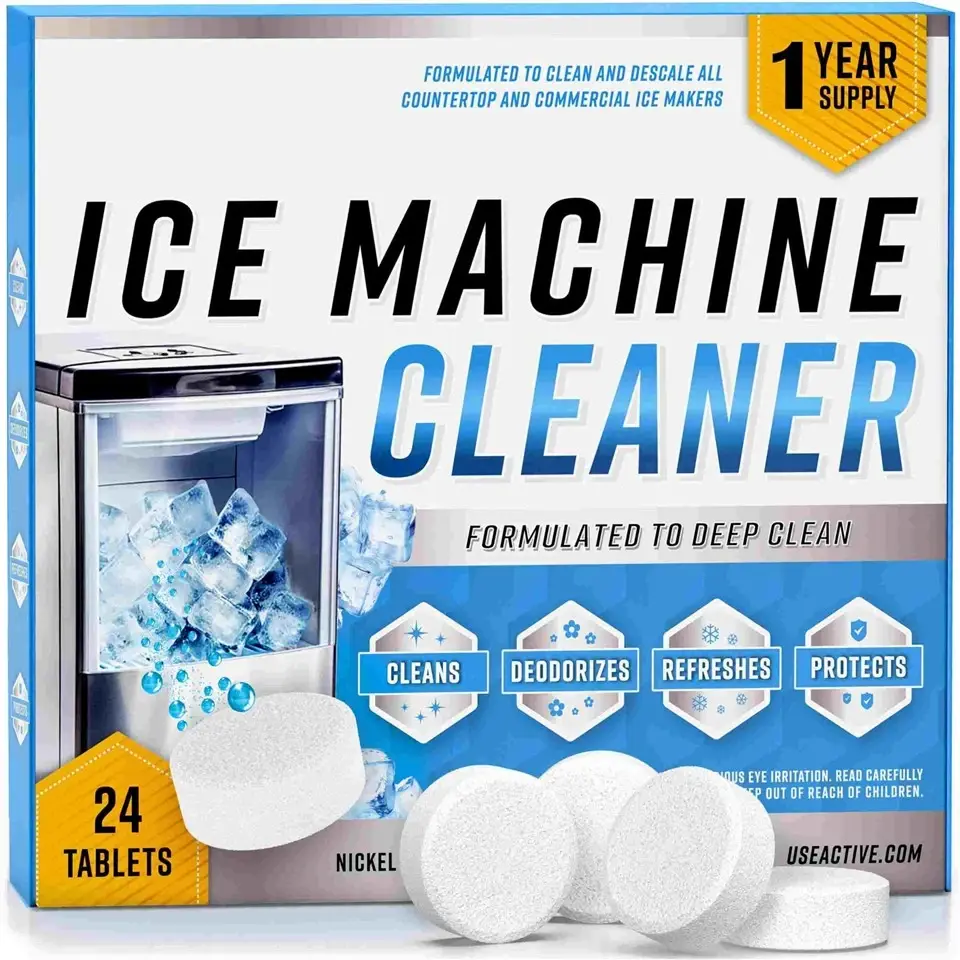

قارن بين تغليف البليستر والأنبوب والكيس لأقراص التنظيف من حيث الحماية من الرطوبة، والتكلفة، والجرعات، وجاذبية العرض على الرف، وقابلية إعادة التدوير الصديقة للبيئة.
مقارنة عملية بين الصيغ الثلاثة الأكثر شيوعًا لأقراص التنظيف الفوّارة وأقراص غسالات الصحون والأقراص متعددة الأسطح — بناءً على الحماية، والتكلفة، وسرعة الخط، وجاذبية العرض على الرف، وقابلية إعادة التدوير.
الجواب المختصر (قبل أن تتابع القراءة)
إذا قرأت ثلاث جمل فقط: فإن العبوة الفقاعية هي الأفضل للنظافة الممتازة ذات الجرعة الواحدة وللجرعات التي لا تحتمل الخطأ، والأنبوب هو الأفضل للأقراص الفوّارة الحساسة للرطوبة وللقيمة عند الشراء بكميات كبيرة، أما الكيس فهو الأفضل من حيث أقل تكلفة وأوضح قصة استدامة. ولا يعد أيٌّ منها «الأفضل» بشكل مطلق. فالخيار الصحيح تحدده كيمياء القرص لديك وقناة البيع الخاصة بك — وهذا بالضبط ما توضحّه المعايير أدناه.
لماذا يحدد شكل العبوة أكثر مما تتوقع
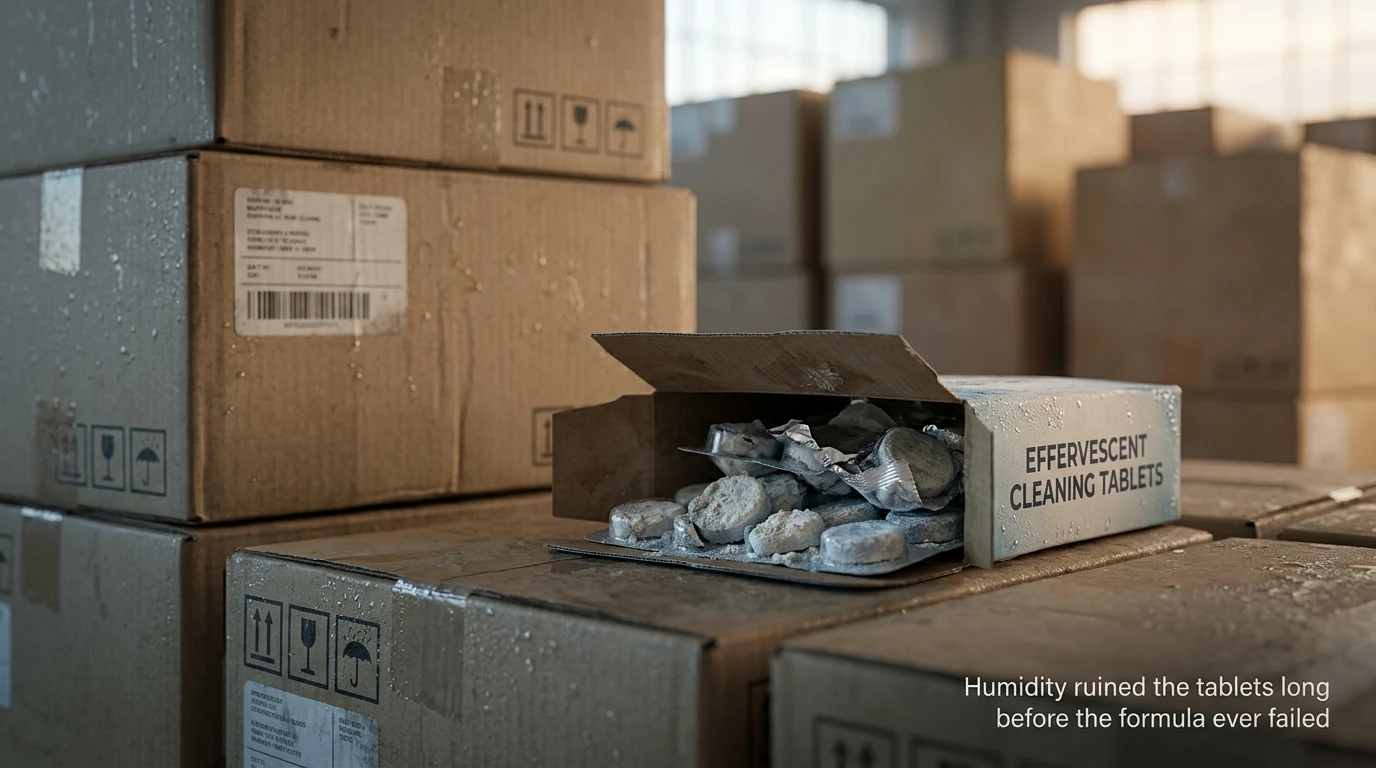
أرسلت علامة تجارية يومًا منظفًا فوّارًا للأسطح بتركيبة ممتازة داخل كيس قابل لإعادة الإغلاق، وبحلول الوقت الذي وصلت فيه الشحنات إلى مستودع ساحلي رطب، كانت نصف الأقراص قد انتفخت وتحولت إلى كتل طباشيرية فقدت نصف فورانها. كانت التركيبة سليمة. لكن العبوة أخفقت. وهذه هي المشكلة: فعلى ورقة المواصفات، تبدو العبوة مجرد بند تكلفة، لكن في الواقع هي التي تتحكم في مدة الصلاحية، ودقة الجرعة، والانطباع الكامل عند فتح المنتج الذي يتكوّن لدى المشتري خلال ثانيتين.
اعتبر الغلاف حاجزًا كيميائيًا أخيرًا يحيط بمنتج تفاعلي، لا مجرد عنصر للزينة. فإذا أخطأت في اختياره، ارتفعت المرتجعات، وساءت المراجعات، ومات منتج جيد بهدوء.
الكيمياء التي تقود القرار
الرطوبة هي العدو، لا جدال في ذلك. تمزج القواعد الفوّارة بين بيكربونات الصوديوم وحمض الستريك أو حمض الأديبيك، وما إن ترتفع الرطوبة المحيطة إلى ما يزيد قليلًا على 40% RH حتى يبدأ هذا المزيج بالتفاعل مبكرًا — مطلقًا CO₂، ومُليّنًا القرص، ومُفسدًا الفوران الذي تبيعه. وتضيف أقراص الغسيل وغسل الصحون ضعفًا آخر: فالإنزيمات والمواد الخافضة للتوتر السطحي تتحلل مع تسرب الماء، ما يؤدي إلى تراجع الأداء التنظيفي قبل وقت طويل من ظهور أي تلف واضح على القرص.
ولهذا السبب يجب أن يبدأ الحديث عن الشكل دائمًا بالتركيبة. فالتغليف يتبع الكيمياء، وليس العكس أبدًا.
كيف أقيم الأشكال الثلاثة: معايير التقييم
قبل أن نمنح أي درجة، إليك المنظور المعتمد. ستة معايير، ولكل واحد سبب واحد:
- حاجز الرطوبة/الأكسجين — العامل الأكبر تأثيرًا على مدة صلاحية الأقراص التفاعلية.
- دقة الجرعة — سواء كانت العبوة نفسها تفرض استخدام قرص واحد في كل مرة أو تترك ذلك للعميل.
- تكلفة الوحدة وخط الإنتاج — تكلفة المادة بالإضافة إلى التعبئة لكل قرص، وهو ما تتحدد عنده الأرباح أو الخسائر.
- سرعة وتعقيد خط التعبئة — الإنتاجية ووقت التبديل على خط آلي.
- الحضور على الرف — كيف يبدو هذا الشكل في المتجر وعلى صفحة المنتج.
- قابلية إعادة التدوير — مصير المنتج الفعلي في نهاية العمر، لا الادعاء النظري.
الشكل 1: عبوات البليستر — المعيار للجرعة الواحدة
كيف تحمي عبوات البليستر القرص
تسود بنيتان. توفر عبوات البليستر المصنوعة من الألومنيوم-الألومنيوم بالتشكيل البارد حاجزًا شبه كامل ضد الرطوبة والأكسجين لأنه لا توجد نافذة بلاستيكية يمكن للبخار أن يتسرب عبرها. أما التشكيل الحراري من PVC/PVDC فيعمل بسرعة أكبر وتكلفته أقل، لكن أداء الحاجز يعتمد بدرجة كبيرة على وزن طلاء PVDC. وفي كلتا الحالتين، السمة الحاسمة هي عزل كل تجويف على حدة: إذ يستقر كل قرص في جيب محكم الإغلاق خاص به، بحيث لا يؤدي تلف خلية واحدة إلى إفساد بقية الدفعة. كما أن دليل العبث مدمج بالفعل.
المزايا والعيوب لأقراص التنظيف المعبأة في بليستر
تتفوق عبوات البليستر حيث تكون الدقة مهمة. فالحاجز هو الأفضل بين الأنواع الثلاثة، والجرعات محددة بدقة دون احتمال للخطأ، كما أن الإحساس الفاخر ينعكس مباشرة على القيمة المتصورة. ومع ذلك، فإن مقايضات هذا الشكل حقيقية — وهنا يصبح الحديث عن مزايا وعيوب أقراص التنظيف في عبوات البليستر صريحًا.
- المزايا: حاجز من الفئة الأولى، تحكم دقيق في الكمية، دليل على العبث، وجاذبية قوية على الرف وفي السياقات الطبية.
- العيوب: أعلى تكلفة للمواد، أوقات أطول لتبديل الخطوط، وقابلية ضعيفة لإعادة التدوير — فالمادة المركبة من الألومنيوم والبلاستيك في معظم أشكال عبوات البليستر للأقراص الفوارة تمثل تحديًا كبيرًا لتيارات النفايات البلدية.
الأفضل لـ
التموضع المتميز والسريري أو المرتكز على النظافة، وصيغ السفر، والمنتجات الفوارة الحساسة للرطوبة حيث تكون خسارة قرص واحد أمرًا غير مقبول فعلًا.
الصيغة 2: موزعات الأنابيب — عامل العمل للكميات الكبيرة
ميزة الأنبوب المقاومة للرطوبة
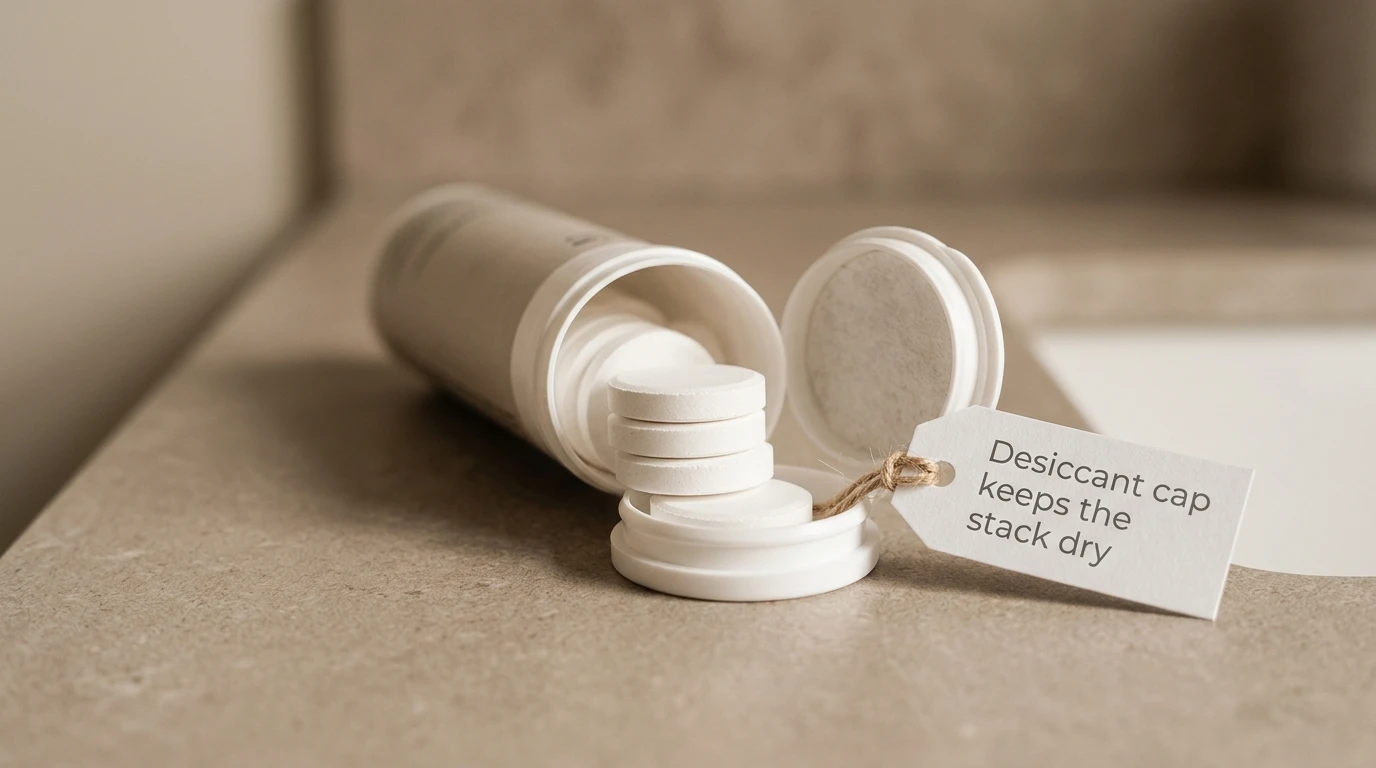
تكمن أفضلية الأنبوب مقارنةً بالكيس في ما يحدث بعد الفتح الأول. فغطاء مبطن بمادة مجفِّفة وإغلاق محكم بنقرة يحافظان على المجموعة المتبقية جافة خلال أسابيع من الاستخدام اليومي، بينما يفقد الكيس المعاد إغلاقه قدرته تدريجيًا. بالنسبة إلى العميل الذي يستهلك 40 قرصًا فوارًا على مدى شهرين، فإن سلامة إعادة الإغلاق هي الفارق بين آخر قرص طازج وآخر تالف. وهذه هي الفكرة الأساسية في طرح فوائد تغليف أقراص التنظيف في الأنبوب.
الإيجابيات والسلبيات لتغليف الأنابيب
موزع الأنبوب المقاوم للرطوبة مناسب لإعادة التعبئة ويؤمّن حاجزًا قويًا ما دام مغلقًا، كما أن اقتصادياته عند التعبئة بالجملة تتفوق بسهولة على العبوات الشريطية عند أحجام الإنتاج الكبيرة. أما التحديات فهي مادية وسلوكية.
- الإيجابيات: قابل لإعادة الاستخدام وإعادة التعبئة، حاجز موثوق عند الإغلاق، تكلفة جيدة لكل قرص عند 30–100 وحدة.
- السلبيات: حجم شحن أكبر، كمية أكبر من البلاستيك الصلب لكل وحدة حسب الوزن، وجرعات تعتمد على عدّ المستخدم بشكل صحيح.
الأفضل لـ
الأقراص الفوارة متعددة الأسطح وأقراص المسابح/السبا، ونماذج الاشتراك في إعادة التعبئة، والعبوات الاقتصادية ضمن نطاق 30–100 وحدة.
الصيغة 3: الأكياس — خيار التكلفة والاستدامة
أين تناسب عبوات الأكياس القابلة للتحلل الحيوي
توفر الأكياس القائمة، والأغشية أحادية المادة القابلة لإعادة التدوير، والرقائق القابلة للتحلل الناشئة أدنى تكلفة للمواد والشحن لكل قرص بفارق كبير. عندما تعتمد قصة العلامة التجارية على غلاف أقراص قابل لإعادة التدوير أو عبوات الأكياس القابلة للتحلل الحيوي، فإن هذا التنسيق ينقل الرسالة بشكل أفضل من أي عبوة صلبة. كما أنه يمنح مرونة على الرف — يمكنك تضمين الكثير من وحدات حفظ المخزون والكميات في نفس المساحة.
الإيجابيات والسلبيات لعبوات الأكياس
في الجدل بين كيس أقراص التنظيف والعبوة الفقاعية، يكون الكيس هو خيار التكلفة والاستدامة — مع تحفظات تتعلق بالحاجز لا يمكن تجاهلها.
- الإيجابيات: الأرخص والأخف وزنًا، أفضل في إيصال رسائل الاستدامة، ومرن من حيث مساحة الرف والتجهيز والتنفيذ.
- السلبيات: حاجز إعادة الإغلاق أضعف، واحتمال التعرض للسحق أثناء النقل، والجرعة تعتمد بالكامل على المستخدم.
الأفضل لـ
العلامات التجارية المباشرة إلى المستهلك ذات التوجه البيئي، والأقراص المغلفة أو الأقل حساسية للرطوبة التي تتحمل حاجزًا أكثر ليونة، ووحدات حفظ المخزون عالية الحجم والقيمة التي تستهدف سردية عبوات إعادة التعبئة المستدامة.
جدول مقارنة مباشر
| المعايير | العبوة الفقاعية | الأنبوب | كيس |
|---|---|---|---|
| حاجز للرطوبة | عالٍ | عالٍ (محكم الإغلاق) | معتدل |
| دقة الجرعات | عالٍ | منخفض–متوسط | منخفض |
| التكلفة لكل وحدة | عالٍ | متوسط | منخفض |
| سرعة الخط | أبطأ | متوسط | سريع |
| جاذبية على الرف | ممتاز | وظيفي | مرن |
| قابلية إعادة التدوير | ضعيف | متوسط | الأفضل |
| النطاق النموذجي للتكلفة/الوحدة | $0.12–0.25 | $0.06–0.14 | $0.02–0.07 |
تفصيل التكلفة: ما التكلفة الفعلية لكل وحدة لكل صيغة
تضع الأرقام النموذجية في هذا القطاع تكلفة التعبئة والتغليف عند المستويات التالية. يُرجى التعامل معها كمؤشرات إرشادية — إذ إن وزن الطلاء، وحجم الطلبية، ومواصفات الفيلم تؤثر فيها بسرعة.
| الصيغة | تكلفة التعبئة والتغليف/قرص | الحد الأدنى العملي للطلب | حجم الشحن النسبي |
|---|---|---|---|
| شريط فقاعي من الألومنيوم بالتشكيل البارد | $0.14–0.25 | 10,000+ | منخفض–متوسط |
| عبوة فقاعية من PVC/PVDC بالتشكيل الحراري | $0.10–0.18 | 10,000+ | منخفض |
| أنبوب + غطاء مجفف | $0.06–0.14 | 5,000+ | مرتفع |
| كيس قائم (مادة أحادية) | $0.02–0.07 | 3,000+ | منخفض جدًا |
المتغير الخفي هو الأدوات. يتحمل التشكيل الحراري وإحكام إغلاق العبوات الفقاعية نفقات رأسمالية وتبديلات أبطأ، لذا تتعرض الدفعات القصيرة للعقوبة — ولا يحقق حساب التكلفة لكل وحدة جدواه مع العبوات الفقاعية إلا على نطاق واسع. أما الأكياس، فعلى النقيض، فتوزع تكلفة الأدوات الخفيفة على دفعات صغيرة، ولهذا تميل العلامات التجارية الأصغر إلى اعتمادها مبكرًا حتى عندما يكون الأنبوب أكثر ملاءمة لحماية المنتج.
الاستدامة والتدقيق في الالتزام
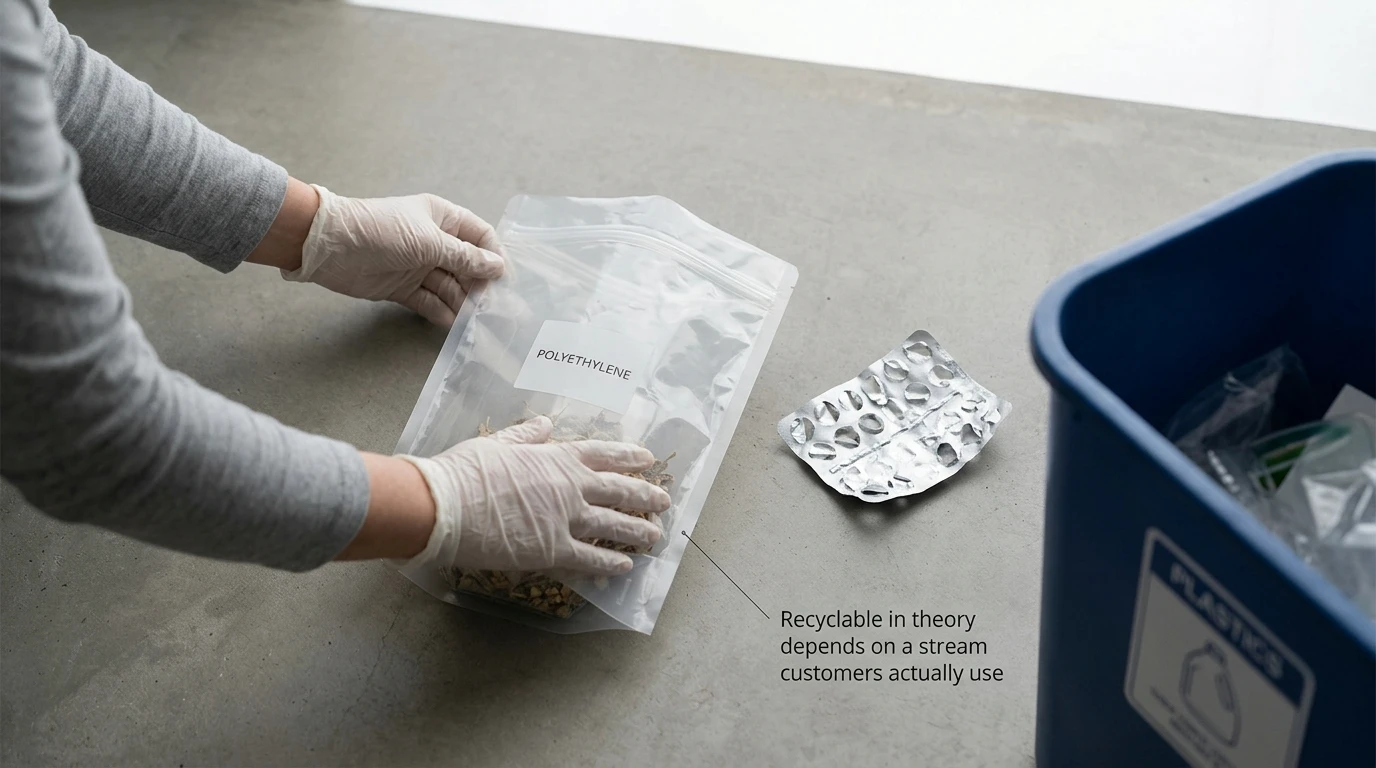
هنا يجب التوقف عن الترويج المبالغ فيه. الكيس أحادي المادة قابل لإعادة التدوير نظريًا، لكن معظم مسارات الجمع المنزلية البلدية لا تقبل الأفلام المرنة — ويعتمد الاسترجاع على برامج الإيداع في المتاجر التي لا يستخدمها كثير من العملاء أبدًا. كما أن شرائط التغليف المصنوعة من الألمنيوم قابلة لإعادة التدوير تقنيًا أيضًا، لكن الطبقة المركبة من البلاستيك والألمنيوم نادرًا ما يتم فصلها عمليًا، لذلك تبقى معدلات الاسترجاع الفعلية منخفضة.
اللوائح تزداد تشددًا. نظام الاتحاد الأوروبي للعبوات ونفايات العبوات يفرض متطلبات لإعادة التدوير والمحتوى المعاد تدويره، ما سيضغط بشدة على الطبقات المركبة المختلطة. إذا كنتم تبيعون في أوروبا، فإن عبارة "قابل لإعادة التدوير نظريًا" لن تصمد أمام التدقيق — صمموا وفقًا لمسار الجمع الموجود فعليًا، وكونوا صرحاء في ادعاءاتكم على العبوة.
الخلاصة: مواءمة الشكل مع المنتج والقناة
لا مجال للتردد. ابدؤوا بالتصنيف حسب التركيبة أولًا، ثم حسب الفئة السعرية والهدف الاستدامي:
فوار خام عالي الامتصاص للرطوبة → شريط تغليف. عندما تكون خسارة قرص واحد غير مقبولة وتركزون على الفئة الممتازة أو السريرية، ادفعوا مقابل الحاجز.
فوار متوسط الحساسية بكميات كبيرة أو عبر الاشتراك → أنبوب. أفضل توازن بين الحماية، واقتصاديات إعادة التعبئة، ونضارة الاستخدام المتكرر.
قرص مغلف أو مستقر، مدفوع بالتكلفة أو الاستدامة → كيس. أقل تكلفة، وأخف شحنًا، وأقوى رسالة استدامة — بشرط أن تتوافق التركيبة ومسار إعادة التدوير المحلي.
عند مواءمة الغلاف مع المنتج والقناة، تتوقف العبوة عن كونها تسوية وتبدأ في أن تصبح ميزة تنافسية.
الخطوة التالية
لستم متأكدين من تصنيف الحاجز الذي تتطلبه تركيبتكم فعليًا؟ أرسلوا لنا كيمياء الأقراص والقناة المستهدفة، وسنزوّدكم بمقارنة لمواصفات الحاجز وتكلفة الوحدة عبر الأشكال الثلاثة جميعًا — بالإضافة إلى قائمة تحقق لاختيار الشكل يمكنكم استخدامها مع وحدات SKU الخاصة بكم. اضبطوا العبوة بشكل صحيح قبل أن تكلفكم دفعة إنتاج.
الأسئلة الشائعة
س: أي نوع من التغليف يحافظ على أقراص التنظيف طازجة لأطول فترة؟
ج: التغليف الفقاعي المصنوع من الألومنيوم بالتشكيل البارد والأنبوب المبطن بمادة مجففة يتصدران هنا. يعزل التغليف الفقاعي كل قرص داخل تجويف محكم الإغلاق، بينما يحافظ الأنبوب على جفاف الكمية المتبقية بعد الفتح الأول. وكلاهما يتفوقان بوضوح على الكيس المُعاد إغلاقه عندما يتعلق الأمر بالمنتجات الفوارة الحساسة للرطوبة.
س: هل تكون أقراص التنظيف المعبأة في أكياس أقل حماية من الرطوبة؟
ج: نعم، خاصة بعد الفتح الأول — إذ يتدهور ختم الإغلاق القابل للإعادة في معظم الأكياس مع تكرار الاستخدام. الأقراص المغلفة أو الأقل استرطابًا تتحمل ذلك جيدًا، لكن القواعد الفوارة الخام في المناخ الرطب ستتأثر سلبًا.
س: ما أرخص نوع تغليف لأقراص التنظيف عند الإنتاج بكميات كبيرة؟
ج: الأكياس، وبشكل واضح. عند الأحجام الكبيرة، يبلغ سعر الكيس القائم أحادي المادة حوالي $0.02–0.07 لكل قرص، بما في ذلك أقل حجم شحن بين الأنواع الثلاثة، مما يجعله أفضل تغليف لأقراص التنظيف عندما تكون التكلفة هي الأولوية ويمكن للتركيبة تحمّله.
س: أي صيغة هي الأكثر صداقة للبيئة؟
ج: تحقق الأكياس أحادية المادة أفضل نتائج على الورق من حيث تغليف أقراص التنظيف الصديق للبيئة، ولكن فقط إذا كانت هناك بالفعل منظومة فعّالة لإعادة التدوير أو التسميد لدى العميل. أما الأنابيب فهي قابلة لإعادة الاستخدام وإعادة التعبئة، وقد تتفوق على كيس "قابل لإعادة التدوير" لا تتم إعادة تدويره فعليًا أبدًا.
س: هل يمكنني تغيير صيغة التغليف دون إعادة تركيب القرص؟
ج: أحيانًا. إذا كانت قدرة القرص على تحمّل الرطوبة تقع بالفعل ضمن تصنيف الحاجز الخاص بالصيغة المستهدفة، فيمكنك الانتقال بسلاسة. أما الانتقال من التغليف الفقاعي إلى الكيس فعادةً ما يتطلب إضافة طبقة واقية أو مادة مجففة للحفاظ على مدة الصلاحية — اختبر عتبات الحاجز قبل الالتزام.