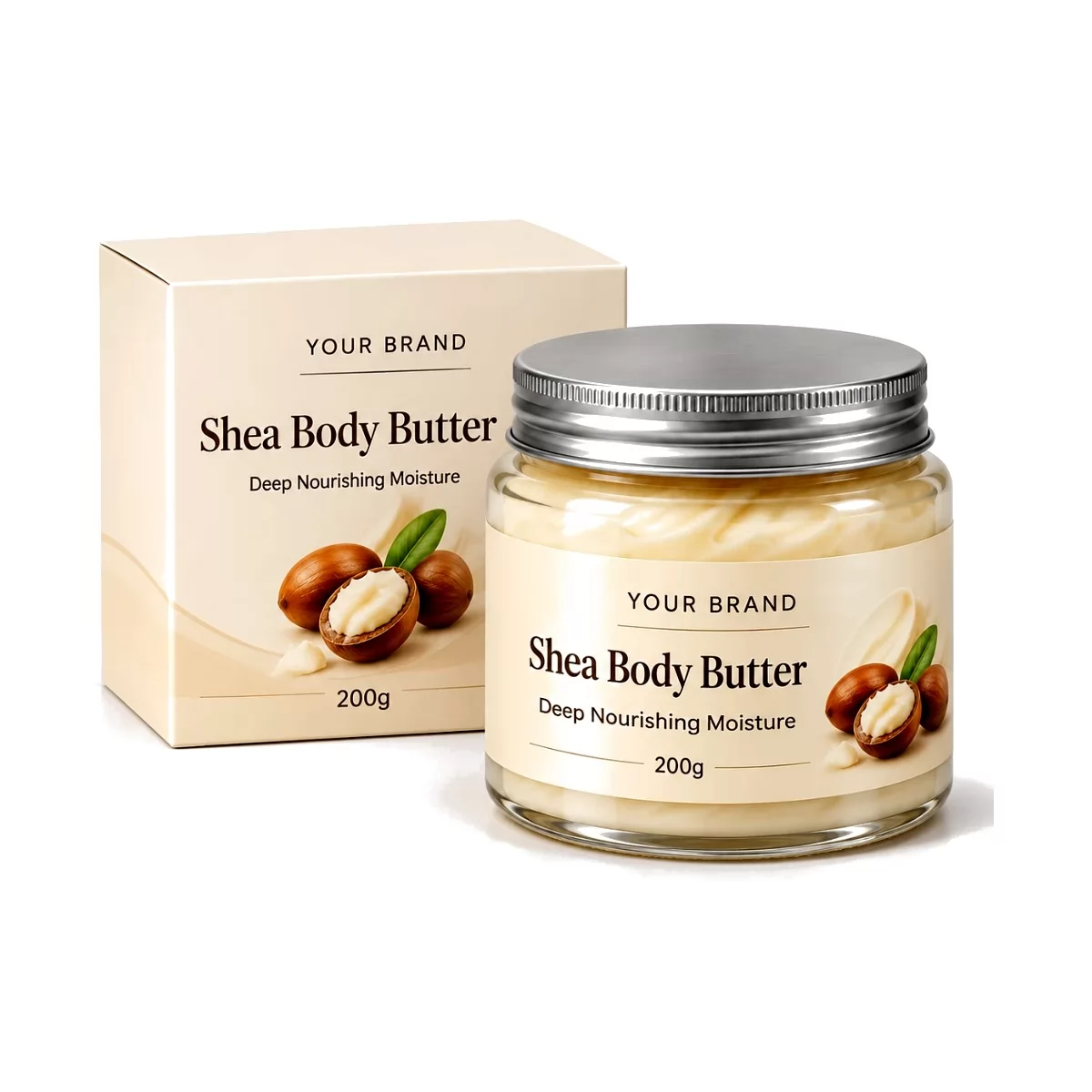

"Just rub it in after the shower" is the line on half the leaflets in the category, and it skips the things that change the result: how wet the skin is, how much product, how dense the butter is, and whether the user lives somewhere humid or somewhere with heating on all winter. If your directions end up on a jar, an insert or a product page, they decide whether a customer says "rich" or "greasy". Here is how to use body butter, written so you can adapt it for your own pack.
The short version: apply a small amount to damp skin, right after drying off
Body butter works best when a small scoop is warmed in the hands and spread over skin that is still slightly damp from the shower. Towel off first, so no water is dripping. Use less than you think you need, then add more only to dry areas.
The five-step routine in order
- Pat the skin mostly dry. Leave a trace of moisture, but no drips, because pooled water makes the butter slide and feel slick.
- Scoop a small amount. Think a hazelnut-sized portion per limb to start, since a dense butter spreads further than a lotion.
- Warm it between your palms. Body heat softens the butter so it spreads evenly instead of dragging or leaving clumps.
- Spread in long, slow strokes. Work from the lower legs upward and from the arms inward, and press a little extra onto dry spots.
- Wait a few minutes before dressing. The surface needs time to settle, or the product transfers to fabric.
Why damp skin and a small amount work
Body butter is a rich, oil- and wax-based moisturizer, usually built on plant butters such as shea or cocoa, that sits on the skin surface. In general terms, an oil-rich layer like this slows the evaporation of water from the skin, which is why it is commonly applied while the skin still carries some moisture.
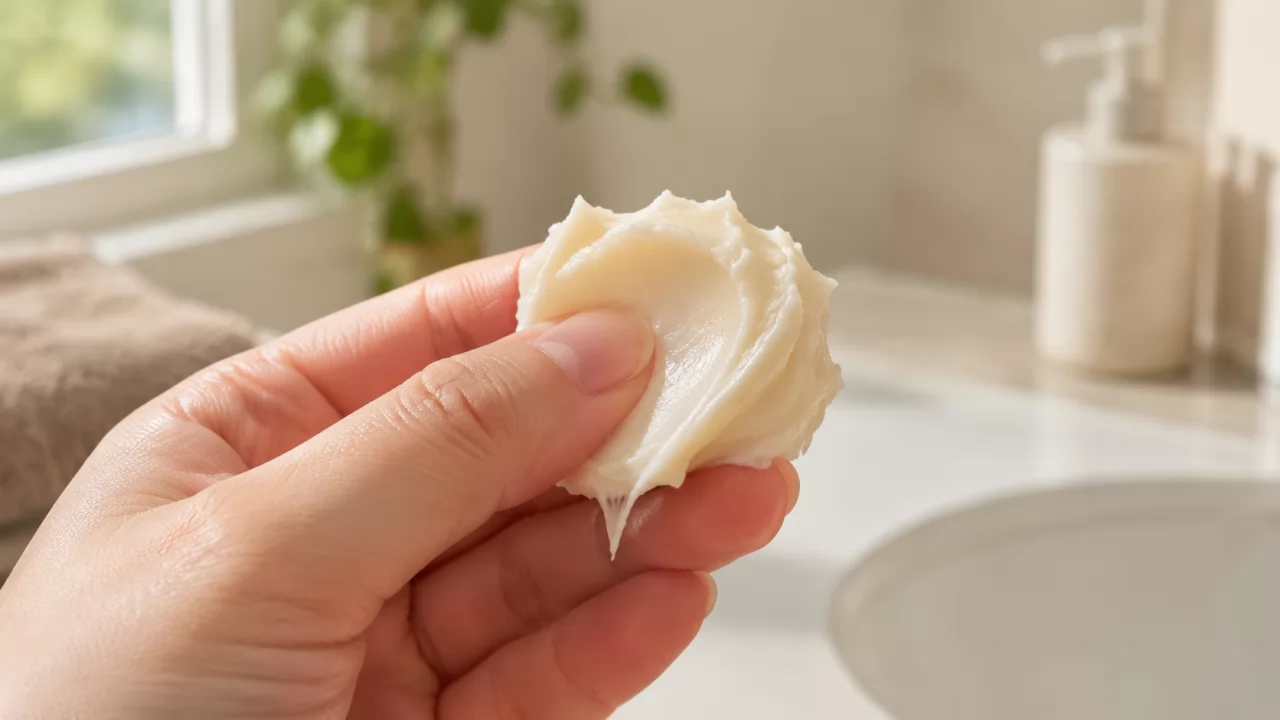
The amount matters because the texture is dense. A thick layer does not absorb faster; it just stays on the surface longer. Most complaints about heaviness trace back to quantity, not to the formula itself.
A note on patch testing and fragrance
First-time users should try a small amount on a limited area, such as the inner forearm, and wait before using it on the whole body. Stop using the product if redness, itching or irritation appears. Directions should never promise that a butter suits sensitive skin unless you hold test reports that support that exact formula.
Fragrance and essential oils are the usual suspects when a reaction does occur. That is a good reason to list the ingredients clearly in INCI (International Nomenclature of Cosmetic Ingredients) names, so users and professionals can check them.
How to apply body butter after a shower, and when timing matters
The best time to apply body butter is within a few minutes of leaving the shower, while the skin is still slightly damp. That is common practice, not a rule with a fixed clock. The point is to apply before the skin dries out completely and the surface feels tight.
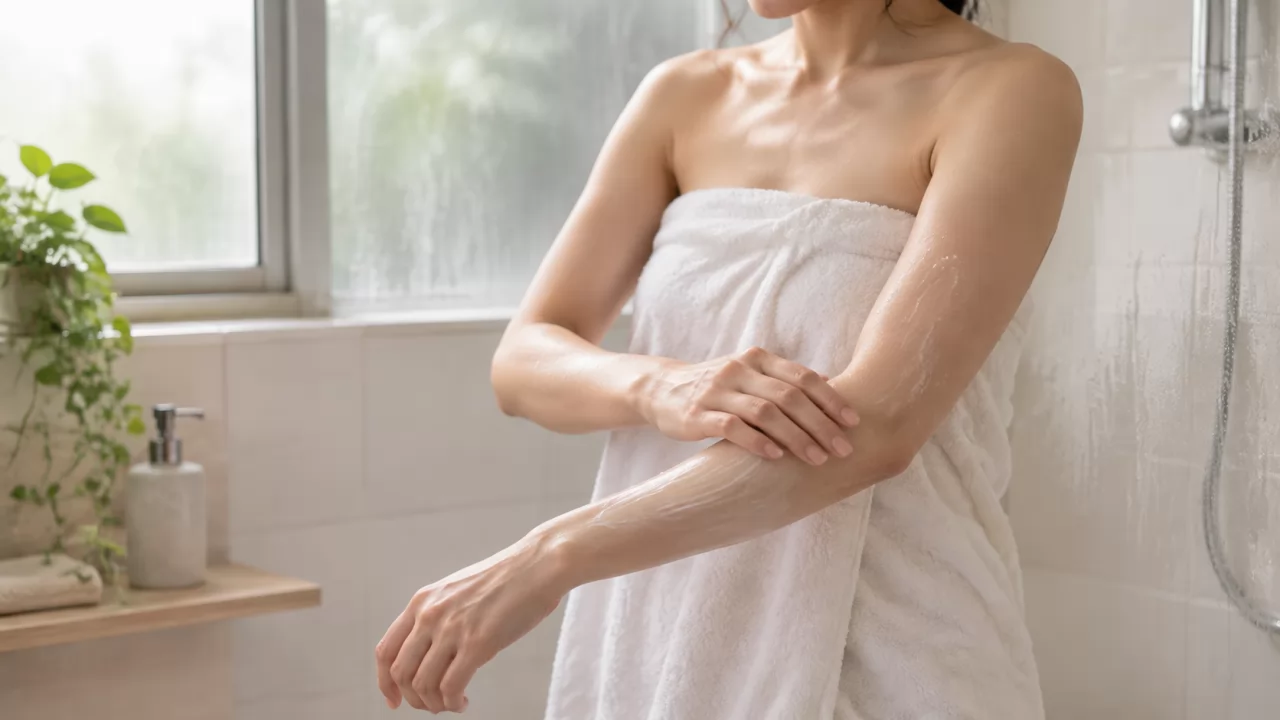
Shower temperature plays a part. Very hot water tends to leave skin feeling drier, so many routines suggest warm, not hot. Drying method matters too: rubbing hard with a towel strips the damp film you want to keep. Patting is gentler.
Morning or evening? Both work. Evening suits people who do not mind a slightly greasy feel while they relax, and morning suits those who need a short settling time before clothes. If your product is rich, evening directions are often the safer default on pack.
Right after the shower versus later in the day
The two moments suit different habits. The table compares them in practical terms.
| Factor | Right after the shower | Later in the day |
|---|---|---|
| Skin state | Slightly damp | Dry |
| Spreading | Easier, glides | Needs more warming |
| Amount needed | Usually less | Usually a bit more |
| Feel on skin | Softer, can feel slick | Can feel drier at first |
| Best for | Daily routine | Touch-ups on dry spots |
For most users, the post-shower window is the main routine, and later applications are spot treatment for rough areas.
Dry skin routines: where to use more and where to use less
Elbows, knees, heels and shins tend to feel driest, so a second pass there makes sense. The torso, upper arms and thighs usually need only a thin layer. Underarms and skin folds generally need very little, if any, because the product can feel heavy and trap warmth.
Keep directions practical: name the areas, skip the promises. "Focus on dry areas such as elbows and heels" is enough. Anything about repairing or treating skin conditions belongs to medical products, not to a cosmetic leaflet.
Body butter vs body lotion: the difference that changes your directions
Body butter is a dense, low-water, oil-rich moisturizer, while body lotion is a lighter emulsion with a higher water content. That difference changes how much a user takes, how long spreading takes and how the skin feels afterward, so the same directions rarely fit both.
| Feature | Body butter | Body lotion |
|---|---|---|
| Texture | Thick, soft solid | Fluid or light cream |
| Water content | Lower | Higher |
| Richness | High | Light to medium |
| Typical amount | Small scoop | Pump or palm-sized squirt |
| Spreading | Needs warming | Spreads straight away |
| Best for | Dry areas, evening use | Everyday, fast dressing |
Lotion suits quick routines; butter suits people who want a richer finish and will give it a minute.
What the formula type means for amount and absorption
A denser texture means each gram covers more skin, so users need less product. It also means more time. A lotion seems to vanish in seconds because much of it is water; a butter leaves an oil layer that takes longer to settle. If your directions say "massage until absorbed" for a rich butter, some users will rub for ten minutes and decide the product is faulty. "Spread thinly and let settle" is closer to the truth.
Five mistakes that make good body butter feel greasy or heavy
Using too much. The most common one. Start with a small scoop and add only where skin still feels dry.
Applying to soaking wet skin. Water and butter do not blend; the product slips and feels slick. Pat dry first and keep only a faint dampness.
Skipping the warm-up. Cold butter drags and spreads unevenly. Rubbing it between the palms for a few seconds fixes that.
Dressing straight away. Tight or light-coloured clothing picks up the product. A few minutes of settling time, or looser clothes on the first use, solves it.
Ignoring a reaction to fragrance. If skin feels itchy or looks red, a strong scent may be the cause. Stop using the product and, if the problem continues, ask a professional.
What brands should check before putting usage directions on pack
Directions are part of the label, and a label is where cosmetic claims get judged. Keep the wording to use and sensation: how to apply, how much, which areas. Avoid therapy language such as healing, treating, relieving or detox, and avoid promises like "safe for sensitive skin" or "hypoallergenic" unless a test report covers that exact formula.
Most packs carry two standard lines: a patch-test suggestion for first use and a "discontinue use if irritation occurs" warning. Label rules differ by market, so check them case by case for the US, the EU, the UK and Gulf countries. Required warnings, language, ingredient order and responsible-person rules are not identical. The INCI list should match the real formula, and general good manufacturing practice, such as the framework in ISO 22716 for cosmetics, supports consistent batches behind those directions.
Directions that differ by format: jar, tub, tube, stick
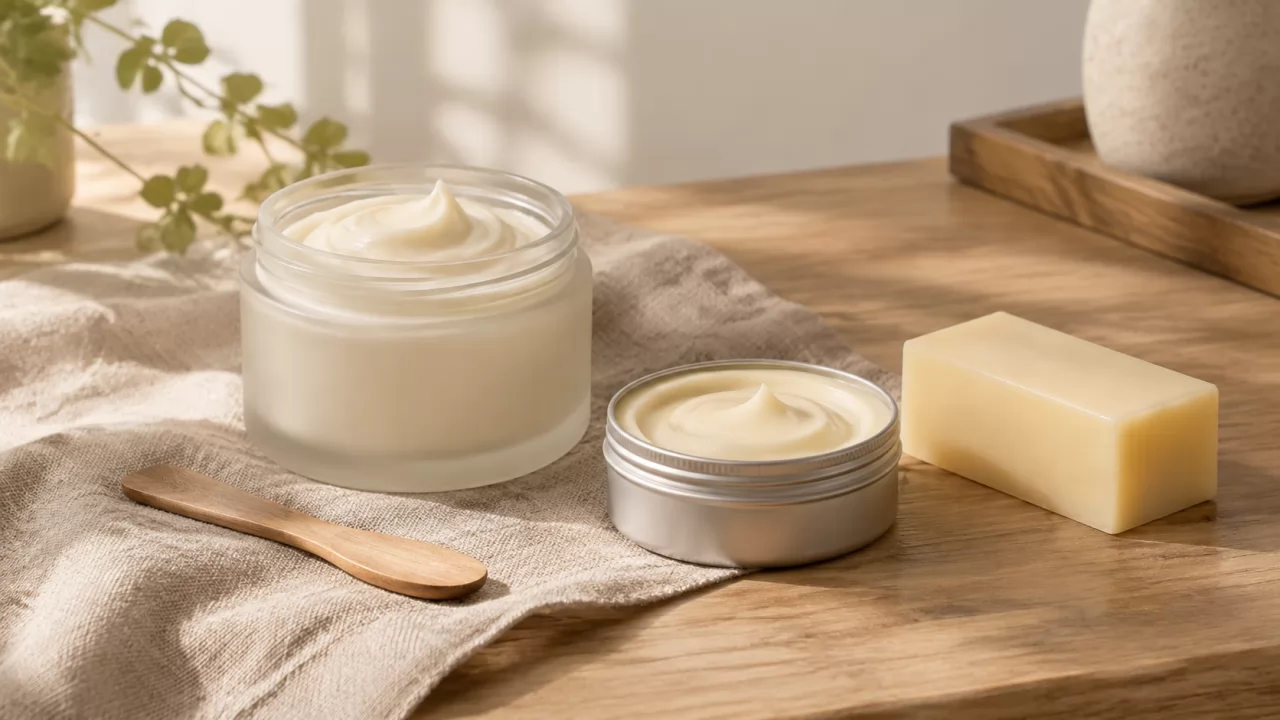
Jars and tubs invite fingers in the product, so a spatula, or a line such as "use a clean, dry scoop", keeps use more hygienic. A pump head controls the amount and suits softer textures; it struggles with very dense butter. Tubes allow a squeeze-and-spread routine and need a note on warming the product. Sticks are applied directly to the skin and then smoothed, so the directions should say to glide lightly, not press. Write the directions after you have chosen the pack, not before.
Briefing a private label body butter manufacturer so the directions match the product
A private label body butter manufacturer can only match your directions to the product if the brief is specific. The skin feel you want, the scent level, the texture, the pack type and the fill weight all affect what the instructions should say. Add the usage lines you plan to print and the market you will sell in, because that decides which warnings and claims are possible.
A vague brief such as "rich but not greasy" produces guesses. A texture reference, like a product you like, gets closer in fewer rounds.
| Step | What happens |
|---|---|
| 1. Discuss customization | Formula, scent, shape, pack, labeling |
| 2. Samples and contract | Samples tested, contract signed, deposit paid |
| 3. Bulk samples | Bulk samples made, packaging designed |
| 4. Mass production | Starts after bulk sample approval |
| 5. Inspection and shipment | Inspection, shipment, then balance payment |
The table shows the order flow Boymay follows; samples are free and the buyer pays freight. Confirm the details for your own product before you plan a launch date.
Next step: send your target market, pack idea and texture preference
To get a sample proposal that fits your directions, send the market you plan to sell in, your estimated quantity, the pack format (jar, tub, tube or stick) and a texture reference product. With those four details, the team can suggest a formula and the usage lines that match it.
FAQ
How much body butter should I use per application?
Start with a small scoop, roughly hazelnut-sized for one limb. Add a little more on very dry areas, and use less if the formula feels rich.
Can body butter go on the face?
Only if it is made and labelled for the face. Facial skin differs from body skin, and a body formula may be too heavy or contain ingredients not meant for that area.
How long should it take to absorb?
It varies. Dense butters usually take longer than lotions, and skin condition, amount and room temperature all play a part. A thin layer settles faster than a thick one.
Should body butter be used every day?
Many people use it daily, others only in colder months or on dry areas. Frequency depends on the person and the climate. Anyone with persistent skin problems should ask a doctor or pharmacist, not rely on a cosmetic.