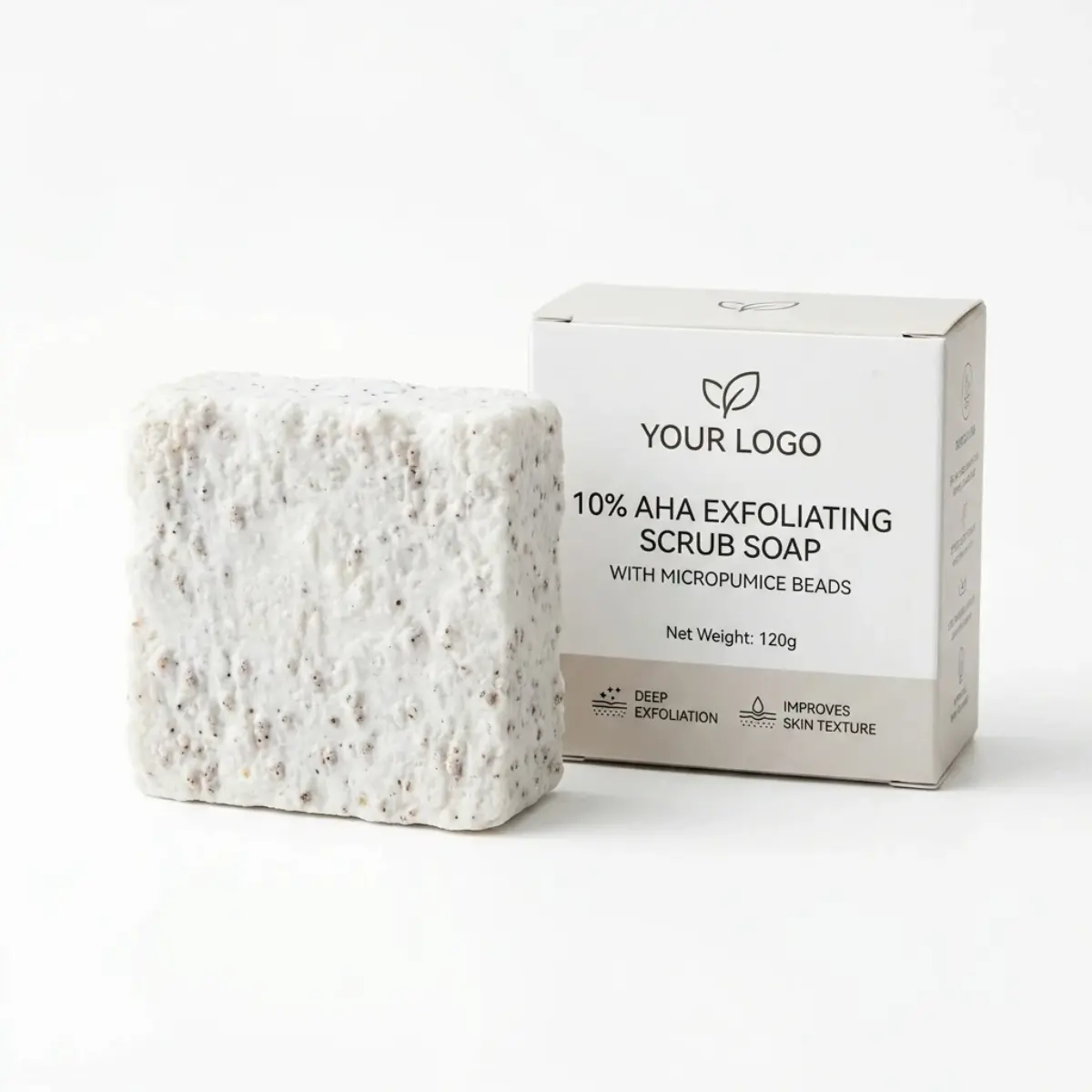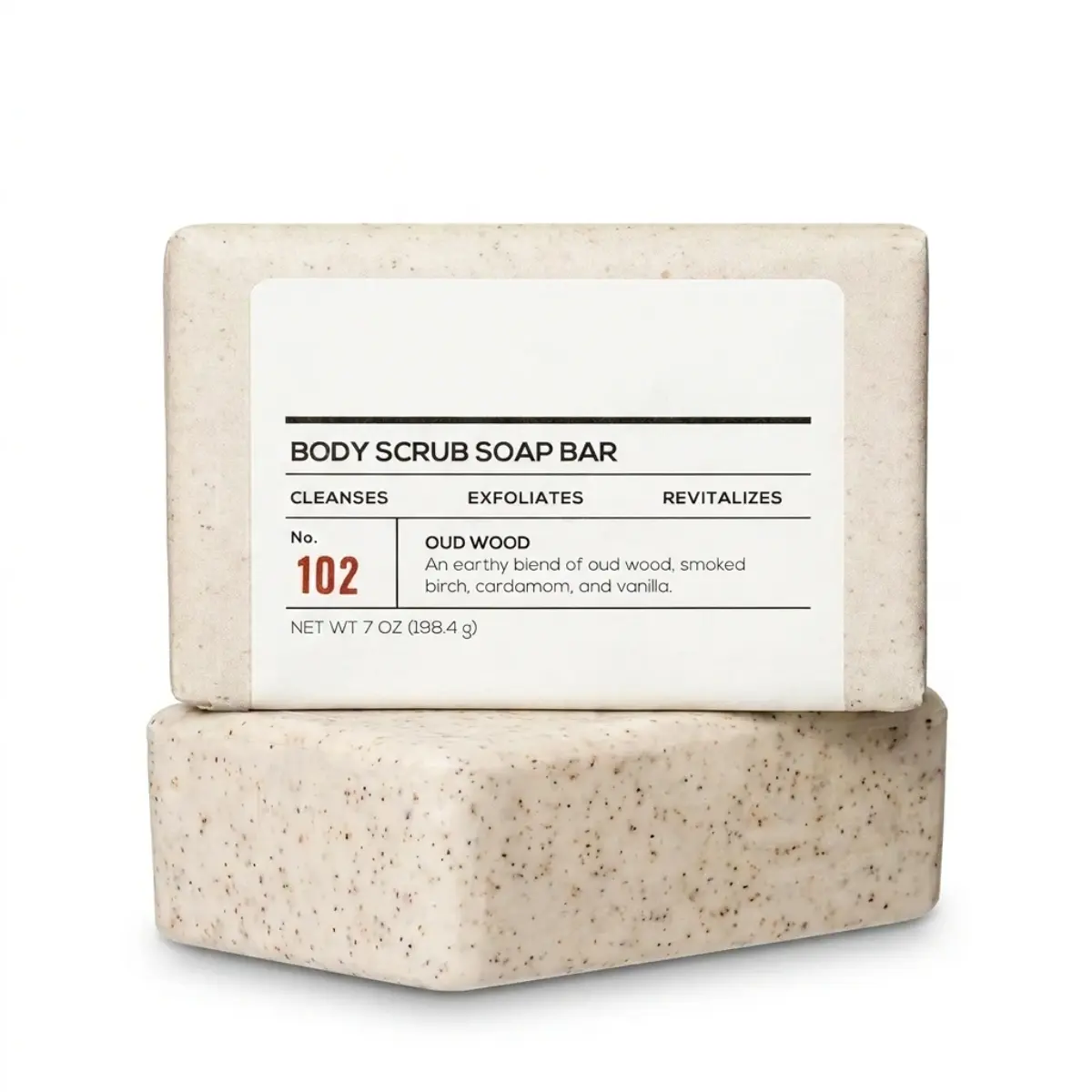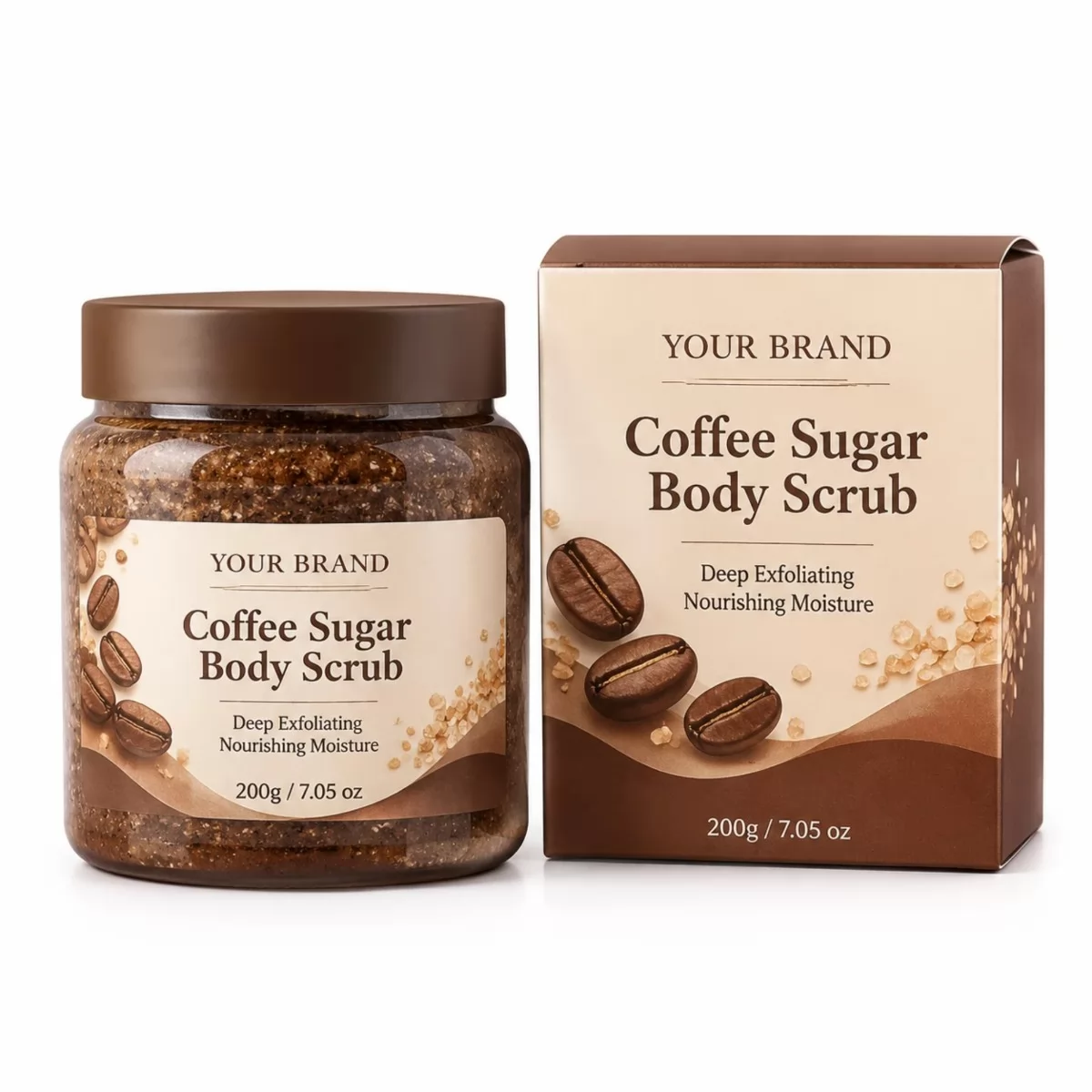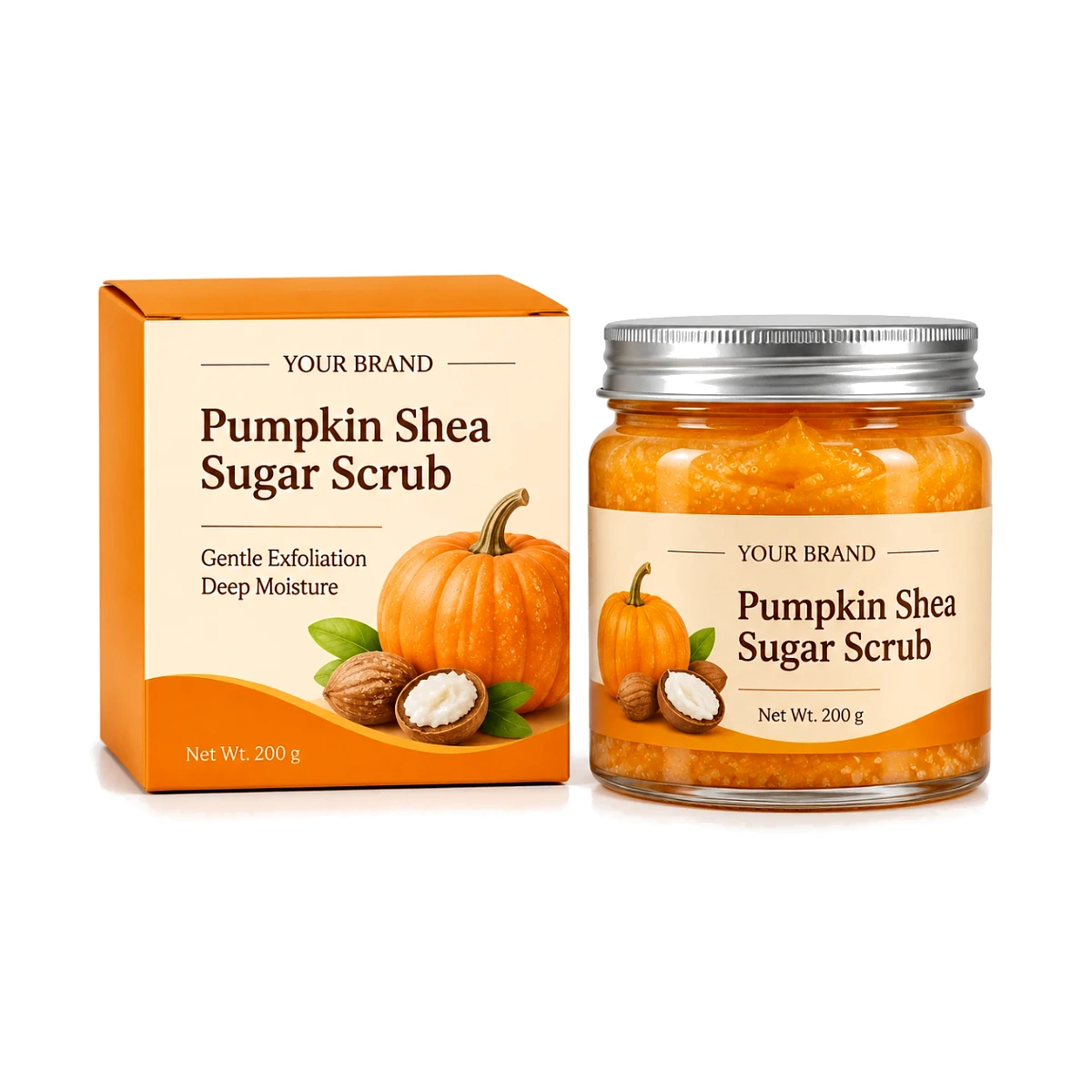

"A scrub is just sugar and oil," people say, and that overlooks most of what you feel in the shower. Grain size, grain shape, the oil blend and how often you use it all change the result. This guide covers the main types of exfoliating body scrub, what goes into them, and what they can and cannot do.
- Physical exfoliation: a scrub loosens dead skin by rubbing, not by dissolving it with acids.
- Grain matters: sugar, salt and coffee behave differently on skin.
- Base shapes the feel: oils, butters and emulsifiers decide slip, rinse-off and residue.
- Patch test first: fragrance and other ingredients can irritate some people.
- Go gentle: light pressure and infrequent use is the safer default.
Not A Peel, Not A Cleanser
A body scrub is not a chemical peel. It is not a regular body wash either, and it is not a treatment for any skin condition. It is a product that contains small particles, which loosen built-up dead skin cells when you rub them over wet skin. The rubbing does the work. Everything else in the jar, such as oils, butters and scent, mostly decides how pleasant that rubbing is.
Scrub vs chemical exfoliant
A few terms come up on labels and in shops. Here they are in plain words.
A physical exfoliant is an ingredient or tool that removes dead skin by friction, such as sugar grains or a mitt. A chemical exfoliant is an ingredient, usually an acid such as an AHA (alpha hydroxy acid) or BHA (beta hydroxy acid), that loosens the bonds between dead cells without scrubbing. An emollient is an ingredient, often an oil or butter, that softens the skin's surface and leaves it feeling smoother. An emulsifier is an ingredient that lets oil and water mix, so a scrub can rinse off instead of leaving a greasy film. An INCI name is the standardised ingredient name printed on the pack (INCI stands for International Nomenclature of Cosmetic Ingredients), for example "Sucrose" for sugar.
What Does A Scrub Actually Do?
An exfoliating body scrub helps lift dead cells from the surface of the skin, and it can leave skin feeling smoother and looking brighter for a short time. That is the realistic scope. It does not change the deeper structure of the skin, and it does not treat medical conditions. The skin sheds its own surface cells all the time, so a scrub speeds up something that already happens rather than creating a new effect.
The smooth feeling also comes from the rest of the formula. Oils and butters left on the skin after rinsing make it feel softer, and some of that comes from the moisturising base rather than from the exfoliation. This is why two scrubs with similar grains can feel very different.
There are limits. Rubbing harder does not mean better results, and over-scrubbing can leave skin red, tight or sore. People with eczema, psoriasis, acne on the body or any broken skin should not treat a scrub as a remedy. A pharmacist or doctor is the right person to ask about those.
Main Types Of Body Scrub
Shelves hold many formats, but most scrubs fall into a few families. The main differences are the particle and the base it sits in.
Sugar, salt and coffee-based scrubs
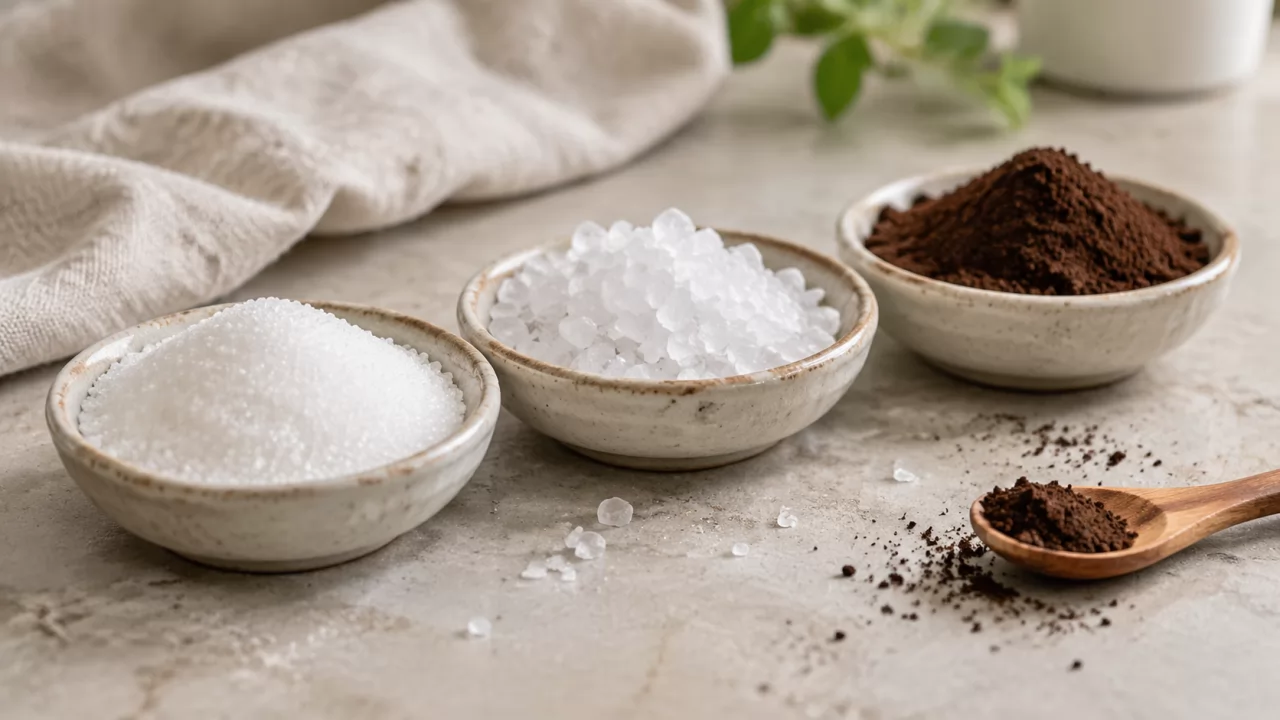
Granular scrubs are the most familiar. Sugar grains are rounded and dissolve in water, so they tend to feel softer. Salt grains are sharper and often coarser, which gives a stronger scrubbing feel. Coffee-based scrubs use ground coffee as the particle. It does not dissolve, so it stays gritty until rinsed away, and it can stain grout or light-coloured tubs if left to sit.
Oil-based, gel and cream formats
The base around the grains changes everything about use. An oil-based scrub is mostly oil with grains suspended in it. It glides easily and leaves a noticeable film, which some people like and others find hard to rinse. A cream scrub contains water and emulsifiers, so it feels lighter and rinses more cleanly. A gel scrub is usually water-based and contains surfactants (cleansing agents), so it feels more like a body wash with grit and leaves little residue.
Solid and shower-based formats
Scrub bars are solid blocks with particles in them. They are tidy and travel well, though they can soften if left in a wet dish. Some products come as pre-portioned shower tablets or sachets that you wet and rub on. These are less common, and the same rules apply: check the particle, check the base, and use light pressure.
Body Scrub Ingredients Explained
A typical scrub label breaks into five parts: the exfoliant, a carrier oil or butter, an emulsifier or surfactant, fragrance, and a preservative. The exfoliant gives the grit. The oil or butter softens. The emulsifier or surfactant controls rinse-off. Fragrance gives the scent, and the preservative keeps the product from growing mould or bacteria, which matters more in anything that contains water or is dipped into with fingers.
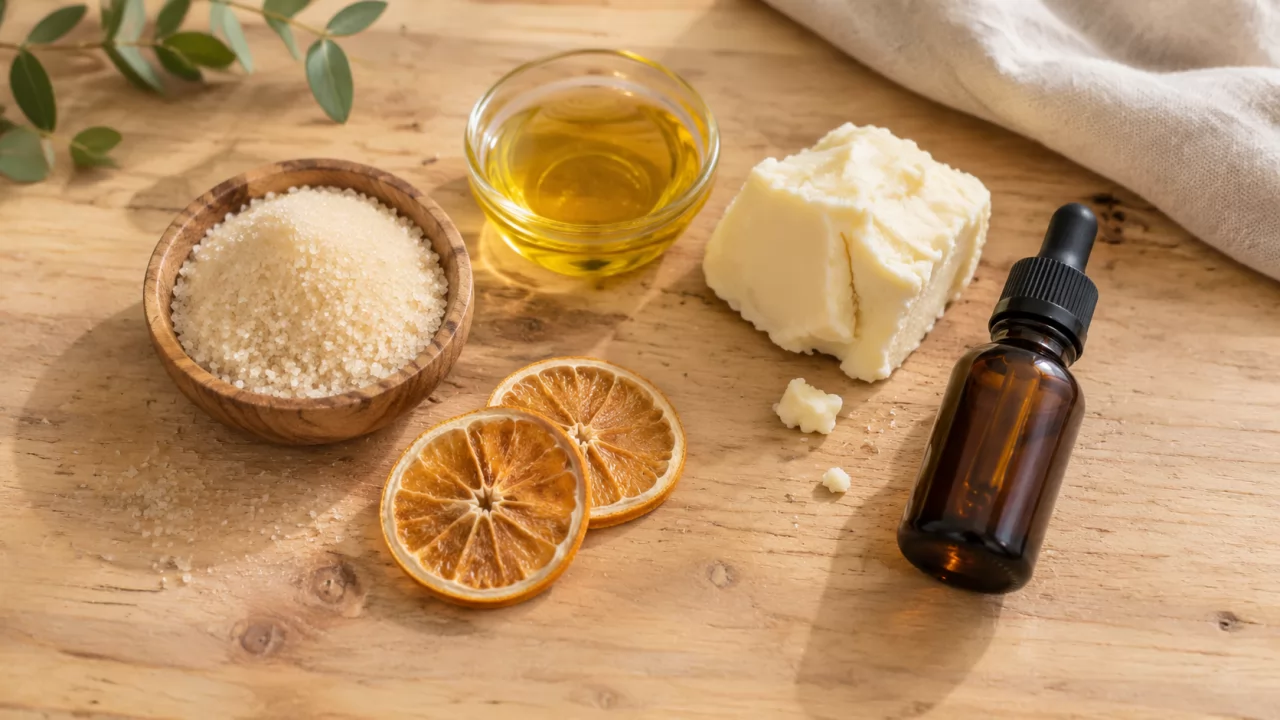
You will also see the phrase "natural exfoliants for skin" on packs. It is a loose marketing phrase. Sugar, salt, ground nut shells and coffee all come from nature, but a natural origin says nothing about whether a particle is gentle or whether the product suits your skin. Some natural particles, such as crushed shells or pits, have jagged edges that can scratch.
Reading an INCI list
Ingredients are listed in descending order of amount, apart from those below about one percent, which may appear in any order. If "Sucrose" or "Sodium Chloride" sits near the top, the product is mostly sugar or salt. Common oils appear under names such as Helianthus Annuus Seed Oil (sunflower), Prunus Amygdalus Dulcis Oil (sweet almond) or Cocos Nucifera Oil (coconut). Butters appear as Butyrospermum Parkii Butter (shea) or Theobroma Cacao Seed Butter (cocoa).
Emulsifiers and surfactants often have names such as Polysorbate 80, Glyceryl Stearate or Sodium Lauryl Sulfate. Their presence is normal, and they explain why one scrub rinses clean while another leaves a slick. If you are allergic to a nut oil, the INCI list is where to check, because marketing names on the front can be vague.
Fragrance, colour and preservatives
Fragrance and colour make a scrub appealing, but they do no work on the skin. Fragrance appears on labels as "Parfum" or "Fragrance", and it is a common trigger of irritation or allergy in some people. Fragrance-free versions exist, though "unscented" can mean a masking scent was added, so the INCI list is the better check. Preservatives such as Phenoxyethanol or Potassium Sorbate are there for a reason. A water-containing scrub with no preservative system is a poor sign, not a bonus.
Sugar Scrub Or Salt Scrub: What Is The Difference?
The difference between a sugar scrub and a salt scrub comes mainly down to the grain. Sugar is rounder and dissolves in water, so it tends to feel gentler. Salt is angular and usually coarser, so it feels sharper and more intense. Both can work for the body, but salt carries a higher chance of overdoing it, and the feel of either also depends on the oil base.
| Criterion | Sugar scrub | Salt scrub |
|---|---|---|
| Grain shape | Rounder, softer edges | Angular, sharper edges |
| Grain size | Often fine to medium | Often medium to coarse |
| Dissolving in water | Dissolves fairly quickly | Dissolves more slowly |
| Feel on skin | Softer, smoother | Firmer, more intense |
| Typical use | Arms, legs, general body | Tougher areas, light pressure only |
For most people, sugar is the easier starting point, because it is more forgiving if you press a little too hard.
Salt is usually seen as the harsher option for two reasons. Its crystals are hard and angular, and salt can sting on skin that is dry, freshly shaved or slightly scratched. Sugar's grains round off and dissolve as you work, so the scrubbing effect fades on its own.
Where each works best
Sugar suits most of the body, including arms, legs and shoulders. Salt is sometimes used on rougher areas such as heels, elbows and knees, again with light pressure. Both are best avoided on the face and neck, on broken or sunburned skin, on freshly shaved areas, and on any skin that is already irritated. Treat these as general guidelines. Skin varies, and what feels fine for one person may sting for another.
How To Choose And Use One
Choosing well comes down to a handful of checks. Each one saves you from a common disappointment.
- Skin feel: if your skin is dry or easily irritated, look for a cream or oil base with fine, rounded grains.
- Grain size: fine grains are gentler, and coarse grains need lighter pressure.
- Scent: strong fragrance suits some people and bothers others, so choose a mild or fragrance-free option if you react easily.
- Packaging: a tube or pump keeps water and fingers out; an open jar invites both.
- Label clarity: a full INCI list, a clear batch code and plain directions suggest a product made with care.
A rule of thumb: pick the finest grain in the gentlest base that you can find, and move coarser only if it feels too mild.
Step-by-step use
Start with wet skin, because water softens dead cells and cushions the grains. Take a small amount and rub it in slow, gentle circles, working from the feet upward. Spend a few seconds per area, not minutes. Rinse thoroughly, pat dry, and apply moisturiser while the skin is still slightly damp.
The usual mistakes are simple. Scrubbing too hard is the first, since pressure should feel light. Using a scrub on broken, sunburned or freshly shaved skin is the second. Using it too often is the third. Many people do well with once a week, and some with less. If skin turns red, tight or stings afterwards, the routine is too much.
Patch test and care
Before the first full use, rub a small amount on a patch of inner forearm and leave it for a day. Stop using the product if redness, itching or burning appears. If a skin problem does not clear up, see a doctor or pharmacist rather than scrubbing harder.
Storage and hygiene
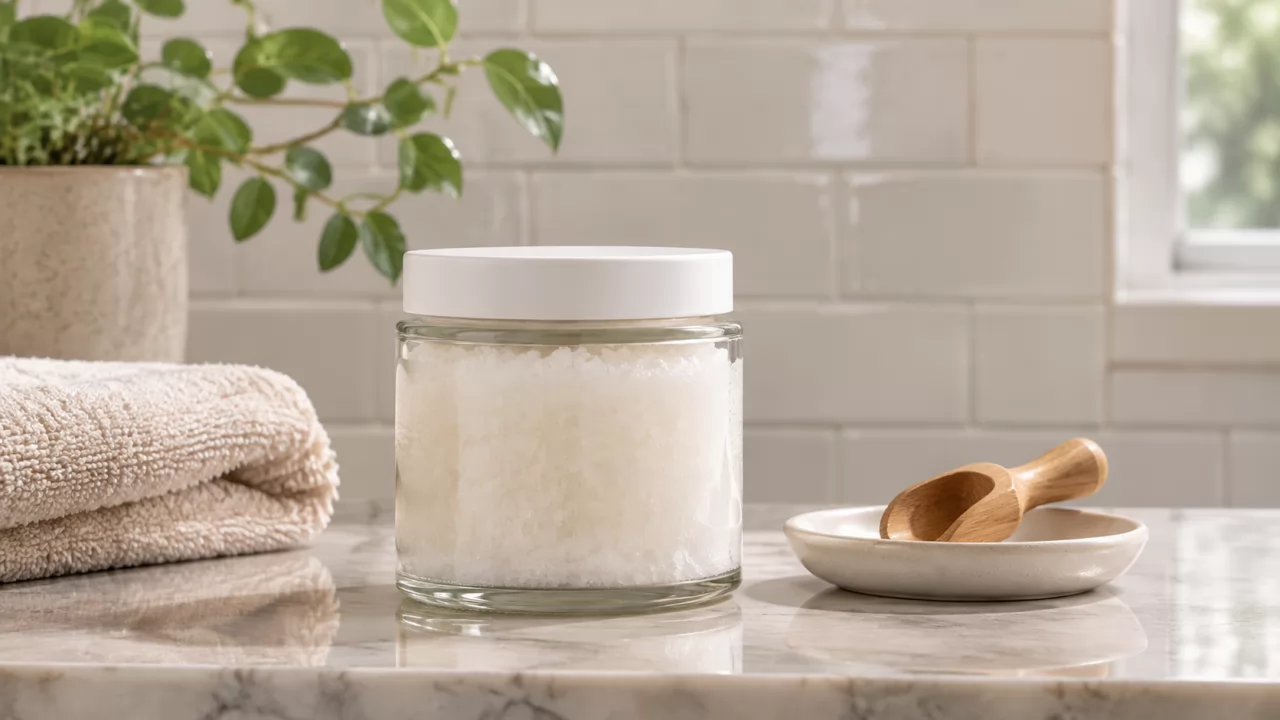
Water is the enemy of a jar scrub. Keep the lid tight, and keep the jar out of the direct spray of the shower. Use dry hands or a clean dry scoop each time. If the smell turns sour or rancid, or if the texture changes or you see mould, throw it away. Heat can also separate oils from grains, so a cool shelf is better than a sunny window.
Scrubs As Private Label Products
Some readers are planning a small brand, and a private label scrub is one way to start. In this model, a manufacturer makes a formula and the brand puts its own name on it. The parts usually adjusted are the scent, the colour, the grain type and size, and the pack. Boymay, a Huizhou, Guangdong manufacturer of bath and personal care products, lists custom formulas, fragrances, shapes, colours and packaging among the things it can customise.
Before choosing a maker, ask for the full ingredient list in INCI names, and check it against the rules of the region where you plan to sell. The EU, the UK and North America each have their own cosmetic labelling and safety requirements, and the responsible person or importer usually carries legal duties. Ask what documents exist for the formula, whether a safety assessment is available, and how preservative performance is checked. Request a sample first, and test it yourself for scent, texture, rinse-off and how the pack holds up. A sample that behaves well in the first week may still show problems after a month in a humid bathroom, so give it time.
FAQ
How often can I use an exfoliating body scrub?
Once a week suits many people, and some prefer less. Start low and watch how your skin responds. If it feels tight, red or sore, cut back.
Can I use a body scrub on my face?
Usually no. Body scrubs tend to have larger grains and richer bases than facial skin handles well. Use a product made for the face instead.
Is a homemade scrub as good as a store-bought one?
Not necessarily. Homemade mixes are easy to make, but they have no preservative system and can spoil quickly. Kitchen ingredients may also irritate skin, so patch test and use them fresh.
Should I moisturise after scrubbing?
Yes, it is a good habit. Scrubbing removes surface cells and can leave skin feeling dry. A moisturiser on slightly damp skin helps it feel comfortable.
Before you buy your next jar, turn it over and find the INCI list. Check which exfoliant comes first, which oil follows, and whether the fragrance is something your skin has tolerated before.