

A shower steamer is a bath bomb in a smaller mould, so the same recipe will do. That is the belief behind a lot of failed first samples. In a shower the tablet sits on the floor, gets a thin spray rather than a tubful of water, and has maybe ten minutes to do its work. Shower steamer ingredients have to be balanced for that: slower dissolve, firmer body, scent that carries in steam. What follows is a path of decisions, in the order you will meet them.
What are shower steamers made of, and which part decides the result?
A shower steamer is made of an effervescent acid-base pair (usually citric acid and sodium bicarbonate), a binder, a filler, fragrance and colour. No single ingredient decides the result. The ratio between these groups does, and it is the part a supplier's recipe sheet shows least clearly.
The core blend in plain words
The acid and base make the fizz. The filler gives bulk and slows the reaction, so the tablet does not burn out in a minute. The binder holds the powder together once it is pressed or moulded. Fragrance and colour sit on top, in small amounts, but they affect the other three more than most people expect: oils soften a tablet, and some dyes bleed into the mould.
Effervescent means that the tablet releases gas (carbon dioxide) when it meets water. That is all the fizz is.
Why a shower tablet is built differently from a bath bomb
A bath bomb drops into a full tub and is surrounded by water. It can fizz hard and fast, and nobody minds if it is gone in two minutes. A shower steamer gets water from one side, in a stream, for a short time. If the formula is too reactive, it fizzes out before the scent has gone anywhere useful. So the filler and binder share is usually higher than in a bath bomb, and the acid-base share is lower. The tablet should erode, not explode.
Reading the INCI list like a buyer
INCI stands for International Nomenclature of Cosmetic Ingredients, the standard naming system used on cosmetic labels in the EU and many other markets. Citric acid appears as Citric Acid. Baking soda appears as Sodium Bicarbonate. Cornstarch is Zea Mays (Corn) Starch. Kaolin is Kaolin. Fragrance may be listed as Parfum, with declarable allergens named separately.
One function can sit under several names. A filler may be starch, clay or a salt. A binder may be a liquid, a surfactant powder or a butter. So when you read a sheet, do not count lines. Sort each line by function and see whether the groups are all present.
If you want visible fizz, start with the acid and base
Citric acid and sodium bicarbonate react in the presence of water to form sodium citrate, water and carbon dioxide. The more of this pair in the tablet, the stronger the fizz and the shorter its life. The filler load pushes the other way. Choosing between "dramatic" and "lasting" is the first real decision in any formula.
How citric acid and sodium bicarbonate react
Dry, the two powders sit side by side without reacting. Add moisture and they dissolve at their contact points and start releasing gas. That is why water is the trigger. It is also the enemy: humidity in the factory, in a wet binder or in a poorly sealed pack can start the reaction early. A tablet that has partly reacted in storage will be soft, swollen or crusty on the surface.
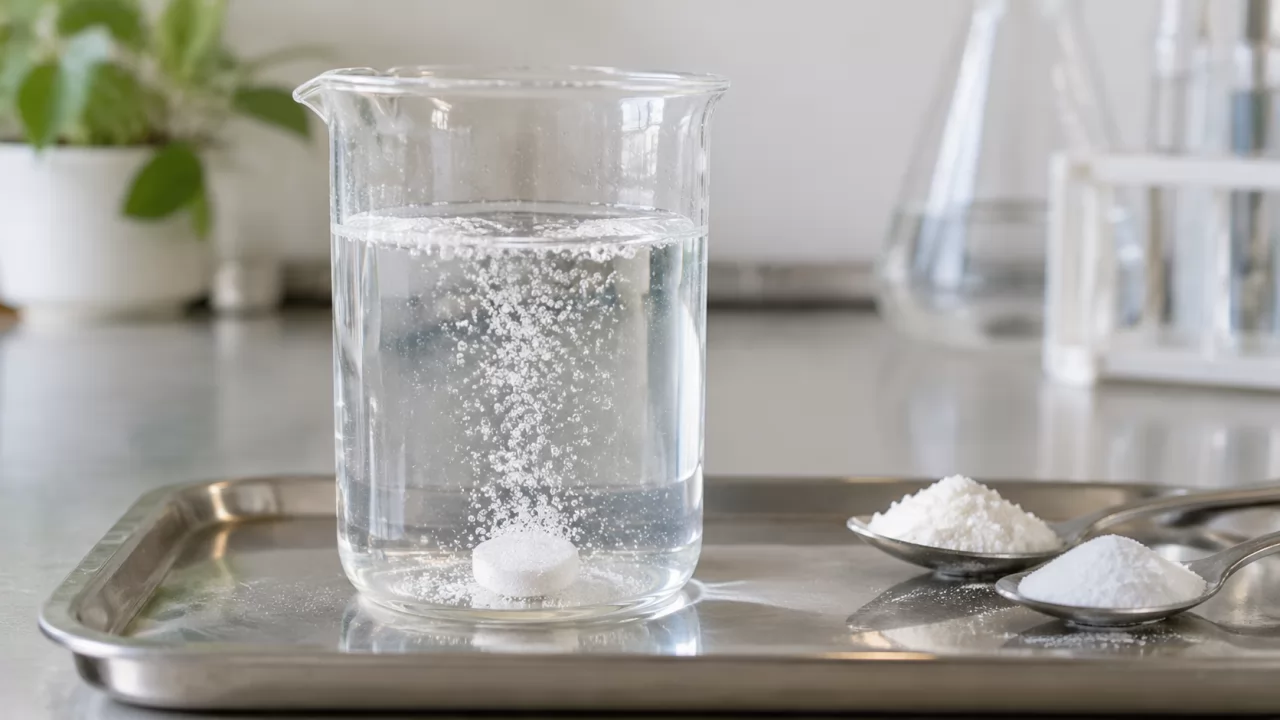
Citric acid and baking soda ratio for shower steamers
There is no single correct ratio. Bath bomb recipes often use roughly two parts sodium bicarbonate to one part citric acid by weight, and some shower formulas stay near that, then dilute the pair with filler. But the right number depends on the filler load, the binder, the tablet weight and the climate it will be stored in. A formulator will normally set it by trial: press several variants, run them under a shower head, and compare fizz time and surface erosion.
Ask for the trial results, not just the final ratio. And note that excess acid can leave a tablet sharp-smelling or irritating to some skin when the steam is concentrated, so the balance should be tested, not assumed.
Acid-base comparison table
Other acids and bases appear in some formulas. The table compares them in general terms only; actual behaviour depends on grade and particle size.
| Criterion | Citric acid | Sodium bicarbonate | Tartaric acid |
|---|---|---|---|
| Role | Acid | Base | Alternative acid |
| Fizz behaviour | Fast, vigorous | Releases the gas | Usually gentler |
| Moisture sensitivity | High | Moderate | Moderate |
| Cost | Low | Low | Generally higher |
| Supply | Widely available | Widely available | Less common |
For most orders, citric acid with sodium bicarbonate is the practical choice because both are easy to source and easy to document.
If the tablet crumbles or cracks, look at the binder first
A binder is any ingredient that helps loose powder hold its shape after pressing or moulding. Crumbling at the edges usually means too little binding or too little liquid at the mixing stage. Cracking after drying often points to the opposite: too much liquid, or a mix that dried unevenly. Either way the fix sits in the binder system before it sits in the machine settings.
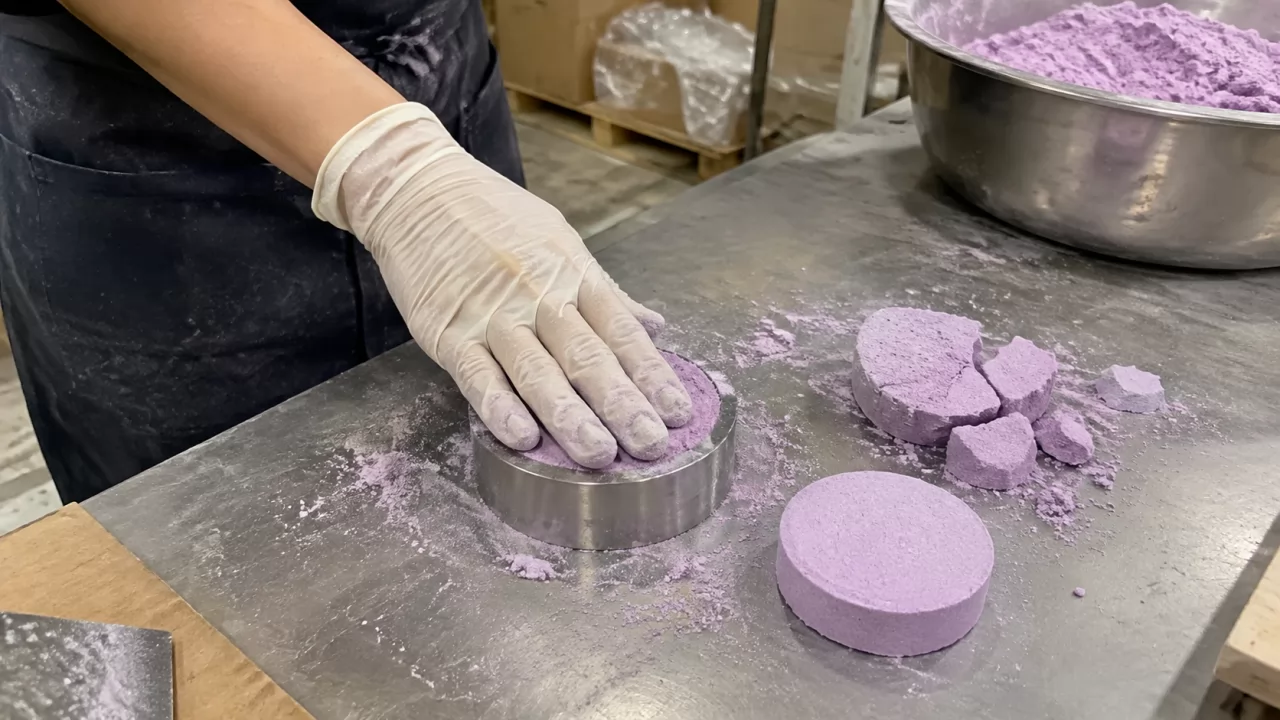
Shower steamer binder and filler ingredients compared
The overlap between binders and fillers is real. Several ingredients do both jobs at different levels.
| Ingredient | Main role | Effect on tablet | Watch-out |
|---|---|---|---|
| Cornstarch | Filler, light binder | Slows fizz, softer feel | Absorbs moisture |
| Kaolin clay | Filler, binder | Firmer, smoother surface | Can dull colour |
| SLSA-type surfactant powder | Binder, foam aid | Harder tablet, some foam | Labelling and skin feel |
| Witch hazel | Liquid binder | Light wetting, fast dry | Contains alcohol |
| Carrier oils or butters | Binder, emollient | Softer, slower dissolve | Too much weakens the press |
Most formulas combine two or three of these rather than relying on one.
Witch hazel, water or oil: choosing the wetting agent
You need some liquid to make the mix hold. Water is cheapest and most direct, but it starts the fizz reaction, so it has to go in as a fine spray and in tiny amounts. Witch hazel is a common substitute because it carries less free water and evaporates faster, though many witch hazel products contain alcohol, and that can raise labelling or market questions. Oils and butters bind through stickiness, not wetness, which avoids early reaction but softens the tablet.
If a sample fizzes in the mixing bowl, the liquid went in too fast or too wet. Do not compensate by adding more powder. Ask which wetting agent was used and in what amount.
Cornstarch and clay: filler or binder?
Both. Cornstarch dilutes the reaction and gives a soft, dry feel, but it holds little structure alone. Clay, such as kaolin, makes a denser, harder tablet and tends to last longer under water. Choose starch-led for a quicker, softer dissolve, clay-led for a longer-lasting piece. A blend is common.
If you sell on scent, plan the fragrance load before the shape
The tablet can only carry so much liquid scent before it softens. Decide the scent direction first, then check what the base can hold, then choose the mould. Doing it the other way round leads to a nice shape that will not press properly.
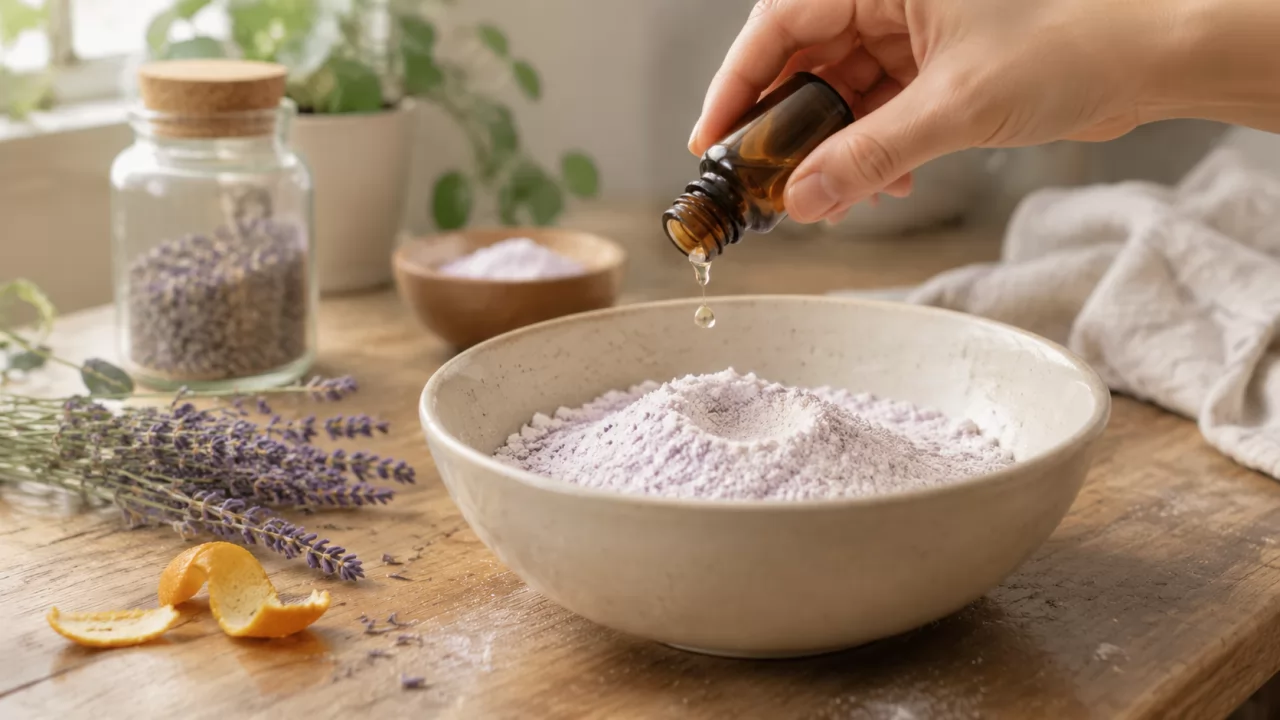
Essential oil blend or fragrance oil?
Essential oils are plant-derived and often have a narrower scent range. Some are costly, and many are volatile, so the scent may fade in storage or flash off quickly in hot steam. Fragrance oils are compounded blends, usually more stable, broader in profile and cheaper per kilo. Both can contain declarable allergens. Neither should be sold with wellness wording. Describe the scent, not what it does for the person.
Allergen declaration and the limits of your fragrance load
Under EU cosmetics rules, certain fragrance allergens must be listed by name on the label once they pass set thresholds. The practical step is simple: get the allergen declaration from the fragrance supplier, and check that the final label matches it. The supplier's usage guidance for the fragrance type should also be followed. Do not guess a safe percentage. Use the documents.
If you are entering Europe, North America or the Middle East, check compliance by market
Shower steamers are generally treated as cosmetics in the EU and as cosmetics in the United States, where FDA rules cover labelling and ingredient safety but do not pre-approve products. The Middle East varies by country, and importers often ask for GCC-oriented or local registration documents. Rules change, so confirm with a regulatory adviser for your market.
Documents to request before approving a formula
Ask for the full INCI list, the fragrance allergen declaration, a cosmetic product safety report if you sell in the EU, and the manufacturer's quality system evidence, such as ISO 22716 (the standard for cosmetic good manufacturing practice) or a GMP audit record. Ask also for batch records, so a complaint can be traced.
A recipe sheet is not a safety assessment. If the factory can give you the formula but not the supporting documents, the formula is not ready to sell.
Claims to avoid on pack
Words like detox, stress relief, sleep aid or skin-healing turn a cosmetic into a regulatory problem. Aromatherapy wording sits in the same grey zone. Stick to what you can see, smell and feel: fragrance name, colour, fizz, shower experience. Terms like "natural", "organic" or "hypoallergenic" also need proof for the exact formula.
Four formulation myths that cost buyers samples
"More fizz is always better." In a shower, a strong fizz usually means a short life. Match fizz to how long the tablet should last under water.
"Natural means safer or approved." It means neither. Natural oils can be allergens, and no ingredient is approved just because of where it came from.
"Any bath bomb recipe works in a shower." It rarely does. Bath bombs are built for full immersion and strong reaction; a shower tablet needs more filler and a slower dissolve.
"Colour does not affect stability." Some dyes and pigments interact with acid or moisture, and can bleed, spot or fade. Test colour in the full formula, not alone.
Glossary of terms you will meet in a formula sheet
Effervescent: releasing gas bubbles when wet. Binder: an ingredient that holds powder into a solid shape. Filler: a bulking powder that dilutes the reaction and shapes the tablet. INCI: the standard ingredient naming system used on cosmetic labels. Wetting agent: the small amount of liquid added so the mix can be pressed or moulded. Carrier: an oil or base that carries fragrance or colour.
Next step: send your brief for a sample round
Still comparing? Start with the binder and filler table above and decide whether you want a quick fizz or a longer-lasting tablet. Ready for a sample? Send your target market, tablet weight, scent direction and packaging idea to our team, and we will match a formula to that brief.
FAQ
Can I swap baking soda for another base?
Sometimes, but not casually. Alternatives change the fizz speed, pH and cost, and the ratio must be retested. Request a new sample round before approving the change.
Why do my samples soften in storage?
Usually moisture. Either the pack lets humidity in, the binder carried too much water, or the oil load is high. Check the seal, the wetting agent amount and the storage conditions.
Do vegan formulas change the binder choice?
Sometimes. Most common binders are plant or mineral based, but check carrier butters, colours and fragrance components for animal-derived content, and ask for confirmation in writing.
How do I brief a manufacturer on a custom formula?
Give target market, tablet weight, desired fizz time, scent direction, colour, vegan needs and pack type. The more specific the brief, the fewer sample rounds you need.


