
لماذا تنفصل رذاذات الجسم أو تتعكر أو تنمو فيها الكائنات الدقيقة—وكيفية إصلاح مشكلات العطر، والمذيب المساعد على الذوبان، والحفظ، ودرجة الحموضة من المصدر أثناء الإنتاج.
قد تبدو الدفعة مثالية في وعاء سعة 500مل، لكنها قد تخذلك تمامًا عند 500 لتر. لقد رأيت رذاذ جسم صافيًا تمامًا يتحول إلى حليبي خلال الليل في خزان الحفظ، ورأيت تركيبة تجتاز كل فحوصات المختبر ثم تظهر فيها مستعمرات مرئية بعد ثلاثة أسابيع من التعبئة. والجزء المزعج؟ تكاد جميع هذه الإخفاقات تعود إلى المجالات الأربعة نفسها القابلة للإصلاح: إذابة العطر، واختيار المستحلب، والحفظ، والتحكم في العملية.
هذا تفكيك عملي لأين تتعثر رذاذات الجسم وكيفية تصحيح كل خلل من مصدره — وليس قائمة نصائح سطحية قرأتها عشرات المرات.
لماذا تفشل تركيبات رذاذ الجسم أكثر مما تتوقع
على الورق، يُعد رذاذ الجسم أبسط شيء في قائمة العناية الشخصية: ماء، وقليل من زيت العطر، ومذيب مساعد على الذوبان، ومواد حافظة، وتعديل طفيف لدرجة الحموضة. هذه البساطة الظاهرية هي الفخ نفسه. لا توجد بنية شمعية، ولا مستحلب كثيف، ولا هامش من المكونات المتسامحة لإخفاء الخطأ. كل مكوّن يكون مكشوفًا، وأي خطأ في الحساب بنسبة 0.5% يظهر على شكل عكارة أو انفصال يمكن رؤيته من الطرف الآخر للغرفة.
لقد جعل التوجه نحو الصيغ الخالية من الكحول و"النظيفة" الأمر أصعب، لا أسهل. فعند إزالة الكحول، تكون قد أزلت في قرار واحد كلًا من المذيب الطبيعي المساعد على الذوبان وشبكة الأمان المضادة للميكروبات المدمجة. وتزداد أوضاع الفشل الأكثر شيوعًا — انفصال العطر، والنمو الميكروبي، وانجراف درجة الحموضة — سوءًا تقريبًا في اللحظة التي يخرج فيها الكحول.
تشريح رذاذ الجسم (وأين يمكن أن يخطئ كل مكوّن)
يبدأ فهم مشكلات تركيبة رذاذ الجسم بمعرفة ما الذي يفعله كل جزء وكيف يفشل:
- قاعدة مائية (85–95%): يجب أن تكون منزوعة الأيونات. فالماء العادي أو العسر يُدخل أيونات معدنية تُفسد المواد الحافظة وتُضعف الرائحة.
- زيت عطري (1–3%): السبب وراء معظم حالات الانفصال والعكارة عند استخدامه بجرعة زائدة.
- مذيب/مستحلب: يُبقي الزيت في الطور المائي. إذا أُعطي بجرعة أقل من اللازم، يطفو الزيت إلى السطح.
- نظام المواد الحافظة: أكبر فجوة واحدة في السلامة في البخاخات الخالية من الكحول.
- معدِّل الرقم الهيدروجيني: يحافظ على فعالية المادة الحافظة وثبات الرائحة.
المشكلة 1: انفصال زيت العطر والعكارة
هذا هو العيب الأكثر شيوعًا الذي أواجهه، وعادةً ما يكون الأسهل في التشخيص. فالنظام الزيتي-المائي سيرفض العطر ماديًا بمجرد أن تتجاوز قدرة المذيب على التحميل. وما يبدأ كتلون أزرق خافت في الأعلى يتحول إلى حلقة زيتية واضحة، ثم إلى انفصال كامل.
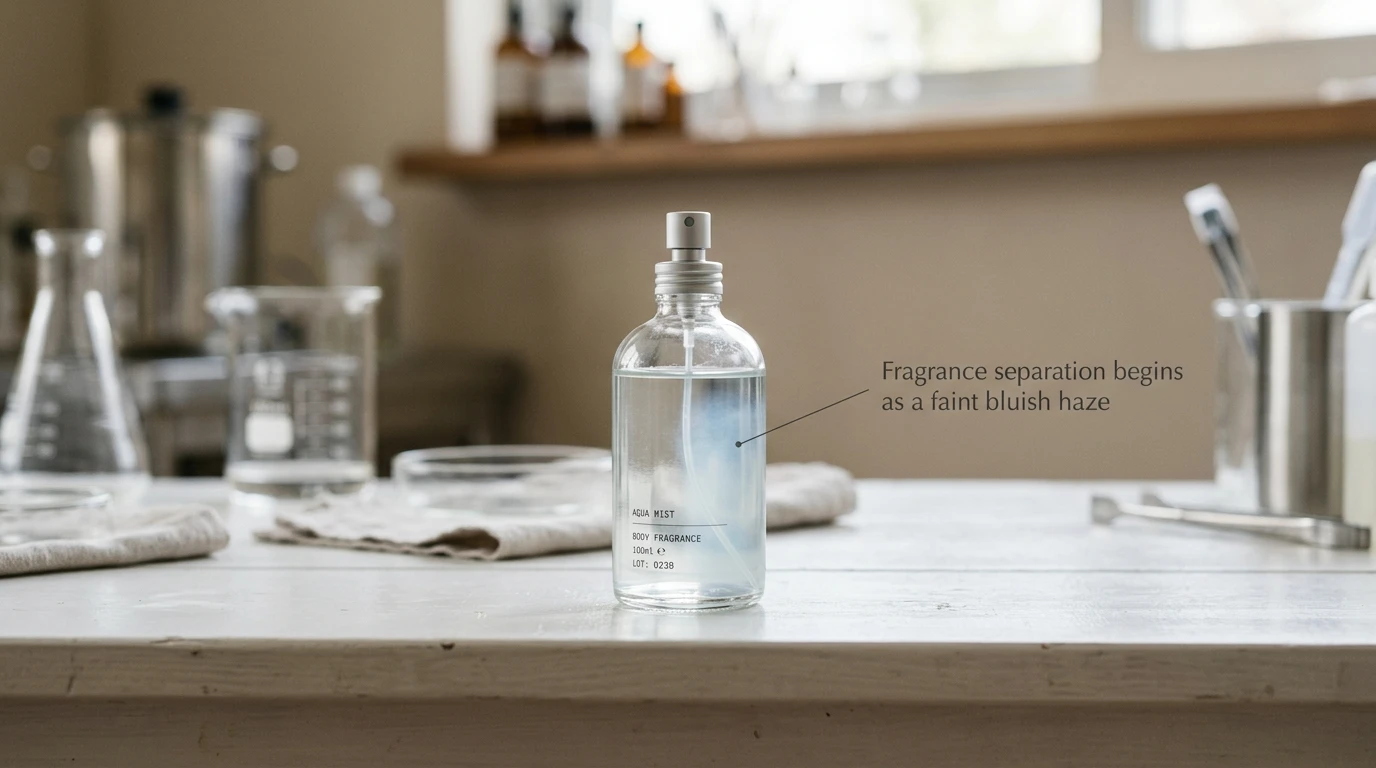
الأسباب الجذرية: زيادة العطر مقابل نقص جرعة المذيب
ثلاثة أمور تقود مشكلات انفصال عطر بودي ميست. أولًا، عدم توافق HLB — قيمة HLB المطلوبة لدى المذيب لا تتطابق مع مزيج العطر. ثانيًا، نسبة غير صحيحة بين العطر والمذيب، وهي الخطأ الفردي الأكثر شيوعًا. ثالثًا، الزيوت الغنية بالتربينات — مثل الحمضيات، والصنوبر، والعديد من التركيبات "المنعشة" — والتي تقاوم الاستحلاب أكثر بكثير من القواعد الزهرية أو المسكية عند نفس الجرعة.
نسبة المذيب التي تعمل فعليًا
يُعد PEG-40 hydrogenated castor oil وpolysorbate 20 عنصرَي العمل الأساسيين هنا. ونقطة البداية الموثوقة هي نسبة مذيب إلى عطر بين 2:1 و4:1، مع زيادتها للزيوت الصعبة الغنية بالتربينات.
| حمولة العطر | النسبة الموصى بها للمذيب | النتيجة النموذجية |
|---|---|---|
| 1.0% | 2:1 | صافٍ، مستقر |
| 2.0% | 3:1 | صافٍ إذا كانت نسبة التيربين منخفضة |
| 3.0% | 4:1 أو أعلى | صافٍ ولكن مع خطر إحساس لاصق على البشرة |
لاحظ المفاضلة في الأعلى: رفع العطر إلى 3% يفرض إدخال كمية كبيرة جدًا من المذيب إلى التركيبة، بحيث يبدأ الرذاذ في الشعور باللزوجة. هذا هو الحد الأعلى الذي يحترمه معظم المُركِّبين ذوي الخبرة.
أخطاء درجة الحرارة وترتيب الإضافة
الخلط على البارد هو المكان الذي تموت فيه التركيبات الجيدة. تحتاج إلى خلط العطر والمذيب مسبقًا معًا أولًا، كمرحلة منفصلة، ثم إضافة تلك المرحلة المجمعة إلى الماء — في النهاية، وببطء، عند درجة حرارة مضبوطة تبلغ نحو 35–40°C. إن سكب العطر مباشرة في الماء البارد يضمن العكارة لأن المذيب لا يحصل أبدًا على فرصة لتغليف قطرات الزيت قبل أن تتجمع.
المشكلة 2: تحديات الاستحلاب والذوبانية
بمجرد أن تصبح النسبة صحيحة، فإن المذيب المحدد الذي تختاره يحدد الصفاء، والإحساس على البشرة، والتكلفة. وهنا تُسقط تحديات ذوبانية المستحلب التركيبات السليمة بهدوء.
اختيار المذيب المناسب لملف عطرك
كل خيار ينطوي على مقايضة:
- Polysorbate 20: ممتاز للعطور الخفيفة منخفضة الحمولة؛ قد يصبح عاتمًا مع الزيوت الثقيلة.
- Polysorbate 80: يتحمل كمية أكبر من الزيوت لكنه يمنح إحساسًا أثقل وقد يكون لزجًا أحيانًا.
- PEG-40 hydrogenated castor oil: الخيار الأفضل من حيث الصفاء للخلطات المعقدة، ولهذا يهيمن على الرذاذات التجارية.
- خيارات قائمة على المواد الحيوية (مثل مزيج Caprylyl/Capryl Glucoside): ملصق أنظف، لكن قدرة حمل أقل وتكلفة أعلى بشكل ملحوظ لكل كيلوغرام.
لماذا تؤدي إعادة الصياغة باسم "Clean Label" إلى فقدان الثبات
ألاحظ هذا النمط باستمرار: تطلب علامة تجارية استبعاد جميع مركبات PEG وpolysorbates لأسباب تسويقية، مع الإبقاء على نفس كمية العطر، وتتوقع صفاءً مماثلًا. هذا لا ينجح. عادةً ما تحمل المذيبات القائمة على المواد الحيوية كمية عطر أقل بنسبة 20–30% عند مستوى الاستخدام نفسه، لذا فإن الاستبدال المباشر يؤدي في الغالب إلى الانفصال. إذا كنت تتجه إلى صيغة clean-label، فعليك إما خفض كمية العطر أو رفع نسبة المذيب — ثم إعادة اختبار الثبات من البداية.
المشكلة 3: التلوث الميكروبي في التركيبات الخالية من الكحول
هذا هو الفشل الذي ينطوي على مسؤولية حقيقية، وليس مجرد شكوى جمالية. التلوث الميكروبي في مستحضرات التجميل وحفظ بخاخ الجسم الخالي من الكحول أصبحا موضوعين ملحين مع تخلّي المزيد من العلامات التجارية عن الكحول لصالح ادعاءات الراحة على البشرة.
لماذا يؤدي إزالة الكحول إلى فقدان شبكة الأمان الخاصة بك
الكحول بنسبة تزيد على نحو 15% يكون في الغالب ذاتي الحفظ — إذ يؤدي عملاً مضادًا للميكروبات بشكل غير ملحوظ لم تكن بحاجة للتفكير فيه. وعند الانخفاض دون ذلك، يصبح الرذاذ القائم على الماء وسطًا مثاليًا لنمو البكتيريا والخمائر والعفن. تحتاج كل تركيبة خالية من الكحول إلى نظام حفظ واسع الطيف كامل، ويجب أن تجتاز اختبار التحدي ISO 11930 قبل أن تقترب من خط التعبئة.
بناء نظام حفظ يجتاز اختبار التحدي
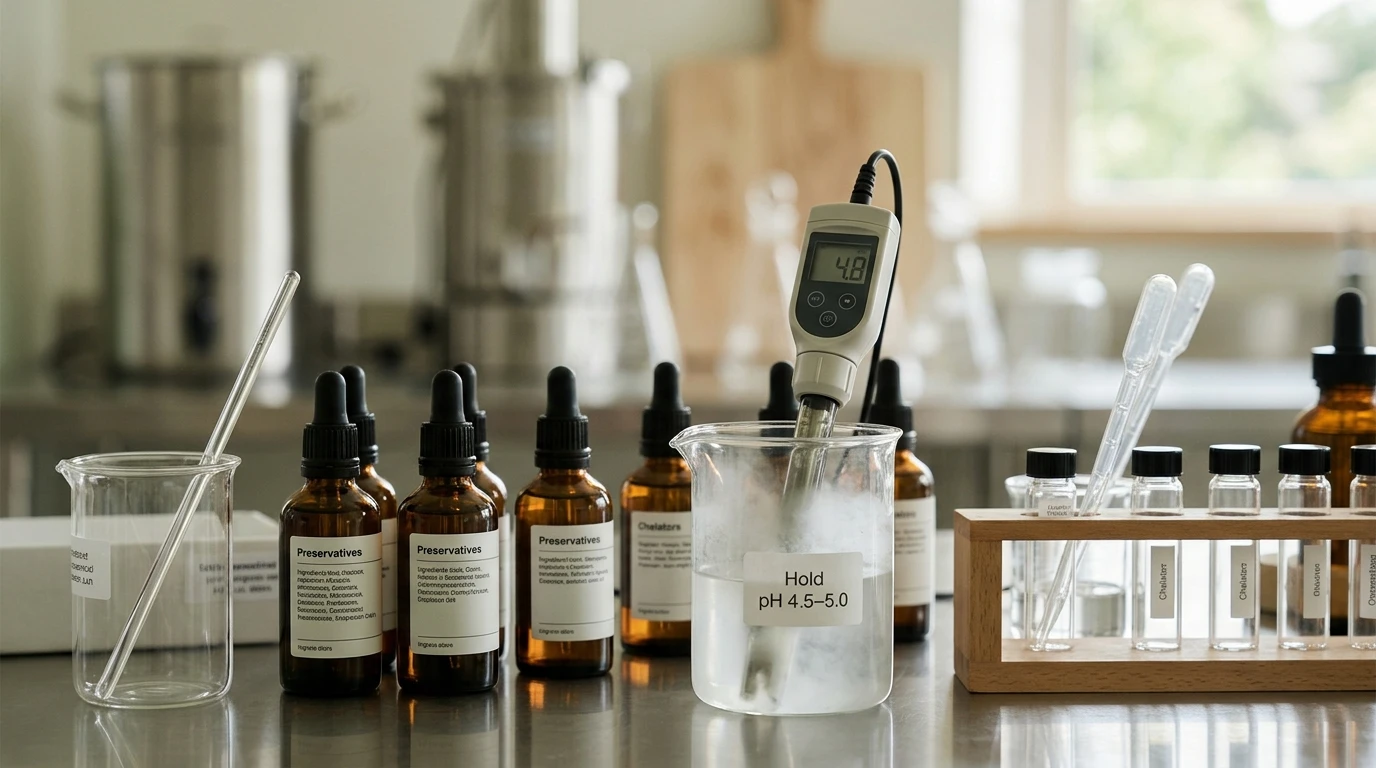
تشمل التركيبات المُجرَّبة مزيج phenoxyethanol مع ethylhexylglycerin، أو أنظمة الأحماض العضوية المبنية على benzoic acid وdehydroacetic acid لتلبية متطلبات الملصقات الأنظف. هناك تفصيلان لا يقلّان أهمية عن المادة الحافظة نفسها: الحفاظ على مستوى pH ضمن نطاق 4.5–5.5 حيث تكون معظم المواد الحافظة في أعلى درجات الفعالية، وإضافة عامل مخلب مثل tetrasodium EDTA أو بديل من phytate لتحييد أيونات المعادن التي قد تُفشل النظام بأكمله.
| التنسيق | نهج الحفظ | مخاطر اختبار التحدي |
|---|---|---|
| عالي الكحول (>60%) | ذاتي الحفظ | منخفض |
| منخفض الكحول (10–20%) | مادة حافظة معزِّزة | متوسط |
| خالٍ من الكحول | نظام متكامل واسع الطيف | عالي |
المشكلة 4: انجراف الرقم الهيدروجيني، وتغيّر اللون، وبهتان الرائحة
تظهر بعض أسوأ الشكاوى بعد أشهر من الإنتاج، عندما يكون المنتج قد وصل بالفعل إلى الأرفف. هذه هي مشكلات تركيبة بخاخ الجسم التي لا تكشف عن نفسها إلا مع مرور فترة الصلاحية.
عدم استقرار الرقم الهيدروجيني وآثاره اللاحقة
نادراً ما يظل الرقم الهيدروجيني ثابتاً تماماً. ومع الأكسدة التدريجية لمكوّنات العطر أو تسرب مواد أثرية من مواد التغليف، قد ينحرف الرقم الهيدروجيني إلى الأعلى، وفوق 5.5 تفقد معظم المواد الحافظة المعتمدة على الأحماض العضوية معظم فعاليتها. كما يؤثر هذا الانحراف في نغمات العطر — فالرائحة التي كانت زاهية عند التعبئة تصبح باهتة أو شبيهة بالصابون. استهدف رقماً هيدروجينياً أولياً قريباً من 4.5–5.0 وفكّر في استخدام مخفف سترات خفيف لمقاومة هذا الانجراف.
بهتان الرائحة وتغير اللون أثناء التخزين
النغمات العلوية بطبيعتها متطايرة؛ لذا تتلاشى الحمضيات والألدهيدات أولاً. كما أن التعرض للأشعة فوق البنفسجية يسرّع فقدان الرائحة واصفرار اللون معاً، خاصة في عبوات PET الشفافة التي تُترك تحت إضاءة البيع بالتجزئة. إذا أبلغ أحد العملاء أن الرذاذ "تغيرت رائحته" بعد شهرين، فعادةً ما يكون السبب هو التعرض للضوء وعدم توافق العبوة — وهو بالضبط ما يفترض أن يكشفه اختبار الثبات قبل الإطلاق.
إخفاقات خط الإنتاج ومراقبة الجودة
كل ما سبق يفترض أن تركيبة المختبر سليمة. أما الفئة التالية من عيوب تصنيع بخاخ الجسم فلا تظهر إلا عند التوسع في الإنتاج — وغالباً ما تفاجئ الفرق التي تثق بما ينجح في الكأس المخبرية.
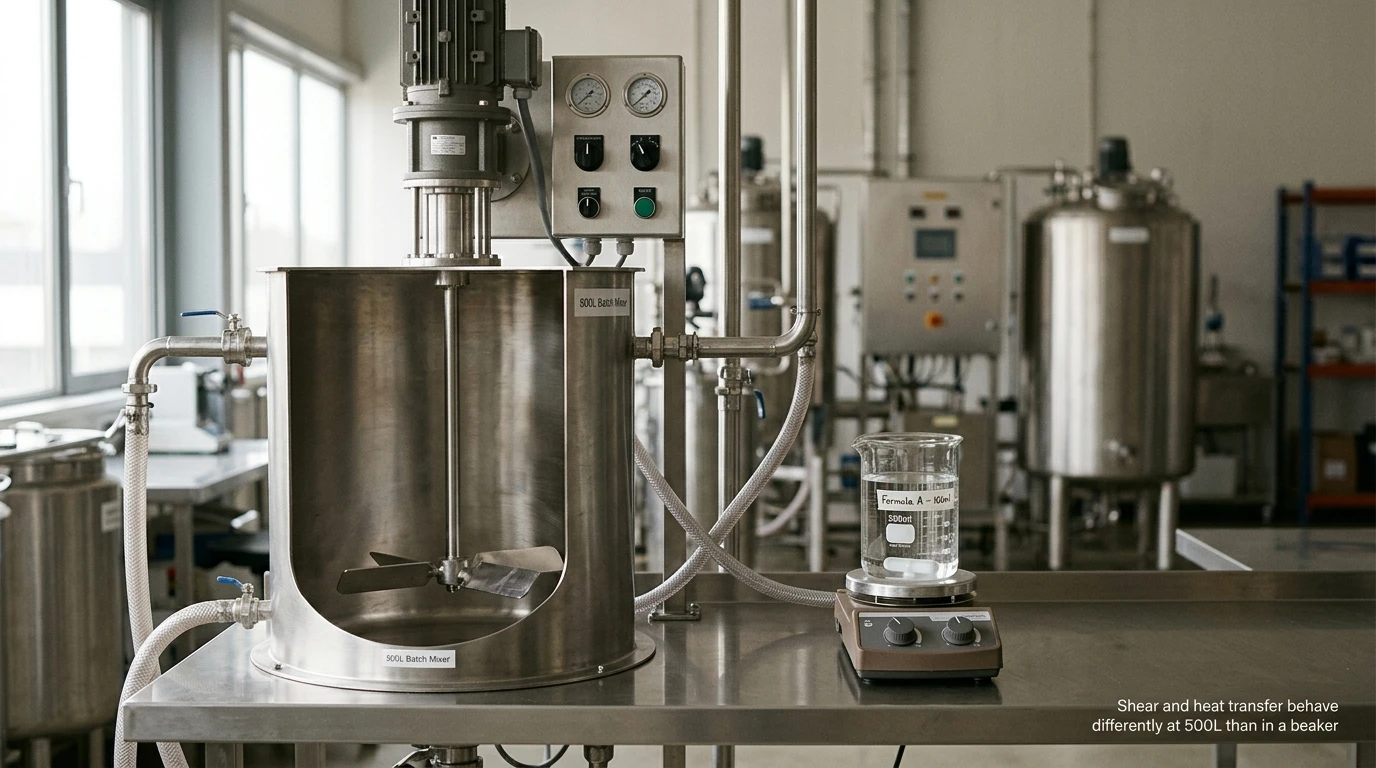
أخطاء التوسّع: ما ينجح في المختبر لكنه يفشل عند 500L
يتصرف قصّ الخلط وانتقال الحرارة بشكل مختلف تماماً في الخزان مقارنةً بالكأس المخبرية. فالمحرك المغناطيسي يولد قصاً محلياً عالياً يذيب العطر بسهولة؛ بينما قد لا يصل مروّج كبير في خزان 500L إلى الدرجة نفسها من التشتت الفعّال، مما يترك قطرات دقيقة تتجمع لاحقاً لتشكّل عكارة. كما أن درجة الحرارة تتأخر أيضاً — فدفعة كبيرة تسخن وتبرد ببطء، لذلك يجب أن يتغير توقيت إضافة العطر وفقاً لذلك.
التعبئة، والترشيح، وتوافق العبوة
تسد العطور غير المذابة فلاتر التلميع وتُعطّل فوهات الرش، مما يؤدي إلى الرذاذ المتقطع الذي يكرهه العملاء. طابق معدل خرج الفوهة مع الانخفاض في لزوجة الرذاذ، وتحقق مبكرًا من توافق التغليف — فبعض مكونات العطر تهاجم بعض الحشيات وأنابيب الغمر ومكونات الرش منخفضة الجودة، مما يسبب تسربات أو تلوثًا بعد أسابيع.
قائمة فحص مراقبة الجودة لكل دفعة
تعتمد مراقبة جودة إنتاج بخاخات الجسم القوية على قائمة فحص قابلة للتكرار لكل دفعة:
- فحص الصفاء البصري بمقارنة بطاقة سوداء وبيضاء
- مستوى pH بين 4.5–5.5
- التحقق من اللزوجة والكثافة النوعية
- اختبار التحمل للدفعات الجديدة أو المُعاد صياغتها
- اختبار نمط الرش والتفعيل
- دورات ثبات عند 40°C و4°C لكشف العيوب الكامنة
الأخطاء الشائعة التي يجب تجنبها
أكثر أخطاء تصنيع بخاخات الجسم شيوعًا، باختصار:
- الإفراط في استخدام العطر بما يتجاوز قدرة مادة الإذابة
- تخطي دورات الثبات الحراري/البارد قبل التوسيع
- استخدام مياه الصنبور أو المياه العسرة بدلًا من المياه منزوعه الأيونات
- إطلاق بخاخ خالٍ من الكحول دون اختبار التحدي
- نسخ تركيبة منافس دون تعديل نسبة المادة المذيلة بما يتناسب مع العطر الخاص بك
اجعل تركيبتك جاهزة للإنتاج
إن معظم حالات فشل بخاخات الجسم أقل تكلفة عند الوقاية منها مقارنة باستدعائها. إذا كنت مالك علامة تجارية أو مصنعًا تستعد للتوسع، فاطلب مراجعة تركيبتك من حيث نسبة المادة المذيلة، وقوة المادة الحافظة، وسلوك التوسيع قبل الالتزام بإنتاج كامل. وبفضل خبرة OEM/ODM منذ عام 1995، و16 خط إنتاج آلي، وشهادات GMP وISO وFDA وSMETA، يمكن لفريقنا مراجعة تركيبتك، وإجراء اختبارات الثبات واختبار التحدي، وإنتاج دفعة عينة — الحد الأدنى للطلب يبدأ من 1,000 وحدة، والعيّنات خلال 7–14 يومًا. أرسل لنا تركيبتك الحالية أو ملخص متطلباتك، ودعنا نختبرها تحت الضغط قبل أن تتسبب لك في خسارة دفعة إنتاج.
الأسئلة الشائعة
لماذا يصبح بخاخ الجسم الخاص بي عكرًا بعد بضعة أيام؟
غالبًا ما يكون السبب مادة مذيلة بجرعة غير كافية أو صدمة حرارية أثناء المزج. ارفع نسبة المادة المذيلة إلى العطر إلى ما لا يقل عن 3:1، وامزج العطر مسبقًا مع المادة المذيلة قبل إضافته إلى الماء عند 35–40°C.
ما كمية زيت العطر التي يمكن أن يحتفظ بها بخاخ الجسم بأمان؟
عادةً 1–3%. يعتمد الحد الأقصى الدقيق على حدود IFRA للمواد المحددة، وعلى كمية المادة المذيلة التي ترغب في إضافتها. فوق 3%، تبدأ هوامش أمان البشرة والإحساس على البشرة في التراجع.
هل تحتاج بخاخات الجسم الخالية من الكحول فعلًا إلى المزيد من المواد الحافظة؟
نعم. من دون وجود الكحول بنسبة تزيد عن ~15% للقيام بدور العمل المضاد للميكروبات، يحتاج الرذاذ المائي إلى نظام شامل واسع الطيف بالإضافة إلى عامل مخلب، ويجب أن يجتاز اختبار التحدي وفق ISO 11930.
ما الذي يسبب تلعثم الرذاذ أو انسداده؟
زيت العطر غير المذاب الذي يسبب انسداد الفوهة، أو بخاخ غير متوافق مع اللزوجة المنخفضة للرذاذ. عالج عملية الإذابة أولاً، ثم تأكد من أن معدل تدفق الفوهة مناسب لمنتج خفيف يشبه الماء.
كم من الوقت يجب أن يستمر اختبار ثبات Body Mist؟
أجرِ بروتوكولاً قياسياً للتسريع لمدة 3 أشهر عند 40°C، مع دورات تجميد-إذابة متوازية وعينة ضبط بالزمن الحقيقي، قبل الالتزام بالإنتاج الكامل.