
أصبحت أقراص تنظيف المراحيض بهدوء واحدة من أكثر المنتجات الموثوقة ذات الشراء المتكرر في قسم المنظفات المنزلية. فهي تحل مهمة لا يستمتع بها أحد، وتُباع بكميات كبيرة، وتكافئ العلامات التجارية التي تتقن التركيبة بالشكل الصحيح.
يوضح هذا الدليل ما الذي يجعل القرص جديرًا بالبيع، وكيف تنمو هذه الفئة، وأي المنتجات تتصدر السوق اليوم. سواء كنت متسوقًا منزليًا أو رائد أعمال يقيّم هذه الفئة، فستجد عرضًا عمليًا لكل من المنتج والفرصة الكامنة وراءه.
ما هي أقراص تنظيف المرحاض ولماذا هي مهمة
أقراص تنظيف المرحاض هي مواد تنظيف مضغوطة تذوب تدريجيًا للحفاظ على نظافة المرحاض بين عمليات الفرك اليدوي. وهي تعالج البقع والروائح وتراكم المعادن مع جهد يومي شبه معدوم من المستخدم.
بالنسبة إلى كثير من المستهلكين، حلّ شكل الأقراص محل المنظفات السائلة والهلامية. والسبب بسيط: الراحة. ضع قرصًا واحدًا وسيقوم المرحاض بتنظيف نفسه تلقائيًا، شطفة بعد شطفة، دون قياس أو ضغط أو تخزين زجاجة نصف فارغة تحت المغسلة.
كيف تعمل أقراص تنظيف المرحاض
توجد آليتان رئيسيتان. توضع الأقراص الخاصة بالخزان داخل صندوق الطرد وتطلق مواد التنظيف وإزالة الروائح إلى الماء مع كل شطفة. أما الأقراص التي توضع داخل الوعاء فتُثبت على الحافة أو توضع في الوعاء، لمعالجة الأسطح التي يراها المستخدم فعليًا.
يجمع التركيب الكيميائي عادةً بين مواد خافضة للتوتر السطحي لإزالة الأوساخ، ومزيل للروائح لتحييدها، وإما عامل مؤكسد (الكلور أو المبيّض أو الأكسجين) أو مزيج من الإنزيمات لتفكيك البقع والمواد العضوية. والمادة الرابطة بطيئة الإطلاق هي ما يتحكم في مدة بقاء القرص فعالًا.
الأنواع الرئيسية في السوق
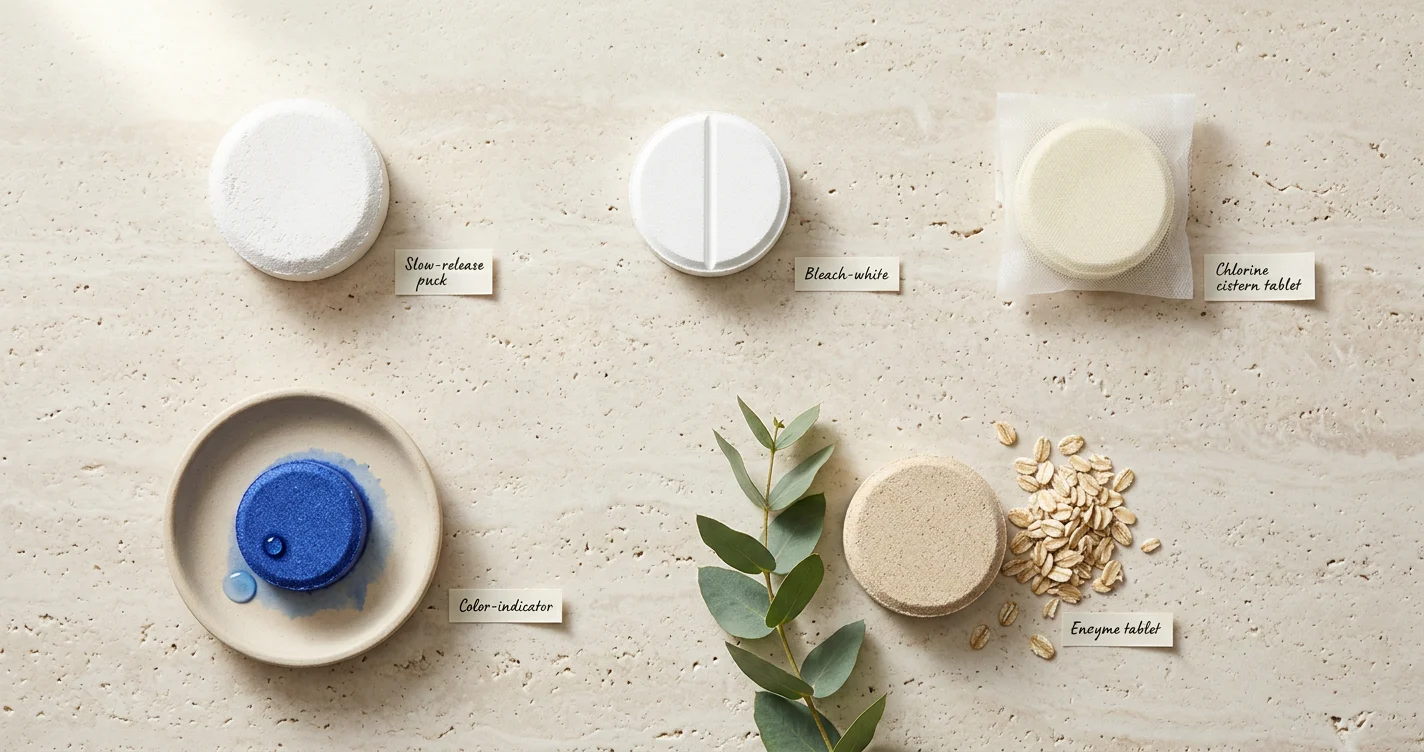
ينبغي أن يتمكن المشترون من التمييز بسرعة بين هذه الأنواع، لأن كل نوع يستهدف متسوقًا مختلفًا وشريحة سعرية مختلفة.
أقراص التنظيف التلقائي لوعاء المرحاض
هذه أقراص بطيئة الإطلاق تنظف مع كل شطفة، من دون حاجة إلى الفرك بين كل مرة وأخرى. ويتم تسويقها باعتبارها خيارًا يُضبط ويُترك، وهي تجذب الأسر المشغولة التي تريد مستوى أساسيًا ثابتًا من النظافة.
أقراص تنظيف المرحاض بالمبيّض
توفر التركيبات المحتوية على المبيّض قدرة قوية على التعقيم وإزالة البقع. وهي مناسبة للمشترين الذين يواجهون بقعًا صعبة وتغيرًا واضحًا في اللون. والتنبيه المهم لتجار التجزئة: قد يكون المبيّض أكثر قسوة على بعض المكونات المطاطية، لذا فإن إرشادات الاستخدام مهمة على الملصق.
أقراص الكلور لخزان المرحاض
تذوب أقراص الكلور الخاصة بالخزان في صندوق الطرد وتوفر تعقيماً واسع النطاق عبر النظام. ومن الشواغل الشائعة لدى المستهلكين تأثير التلامس طويل الأمد مع أختام الخزان والصمامات، وهو أمر يستحق توضيحه بوضوح في تعليمات المنتج.
أقراص زرقاء لوعاء المرحاض
تقوم هذه الفئة المعتمدة على مؤشر اللون بتلوين الماء بالأزرق، مما يمنح إشارة بصرية واضحة إلى أن المنظف نشط. وتكمن جاذبيتها في الجانب النفسي بقدر الجانب الوظيفي: فاللون الأزرق يخبر المستخدم أن المرحاض "يعمل" وأنه منعش.
أقراص تنظيف المرحاض الآمنة لخزانات التحلل
تنظف الأقراص المعتمدة على الإنزيمات والأكسجين دون الإضرار بالتوازن البكتيري في نظام خزان التحلل. ويُعد هذا من أسرع قطاعات الطلب نمواً، مدفوعاً بكل من الأسر الريفية والمشترين الواعين بيئياً الذين يريدون تنظيفاً فعالاً دون الكلور القاسي.
سوق أقراص تنظيف المرحاض: الطلب والفرص
بالنسبة إلى رواد الأعمال وأصحاب الأعمال الصغيرة، تُعد القصة التجارية وراء هذه الفئة مهمة بقدر أهمية المنتج نفسه. وتقع العناية بالمرحاض ضمن سوق تنظيف كبير ومستقر وينمو باطراد.
حجم السوق واتجاهات النمو
تُقدَّر قيمة السوق العالمية لمنظفات المنازل بمئات المليارات من الدولارات، وتُعد العناية بالمرحاض قطاعاً فرعياً مرناً لأن الطلب غير دوري: فالناس ينظفون المراحيض في كل الظروف الاقتصادية. وتشير مؤشرات القطاع باستمرار إلى نمو سنوي متوسط من خانة واحدة لمنتجات العناية بالمرحاض حتى 2026.
يبرز اتجاهان في الوقت الحالي. أولاً، تستقطب التركيبات الصديقة للبيئة والتغليف الخالي من البلاستيك المتسوقين الباحثين عن المنتجات المتميزة. ثانياً، تحوّل نماذج إعادة التعبئة بالاشتراك المشتري لمرة واحدة إلى مصدر إيرادات متكرر.
| الفئة | المحرك الرئيسي | الخلاصة للمشتري |
|---|---|---|
| تلقائي داخل الوعاء / الخزان | الراحة | معدل مرتفع لإعادة الشراء |
| آمن لأنظمة الصرف الصحي / صديق للبيئة | الطلب على الاستدامة | إمكانية التسعير المتميز |
| المبيض / الكلور | الطلب على التعقيم | منتج أساسي ذو حجم مبيعات قوي |
ما الذي يدفع طلب المستهلك
السهولة تتصدر المشهد. تزيل الأقراص عبء التنظيف اليومي وتنسجم مع الطريقة التي ترغب بها الأسر الحديثة في التنظيف: جهد أقل، وأتمتة أكبر.
أدى ارتفاع الوعي بالنظافة منذ الجائحة إلى إبقاء التعقيم في صدارة الاهتمام. وفي الوقت نفسه، يوجه الشراء الواعي بيئيًا المتسوقين نحو تركيبات ألطف وقابلة للتحلل الحيوي، كما أن صعود العلامات التجارية الخاصة بقطاع التجزئة يفتح مساحة على الرفوف كانت تهيمن عليها الشركات الراسخة سابقًا.
لماذا تُعد هذه فئة قوية للعلامة التجارية الخاصة
الجدوى الاقتصادية مشجعة للوافدين الجدد. تكلفة إنتاج الوحدة منخفضة، ويُستهلك المنتج ويُعاد شراؤه ضمن دورة متوقعة، كما أن بناء العلامة التجارية مباشر لأن هذا الشكل مدمج وسهل التعبئة.
ويعني هذا المزيج أن القرص ذو العلامة التجارية الخاصة والمتموضع جيدًا يمكنه التميز على الرف من خلال تغليف ذكي وسرد واضح للتركيبة، بدلًا من المنافسة على أساس التركيب الكيميائي الخام وحده.
كيف قيّمنا أفضل أقراص تنظيف المرحاض
المعايير الواضحة تجعل التصنيف مفيدًا. إليك ما أخذناه في الاعتبار عند تقييم المنتجات أدناه.
أداء التنظيف وإزالة البقع
الاختبار الأساسي هو التنظيف الفعلي: إزالة التكلسات بفعالية، والتحكم في الترسبات الكلسية، والقدرة على الحفاظ على نظافة الوعاء بين مرات التنظيف اليدوي. القرص الذي يقتصر دوره على إزالة الروائح ليس منظفًا.
السلامة والتوافق مع المواد
نظرنا في ادعاءات الأمان لأنظمة الصرف الصحي، والتوافق مع مكونات الخزان والسباكة، وشفافية المكونات. المنتج الذي يتسبب بصمت في إتلاف صمام الطرد هو مشكلة مرتجعات تنتظر أن تحدث.
القيمة وتكلفة إعادة التعبئة وطول مدة الاستخدام
تكلفة كل شطفة أهم من سعر الشراء. لقد أخذنا في الاعتبار مدة بقاء كل قرص وما هي التكلفة الفعلية المستمرة بالنسبة للمتسوق.
العوامل البيئية وعوامل الشهادات
تسهم قابلية التحلل الحيوي، وأثر التغليف، وشهادات السلامة المعترف بها بشكل متزايد في تمييز المنتجات المتميزة عن السلع العامة، خاصةً للمشتري ذي التوجه البيئي.
أفضل أقراص تنظيف المرحاض حاليًا
تمثل الاختيارات أدناه أقوى الأمثلة على كل نوع. وبالنسبة لكل منها، لاحظ ليس فقط نقاط القوة للمستهلك، بل أيضًا ما الذي تعنيه لعلامة تجارية تفكر في نفس الفئة المتخصصة.
الأفضل إجمالاً: أقراص التنظيف التلقائي لوعاء المرحاض
الخيار الأبرز الشامل هو قرص تلقائي بطيء الذوبان يوفر أداء تنظيفًا ملحوظًا مع كل شطفة بأقل قدر من جهد المستخدم. وهو يوازن بين التنظيف وإزالة الروائح وطول العمر دون الاعتماد على مادة كيميائية قوية واحدة.
مثالي لـ: المنازل اليومية التي ترغب في نظافة قليلة الصيانة. إشارة للعلامة التجارية: هذا هو مركز الحجم في الفئة، ونقطة الدخول الأكثر أمانًا لأول SKU بعلامة خاصة.
أفضل أقراص تنظيف المرحاض بالكلور للتعامل مع البقع الشديدة
للبقع الصعبة والتبييض، تظل الأقراص المعتمدة على الكلور الأقوى أداءً. فهي تزيل تغير اللون وتعقم بقوة، وهذا بالضبط ما يريده المتسوقون الذين لديهم مياه عسرة أو مراحيض مهملة.
مثالي لـ: المشترين الباحثين عن التنظيف العميق والتعقيم. إشارة للعلامة التجارية: إن وضع تعليمات استخدام وتحذيرات سلامة واضحة هنا أمر غير قابل للتفاوض لإدارة المخاوف المتعلقة بتآكل المكونات.
أفضل أقراص الكلور لخزان المرحاض
يوفر قرص خزان الكلور الرائد تعقيماً موثوقاً على مستوى النظام بالكامل ومعالجة فعالة للترسبات الكلسية، مع ذوبان ثابت على مدى أسابيع. ويُعد انتشاره عبر مياه الشطف عامل الجذب الرئيسي.
مثالي لـ: المتسوقين الذين يعطون الأولوية للتعقيم والراحة. إشارة العلامة التجارية: يُنصح بإقرانه بإرشادات حول توافق الأختام لتقليل المراجعات السلبية.
أفضل أقراص تنظيف المرحاض الآمنة لخزانات الصرف الصحي
ينظف المنتج الرائد القائم على الإنزيمات بفعالية مع حماية النظام البيئي البكتيري لخزان الصرف الصحي. ويتجنب الكلور تماماً ويستبدل القوة المباشرة بالتحلل البيولوجي للمواد العضوية.
مثالي لـ: المنازل المزودة بخزانات صرف صحي والمشترين المهتمين بالبيئة. إشارة العلامة التجارية: الفئة المتخصصة المميزة الأسرع نمواً، مع فرصة حقيقية للتسعير فوق مستويات السلع الأساسية.
أفضل أقراص زرقاء لحوض المرحاض
يمنح الخيار المفضل ضمن فئة مؤشرات اللون المياه لوناً أزرق نظيفاً ويشير إلى الانتعاش مع كل شطف. ويعزز هذا المؤشر البصري ولاءً قوياً للشراء المتكرر لأن المستخدمين يمكنهم رؤية المنتج وهو يعمل.
مثالي لـ: المتسوقين الذين يقدّرون الانتعاش المرئي. إشارة العلامة التجارية: جاذبية عاطفية عالية وسرد تسويقي سهل.
أفضل أقراص صديقة للبيئة / خالية من البلاستيك
يعتمد الخيار المستدام الأفضل على تنظيف قائم على الأكسجين، ومكونات قابلة للتحلل الحيوي، وتغليف خالٍ من البلاستيك. وهو يستهدف المتسوق المستعد لدفع المزيد مقابل أثر بيئي أقل.
مثالي لـ: المستهلكين ذوي التوجه البيئي. إشارة العلامة التجارية: أوضح تموضع متميز متاح في هذه الفئة اليوم.
أفضل عبوة متعددة ذات قيمة
أفضل خيار من حيث الكفاءة من ناحية التكلفة هو العبوة المتعددة بالجملة التي تخفض تكلفة كل استخدام بشكل كبير مع الحفاظ على مستوى تنظيف جيد. وهي تجذب المتسوق الحساس للسعر ومشتري الكميات الكبيرة.
مثالي لـ: الأسر الكبيرة والمتسوقين الباحثين عن التوفير. دلالة العلامة التجارية: يأتي الحجم وهامش الربح من كفاءة التغليف والتوريد.
جدول مقارنة سريع
| المنتج | النوع | الأفضل لـ | آمن لأنظمة الصرف الصحي | التكلفة التقريبية/الاستخدام |
|---|---|---|---|---|
| حل تلقائي شامل | تلقائي داخل المرحاض | راحة يومية | — | $0.15–$0.25 |
| مبيض للاستخدام الشاق | مبيض | البقع الصعبة | لا | $0.10–$0.20 |
| خزان الكلور | خزان الكلور | التطهير | لا | $0.08–$0.15 |
| إنزيمات خزانات الصرف الصحي | إنزيم | أنظمة الصرف الصحي | نعم | $0.20–$0.35 |
| مؤشر أزرق | مؤشر أزرق | انتعاش مرئي | يختلف | $0.12–$0.22 |
تُعد أرقام التكلفة لكل استخدام نطاقات بيع بالتجزئة نموذجية وتختلف حسب السوق وحجم العبوة.
ما الذي يجب البحث عنه قبل الشراء أو التوريد
إن المعرفة نفسها بالمنتج التي تساعد الأسرة على حسن الاختيار تساعد أيضًا صاحب العمل على التوريد بذكاء. والفرق يكمن في المنظور الذي تطبقه.
للأسر: اختيار القرص المناسب لمرحاضك
إذا كان لديك نظام صرف صحي بخزان تحلل، فاختر أقراصًا آمنة لهذا النظام تعتمد على الإنزيمات أو الأكسجين وتجنب الكلور. أما في حالة بقع الماء العسر، فتكون التركيبة المحتوية على المبيض أو مزيل التكلسات هي الأفضل.
إذا كانت أولويتك هي العناية اليومية السهلة دون عناء، فإن القرص الأوتوماتيكي داخل الوعاء هو الخيار الأنسب بطبيعته. وإذا كنت تفضل ببساطة الاطمئنان عند رؤية المنظف أثناء عمله، فإن قرص المؤشر الأزرق يوفر لك هذه الدلالة.
لرواد الأعمال: اعتبارات التوريد والعلامة الخاصة
من منظور التوريد، تتراكم القرارات بسرعة: أي تركيبة ينبغي طرحها أولًا، وما الحد الأدنى لكمية الطلب الذي يمكنك الالتزام به، وكيف ستمنحك العبوة تميزًا، وما معايير الامتثال التي تتطلبها أسواقك المستهدفة.
العوامل التي تميز المُصنّع الموثوق عن المُصنّع عالي المخاطر هي الاتساق، والشهادات، والقدرة الإنتاجية. وغالبًا ما يكمن الفرق بين بيع قرص عام وامتلاك علامة تجارية موثوقة في الجهة التي تقوم بتصنيعه.
إطلاق علامتك التجارية الخاصة للعناية بالمرحاض إلى السوق
إذا كنت قد وصلت إلى هذا الحد من القراءة، فمن المرجح أنك تقيّم هذه الفئة كفرصة عمل، وليس مجرد عملية شراء. والخبر السار هو أن العوائق أقل مما تبدو عليه، شريطة أن تبدأ مع شريك الإنتاج المناسب.
لماذا يحدد اختيار شريك التصنيع جودة المنتج
كل معيار شراء في هذا الدليل، من أداء التنظيف والسلامة وتوافق المواد إلى الاعتمادات البيئية، يعود في الأساس إلى التصنيع. فالقرص الذي يخيب الآمال على الرف غالبًا ما تكون بدايته تركيبة ضعيفة أو إنتاجًا غير متسق.
إن الشهادات المعترف بها والقدرة الإنتاجية الفعلية ليست مجرد أوراق. بل هي ما يتيح لك أن تعد العميل بمنتج متسق، دفعة بعد دفعة، وأن تدعم هذا الوعد عمليًا.
الشراكة مع Boymay لتصنيع OEM/ODM
منذ عام 1995، تخصصت Boymay في تصنيع OEM/ODM لقنابل الاستحمام، وأقراص البخار للاستحمام، ومنتجات العناية الشخصية. وبفضل منشأة بمساحة 40,000㎡، و16 خط إنتاج آلي، وشهادات GMP وISO وFDA وSMETA المعترف بها دوليًا، نقدم حلول تصنيع موثوقة للعلامات الخاصة والتصنيع المخصص للعلامات التجارية العالمية وتجار التجزئة.
إذا كنتم تدرسون منتجات العناية بالمرحاض كخط منتجاتكم التالي، يمكننا مساعدتكم في تطوير التركيبة، وتصميم العبوة، وتوسيع نطاق الإنتاج بما يتوافق مع خطة الإطلاق الخاصة بكم. تواصلوا معنا لمناقشة خيارات التصنيع المخصص والعلامة الخاصة المصممة حول علامتكم التجارية.
الأسئلة الشائعة
س: هل أقراص تنظيف المرحاض آمنة لأنظمة الصرف الصحي ذات الخزانات؟
ج: تم تصميم التركيبات المعتمدة على الإنزيمات والأكسجين لتكون آمنة لأنظمة الصرف الصحي ذات الخزانات لأنها تنظف دون القضاء على البكتيريا النافعة التي يعتمد عليها خزان الصرف الصحي. ولا يُنصح عمومًا بأقراص الكلور والمواد المبيضة لهذه الأنظمة، لذا تحققوا دائمًا من الملصق للتأكد من وجود تصريح واضح بأنها آمنة لأنظمة الصرف الصحي قبل الشراء.
س: هل تتسبب أقراص المبيض أو الكلور في إتلاف مكونات المرحاض؟
ج: يمكن للأقراص المؤكسدة القوية أن تتسبب في تآكل الأختام المطاطية، والحشيات، وصمامات الطرد بمرور الوقت، وخاصة تركيبات الكلور داخل الخزان التي تبقى على تماس مستمر مع تلك الأجزاء. وتتجنب الأقراص الموضوعة داخل الوعاء هذا الخطر لأنها لا تلامس تجهيزات الخزان مطلقًا. وإذا كنتم تستخدمون قرصًا داخل الخزان، فاتبعوا توقيت الاستبدال الموصى به من الشركة المصنّعة وافحصوا الأختام بشكل دوري.
س: كم تدوم عادةً مدة قرص واحد؟
ج: يعتمد ذلك على النوع وتكرار الطرد. تدوم الأقراص داخل الخزان عادةً من أسبوع إلى أربعة أسابيع، بينما توفر الأقراص التي توضع داخل الوعاء تنظيفًا لمدة تتراوح من أسبوع إلى أسبوعين لكل وحدة. وتدوم الأقراص عالية الكثافة بطيئة الذوبان لفترة أطول، لكنها تكون أعلى تكلفة لكل قطعة.
س: هل تُعد أقراص تنظيف المرحاض منتجًا جيدًا للبيع بعلامة خاصة؟
ج: نعم، لعدة أسباب: انخفاض تكلفة الوحدة، وتكرار الشراء المتوقع، والتغليف المدمج، ووجود مجال واضح للتميّز. وتكون هوامش الربح جيدة في فئات المنتجات الصديقة للبيئة والآمنة لأنظمة الصرف الصحي ذات الخزانات، ويتمثل عامل النجاح الرئيسي في توريد منتج ثابت ومعتمد من مُصنّع موثوق.
س: ما هو الحد الأدنى لكمية الطلب لمنتجات العناية بالمرحاض المخصصة؟
ج: يختلف الحد الأدنى لكمية الطلب حسب التركيبة ومدى تعقيد التغليف، لكن عمليات الإنتاج المخصصة ووضع العلامة الخاصة متاحة للعلامات التجارية الصغيرة والمتوسطة، وليس فقط لتجار التجزئة الكبار. والخطوة العملية التالية هي مناقشة السوق المستهدف والتركيبة والتغليف مع جهة تصنيع يمكنها توضيح الحدود الدنيا الواقعية لكميات الطلب والجداول الزمنية لإطلاق منتجك.